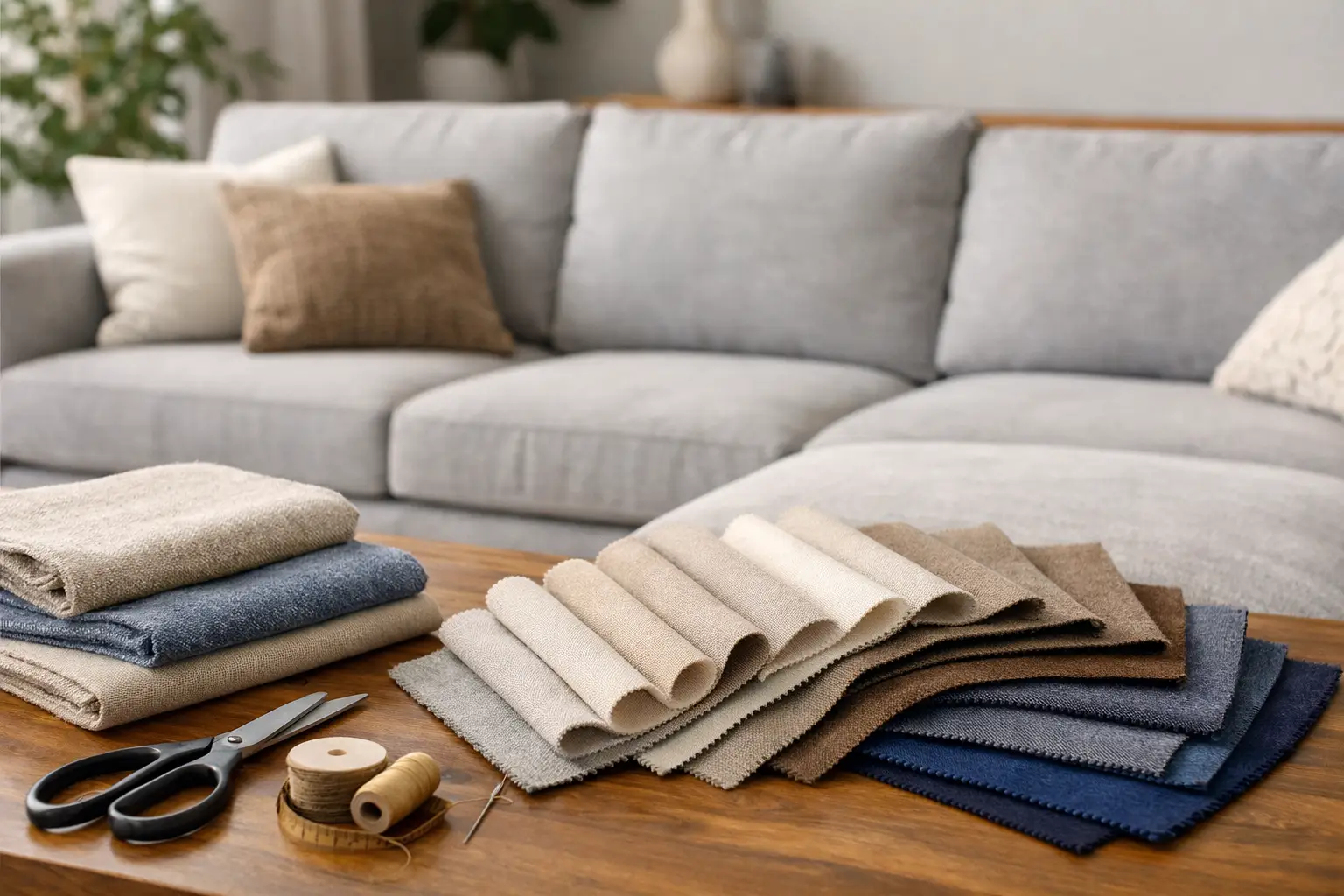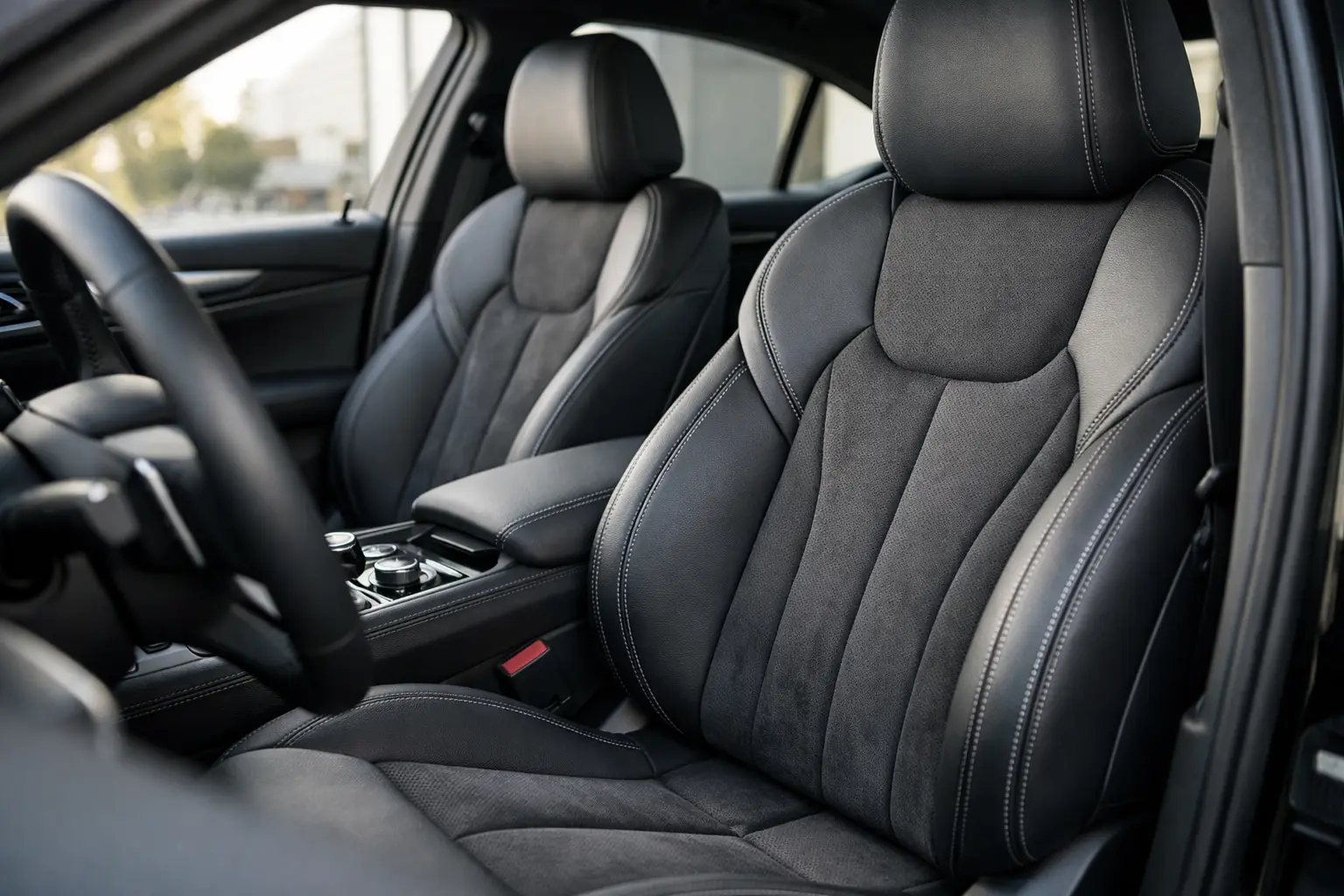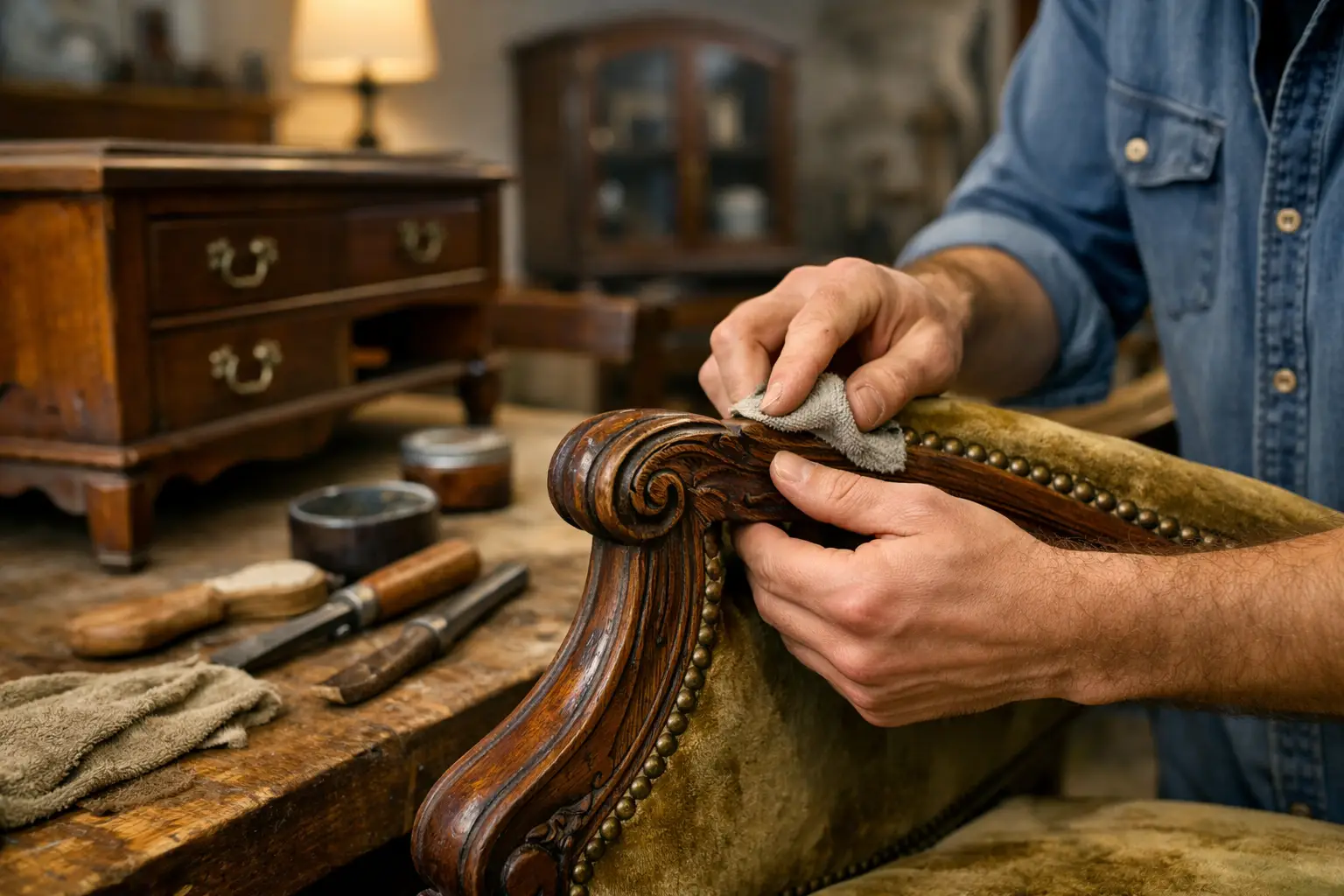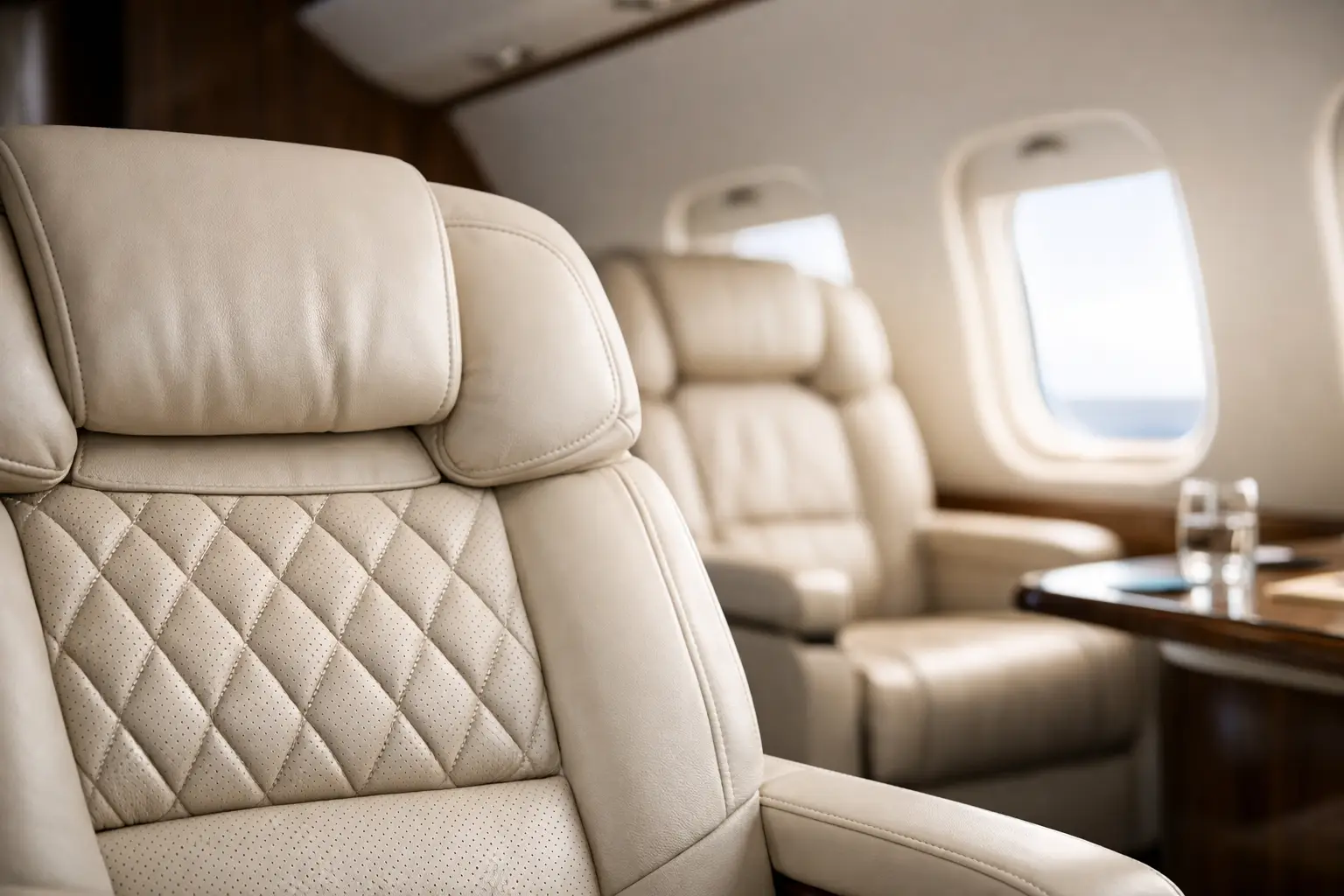
A sofa that sags in the middle, dining chairs with split seams, or an heirloom armchair with fabric worn thin at the arms all raise the same question: when should furniture be reupholstered? The answer depends less on age alone and more on structure, comfort, material condition, and whether the piece is still worth saving.
For many homeowners and business owners, replacement seems like the faster option. But a well-built piece often has more life left than its surface suggests. Reupholstery makes sense when the frame is sound, the dimensions still work for the space, or the furniture has quality, character, or sentimental value that a new replacement cannot match.
When should furniture be reupholstered instead of replaced?
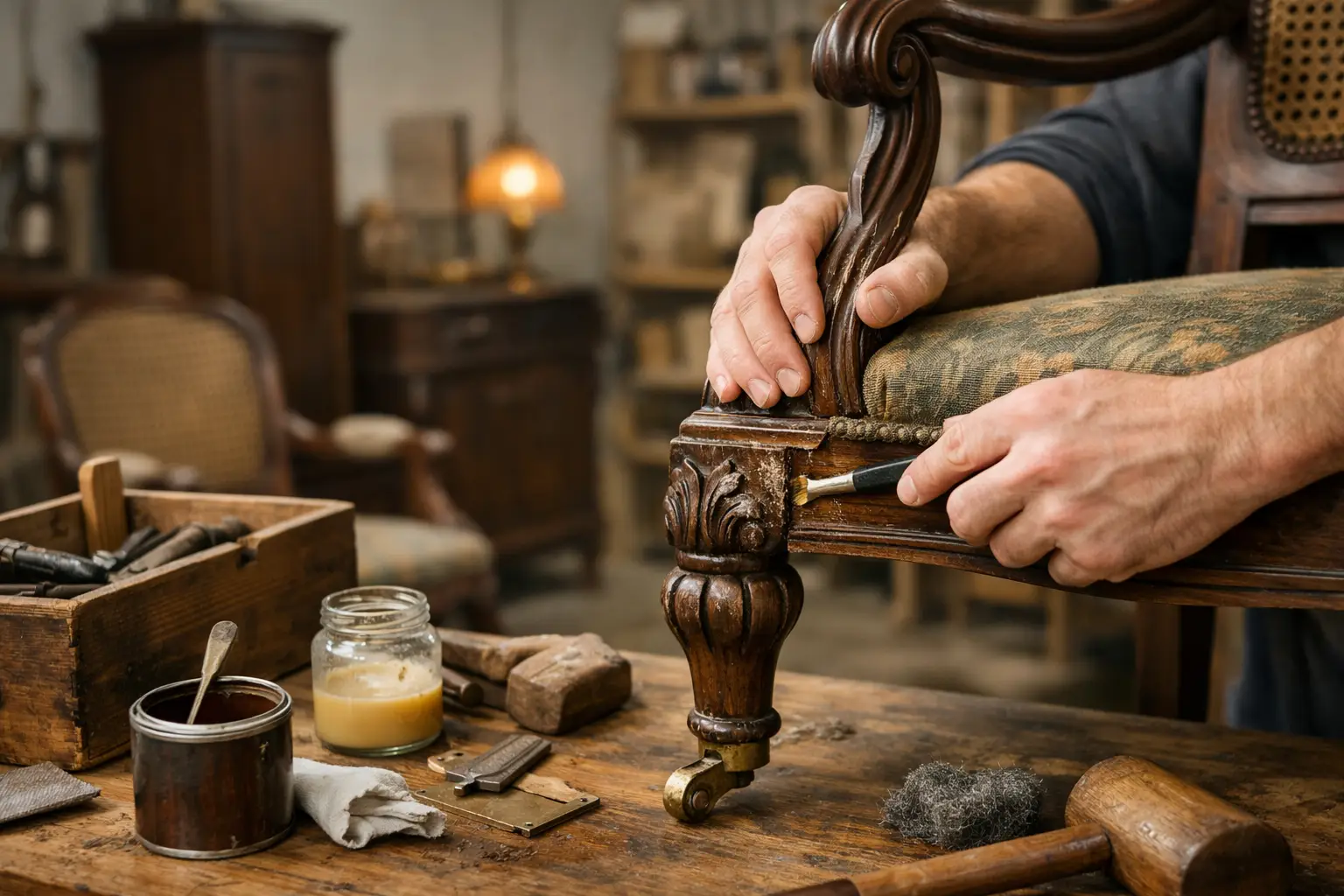
The clearest sign is structural value. If a chair, sofa, bench, or booth was built with a solid hardwood frame, quality joinery, and durable spring support, it may be a strong candidate for reupholstery even if the fabric looks beyond saving. Older furniture is often worth closer inspection for this reason. Many pieces were built more heavily than mass-produced furniture sold today.
Condition matters, but not always in the way people assume. Torn fabric, flattened cushions, broken zippers, stained upholstery, and faded color are usually surface-level problems. These are often repairable through fabric replacement, foam replacement, cushion rebuilding, and detailed upholstery work. By contrast, a cheap frame made from low-grade particle board or furniture that has warped from water damage may not justify the investment.
Comfort is another deciding factor. If you like the scale, seat depth, back height, and overall feel of a piece, keeping it and rebuilding the upholstery can be more practical than starting over with something new that may not fit the room or sit the way you want. This comes up often with living room seating, office chairs, restaurant booths, RV cushions, and custom vehicle interiors where fit and function matter as much as appearance.
Signs your furniture is ready for reupholstery
Visible wear is the most obvious clue, but it is not the only one. Sometimes a piece looks acceptable from across the room and still needs work because the materials underneath have started to fail.
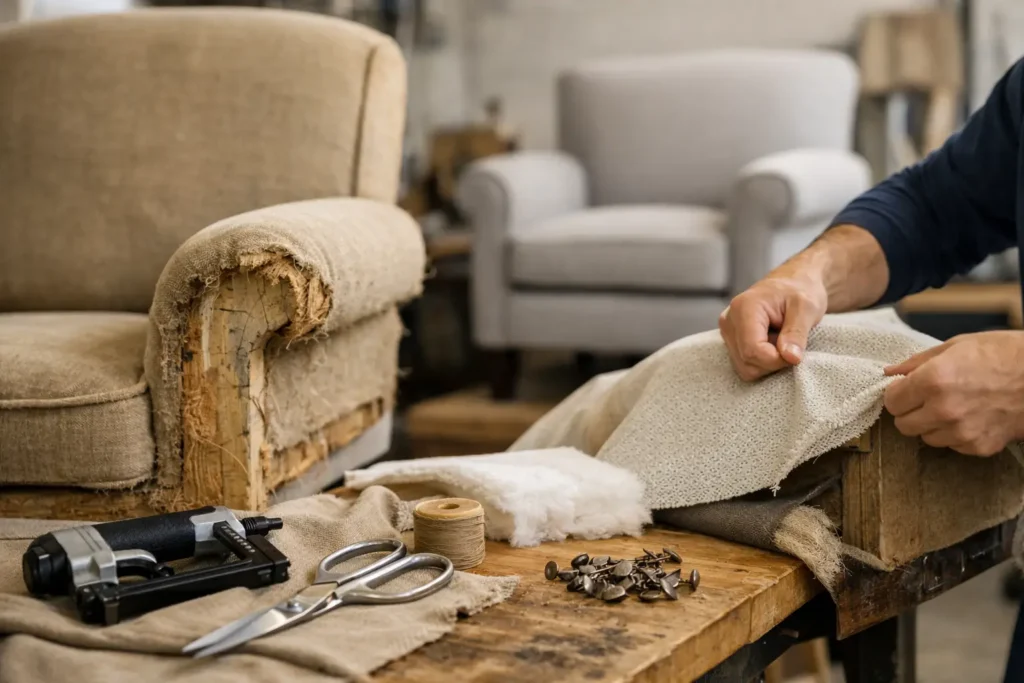
If the fabric is fraying at seams, cracking, pulling loose, or showing bald spots, the upholstery has reached the point where patching is usually a short-term fix. Likewise, if cushions no longer hold their shape, feel uneven, or bottom out when you sit, the foam or support layers may need replacement. Reupholstery is often the right time to correct both issues together instead of covering worn materials with new fabric and hoping for the best.
Odor can also be a factor. Furniture that has absorbed smoke, pets, mildew, or long-term moisture often needs more than surface cleaning. In those cases, replacing fabric and interior materials can restore both usability and appearance.
There are also structural warning signs. Listen for creaking, feel for looseness in arms or backs, and check whether seats lean or shift under weight. These issues do not automatically mean a piece should be discarded. In many cases, furniture repair and structural restoration can be completed before the new upholstery goes on. That is often the right path when the underlying frame still has real value.
Quality is the real deciding factor
Not every piece should be reupholstered. The better question is whether the furniture was made well enough to deserve the work.
A high-quality piece usually has a sturdy frame, balanced proportions, replaceable cushions, and construction that can be taken apart and rebuilt. That applies to residential furniture, but also to commercial seating, marine cushions, RV interiors, and specialty vehicle seating. If the shape is right and the foundation is strong, reupholstery can extend the life of the piece for years.
Lower-end furniture is different. If the frame flexes, staples are pulling loose, joints are failing throughout, and the original materials were not durable to begin with, replacement may be the smarter investment. Reupholstery is skilled custom work. It adds the most value when the piece has something worth preserving.
This is why in-person evaluation matters. A furniture piece that looks worn out may have an excellent frame, while a newer-looking piece may be poorly built under the fabric. Craftsmanship starts with understanding what is underneath.
Cost matters, but so does replacement quality
People often compare reupholstery cost to the price of a new piece on a showroom floor. That can be misleading.
A fair comparison is not between reupholstery and the cheapest available replacement. It is between reupholstery and a new piece of similar quality, fit, and finish. Once you compare solid construction, custom material choices, foam quality, and labor, reupholstery often makes more sense than expected.
This is especially true for furniture with uncommon dimensions or matching requirements. Banquettes, medical seating, restaurant booths, antique chairs, built-in RV cushions, and custom automotive interiors are not always easy to replace off the shelf. Reupholstery lets you keep the exact shape and improve the materials.
That said, there are situations where replacement is the better call. If the furniture is low-value, badly damaged, and easy to replace with something comparable, investing in full reupholstery may not be practical. A dependable upholstery shop should be direct about that.
Style changes are a valid reason to reupholster
Furniture does not need to be falling apart before reupholstery makes sense. Sometimes the structure is fine, but the fabric, color, or pattern no longer fits the room.
This is common with inherited furniture, quality older sofas, and dining chairs that still perform well but look dated. Reupholstery allows you to update the piece without losing the construction, scale, or details that made it worth keeping. It also gives you more control over fabric type, texture, pattern, cleanability, and durability than buying new often does.
For commercial spaces, appearance can be part of the decision too. Worn waiting room seating, restaurant booths, auditorium seating, and office furniture affect how a business is perceived. Reupholstery can refresh a space while keeping existing layouts and built-in pieces in service.
Sentimental and specialty pieces deserve a different standard
Some furniture should not be judged by replacement cost alone. Family heirlooms, handcrafted chairs, vintage pieces, and custom-built seating often carry value that goes beyond price.
If the piece has sentimental importance or unique design details, reupholstery can preserve what matters while restoring function. The same principle applies to specialty applications. Motorcycle seats, classic car interiors, marine cushions, aircraft seating, and RV upholstery are often worth rebuilding because the fit is specific and the replacement options are limited.
In those cases, the work is not just about new fabric. It may involve foam reshaping, panel replacement, stitching repairs, structural reinforcement, and material selection based on use conditions. Sun exposure, moisture, frequent entry and exit, and commercial traffic all affect what should be used and how the work should be done.
When should furniture be reupholstered by a professional?
As soon as wear moves beyond a simple surface fix, professional evaluation is the smart next step. Early attention often prevents bigger problems. A loose seam can turn into torn fabric. Flattened cushions can strain the support below. Small frame movement can become breakage.
Professional upholstery also matters when pattern matching, cushion rebuilding, commercial durability, or structural repairs are involved. A finished piece needs to look right, sit right, and hold up under regular use. That takes more than replacing fabric alone.
At Rocky Mountain Upholstery, many projects start with customers who assume their furniture is too far gone. Once the frame, support, and overall build are examined, the picture is often different. Good bones can be restored, rebuilt, and customized into something that serves the space better than a quick replacement.
If you are unsure whether a piece is worth saving, focus on four things: how well it is built, how well it fits your needs, how much wear is cosmetic versus structural, and whether a comparable replacement would truly be better. Furniture does not need to be perfect to deserve restoration. It just needs a solid reason to keep it in service.
The right time to reupholster is usually earlier than most people think – before damage spreads, before comfort drops too far, and before a quality piece gets written off for problems that can still be repaired.