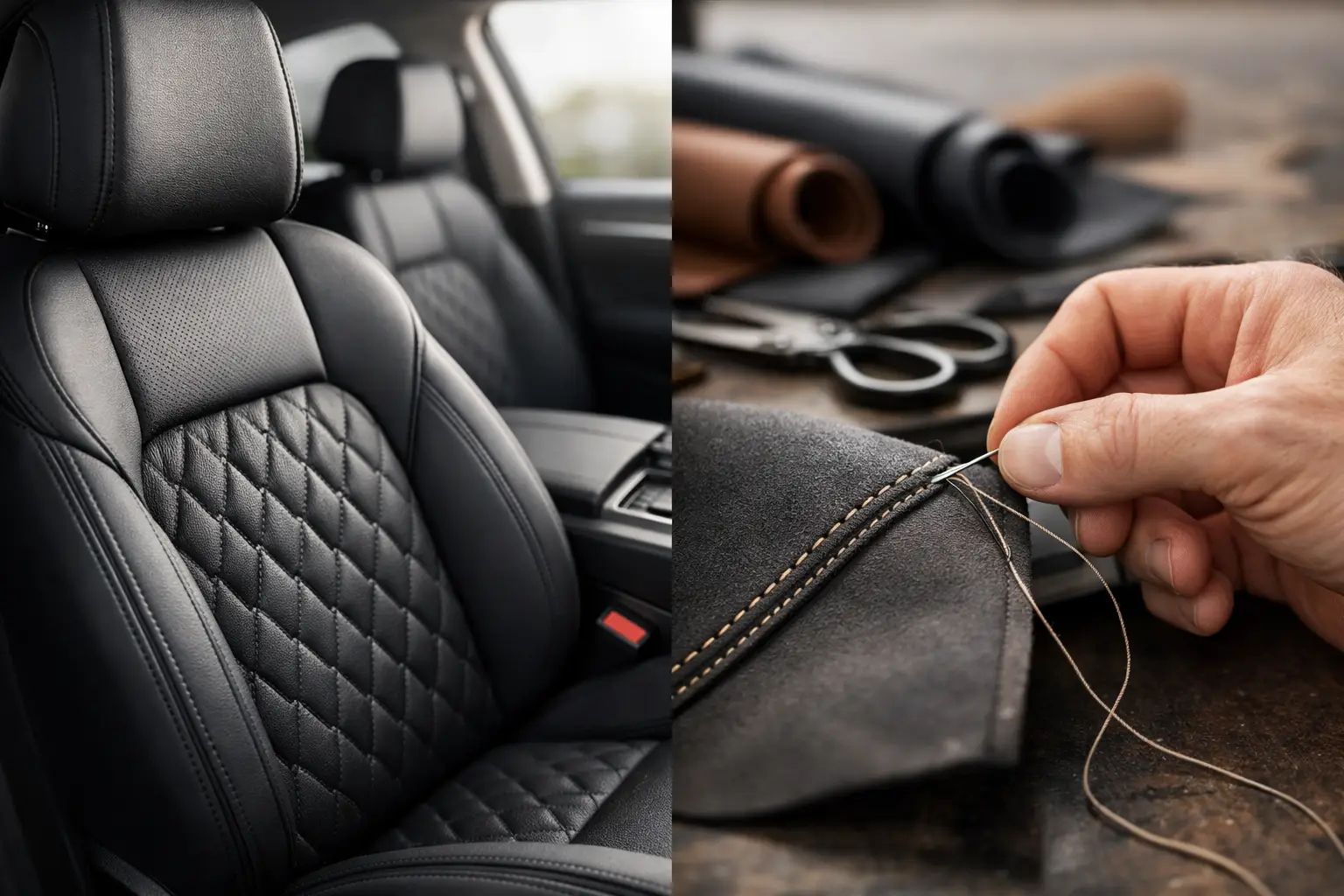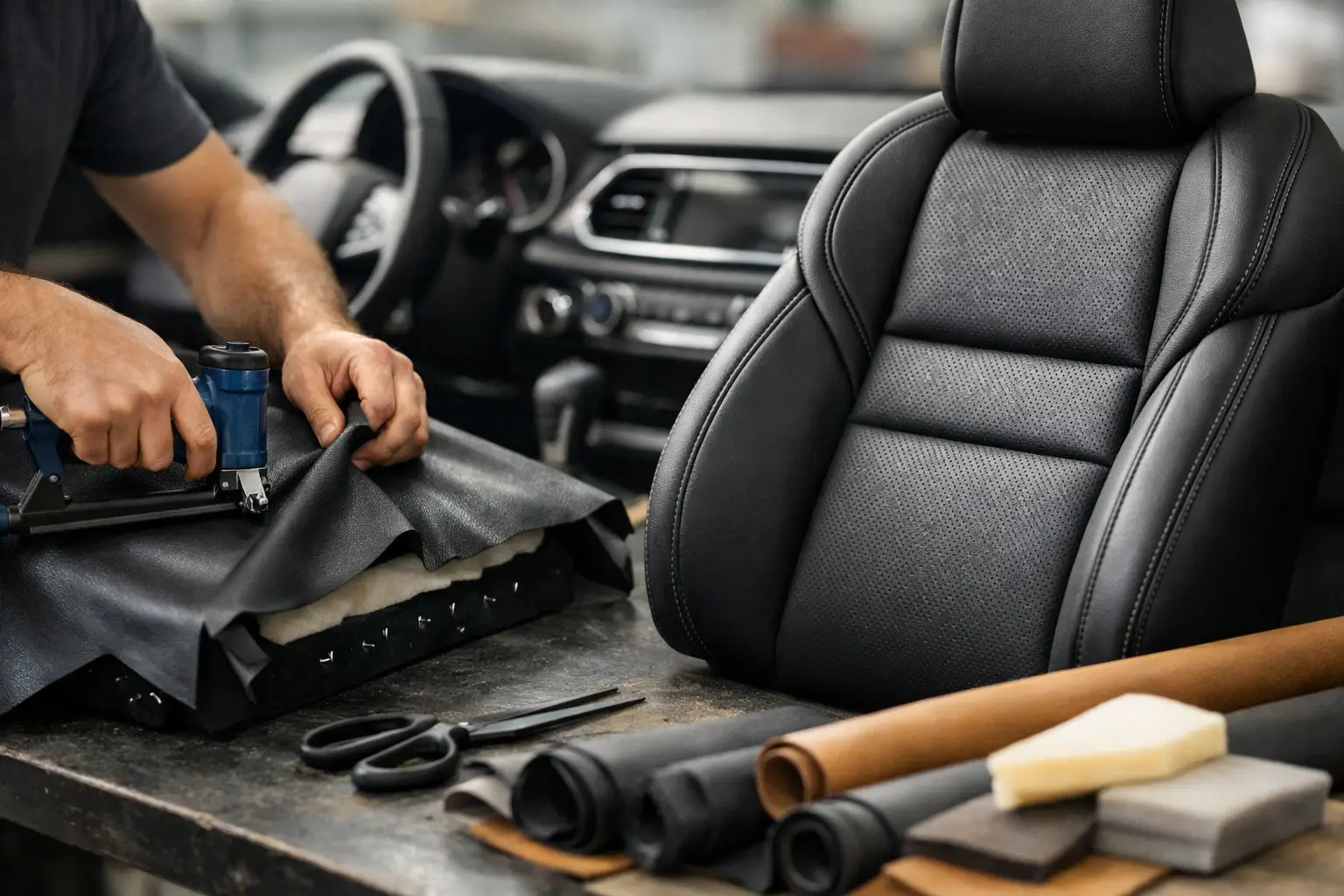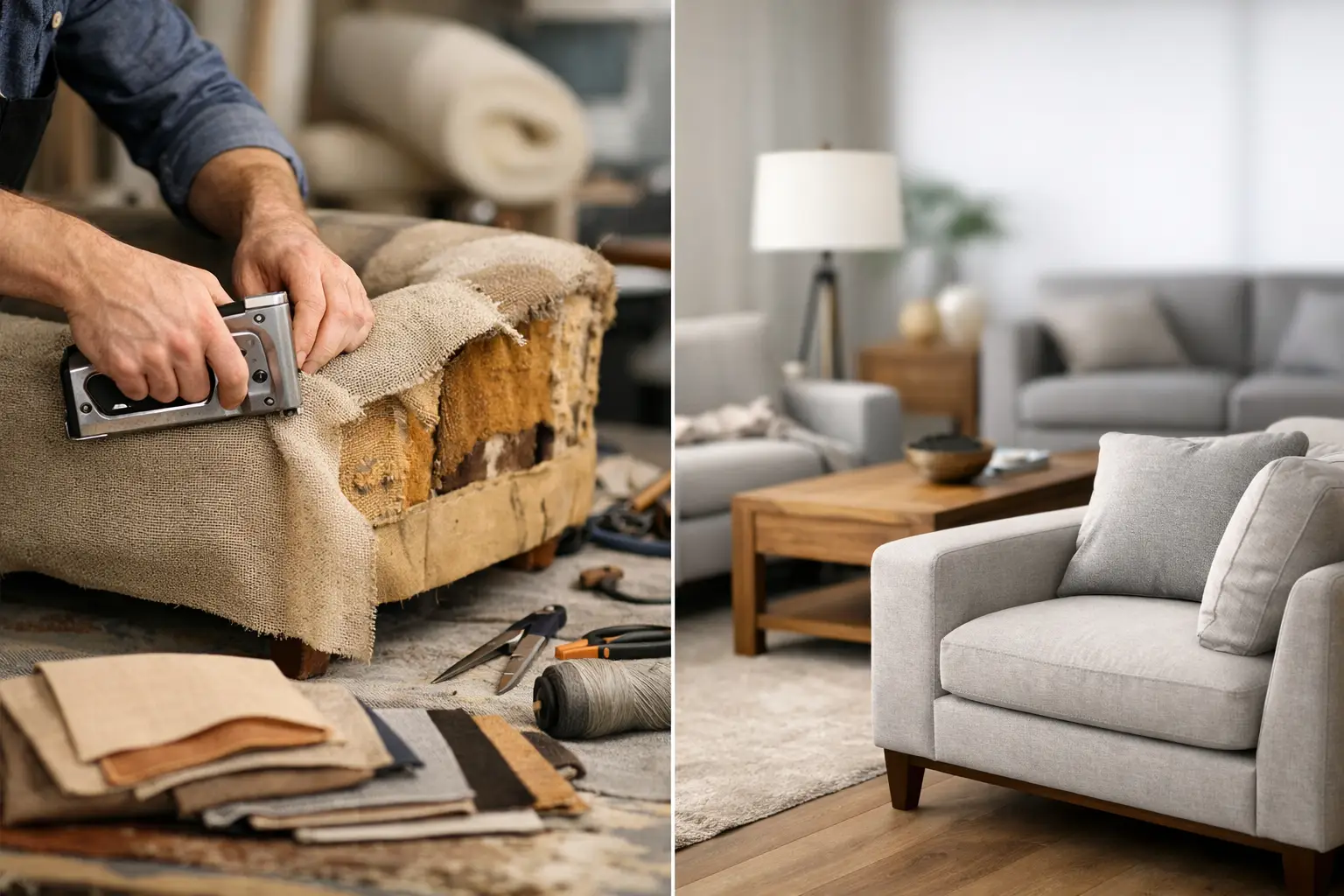
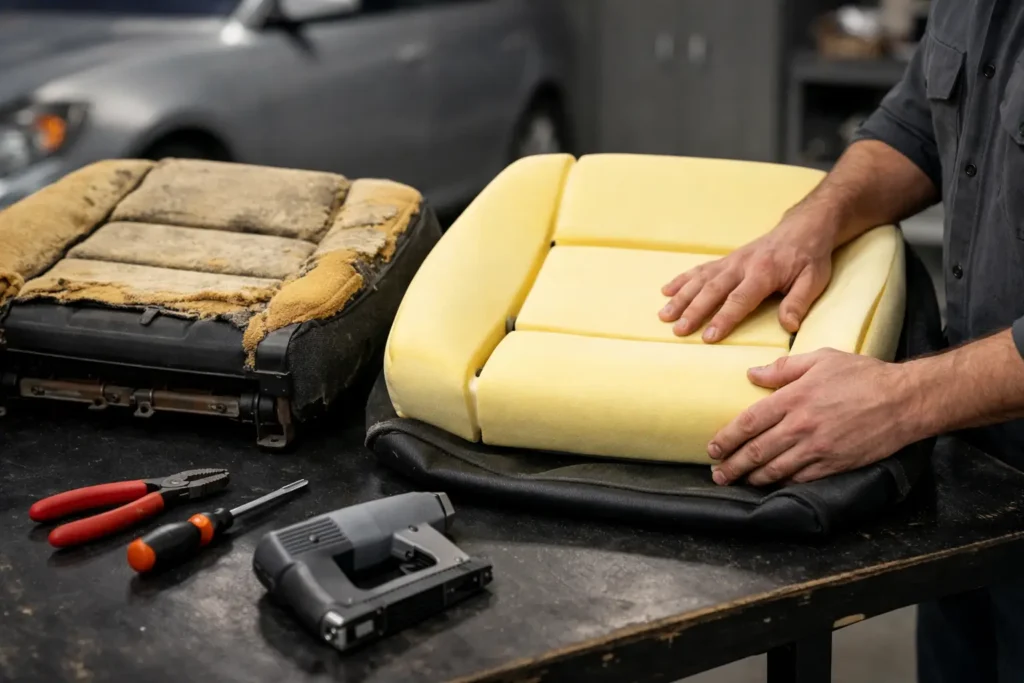
A seat that looks fine from across the room can tell a different story the moment you sit down. If the cushion bottoms out, leans to one side, or never quite springs back, the problem is usually in the foam – not always the frame or the fabric. Knowing how to replace seat foam starts with understanding what failed, what can be reused, and what kind of support the piece actually needs.
Replacing foam sounds simple until the finished seat feels too hard, too soft, too tall, or uneven from one side to the other. Good upholstery work is not just about filling a cushion. It is about restoring comfort, shape, and long-term performance so the piece feels right again in daily use.
When seat foam needs to be replaced
Foam rarely fails all at once. More often, it breaks down slowly from weight, age, heat, moisture, and repeated compression. In homes, that shows up in dining chairs, window seats, sofa cushions, and built-in seating. In vehicles, boats, RVs, and motorcycles, the wear can be more aggressive because of temperature swings, vibration, and heavier use.
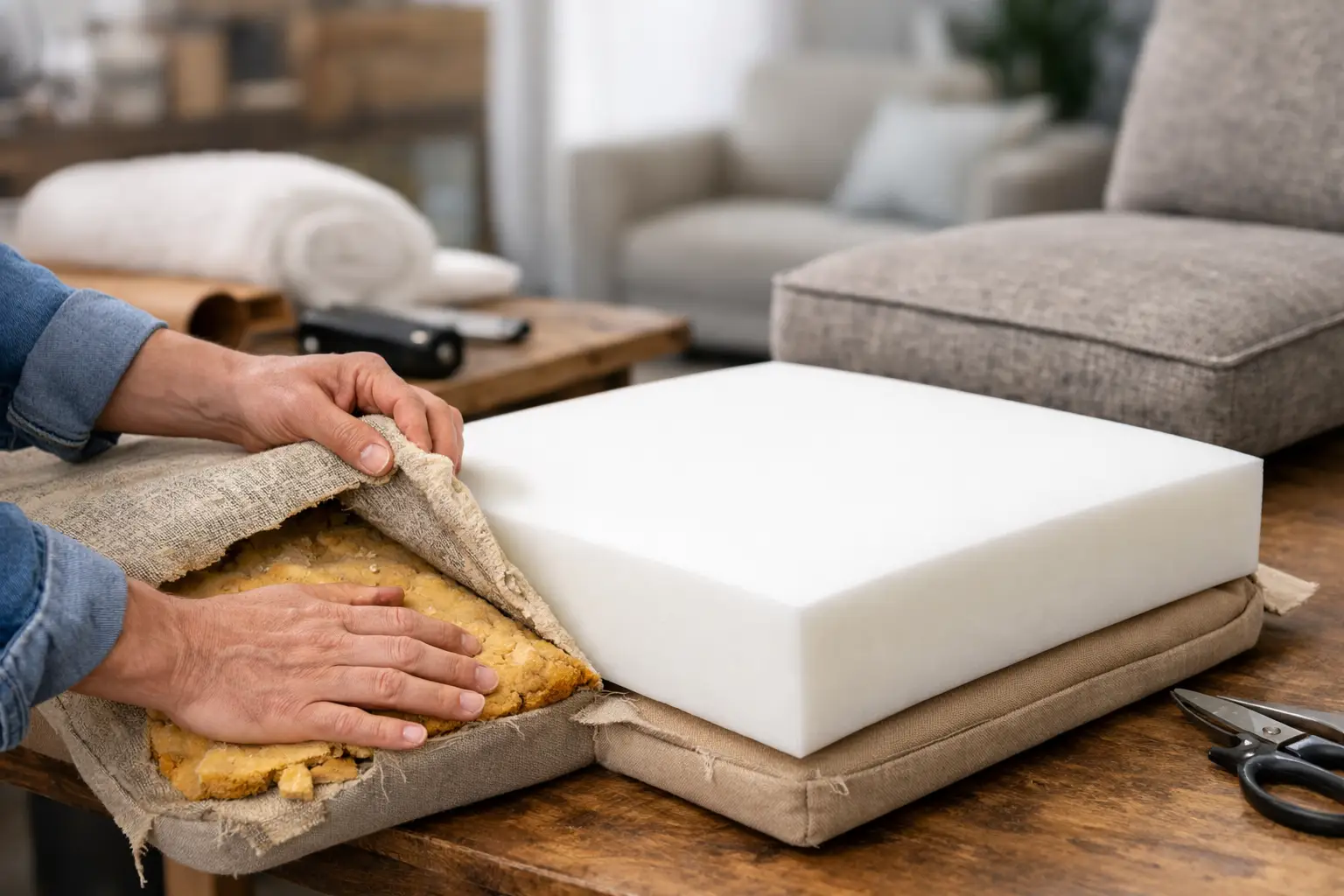
If you can feel the wood base, springs, or support surface underneath, the foam is no longer doing its job. The same is true if the cushion has deep body impressions, rounded edges that have collapsed, or a seat profile that no longer matches the cover. Torn foam, crumbling foam, and foam that has hardened with age should also be replaced rather than patched.
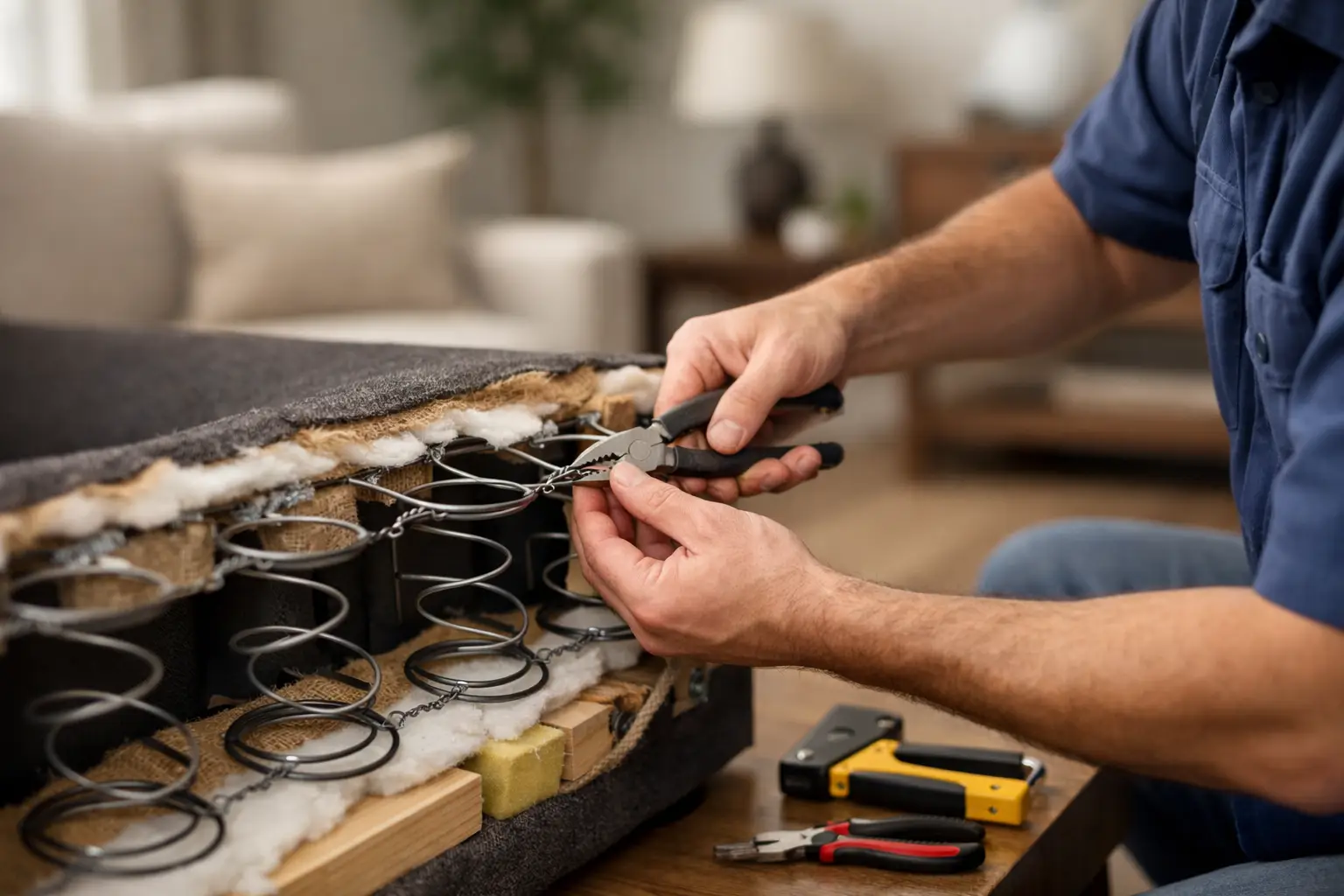
In some cases, the foam is only part of the problem. A sagging spring unit, broken webbing, cracked seat board, or stretched upholstery cover can make a cushion feel worse than it is. That is why a proper inspection matters before new material is cut.
How to replace seat foam without creating new problems
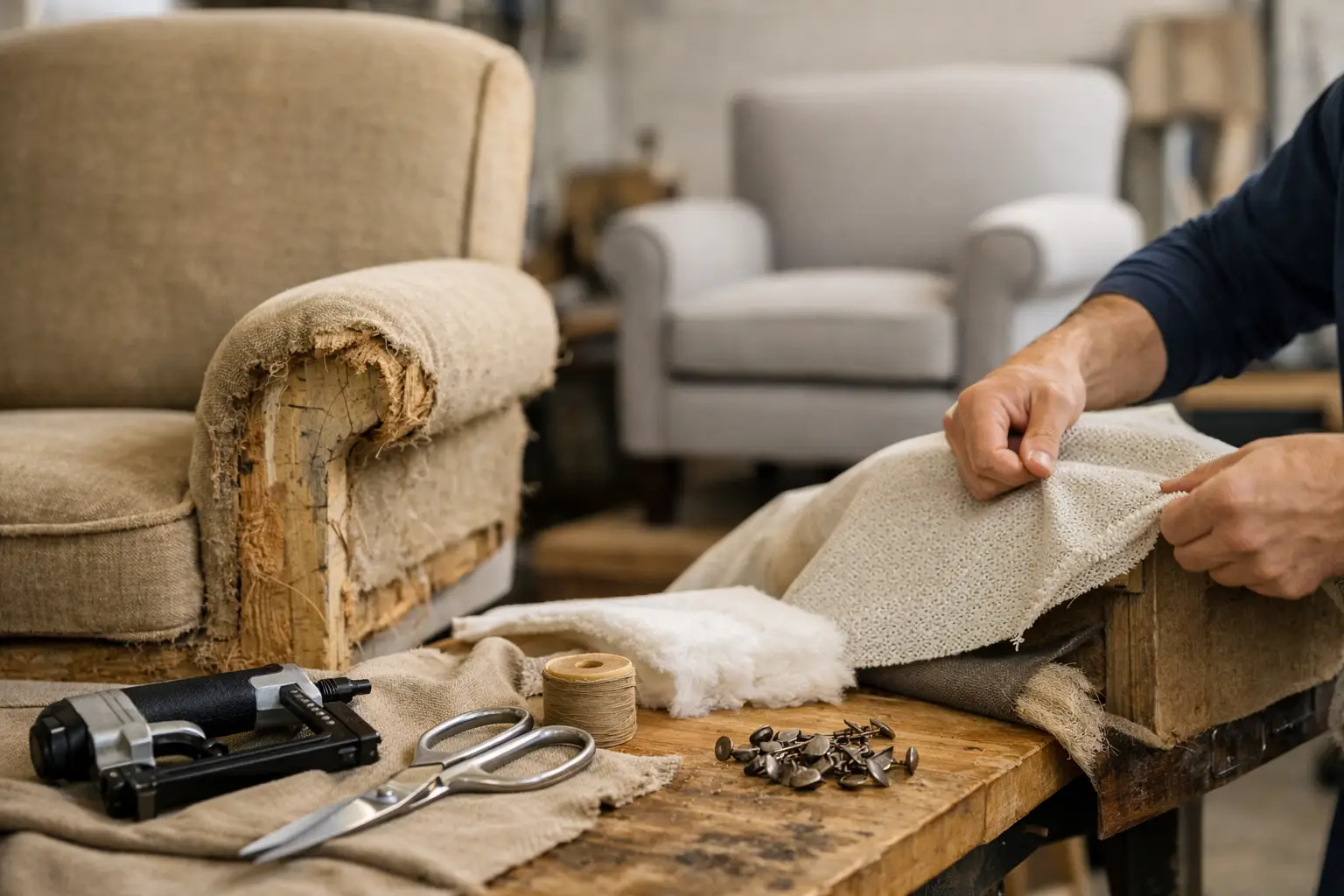
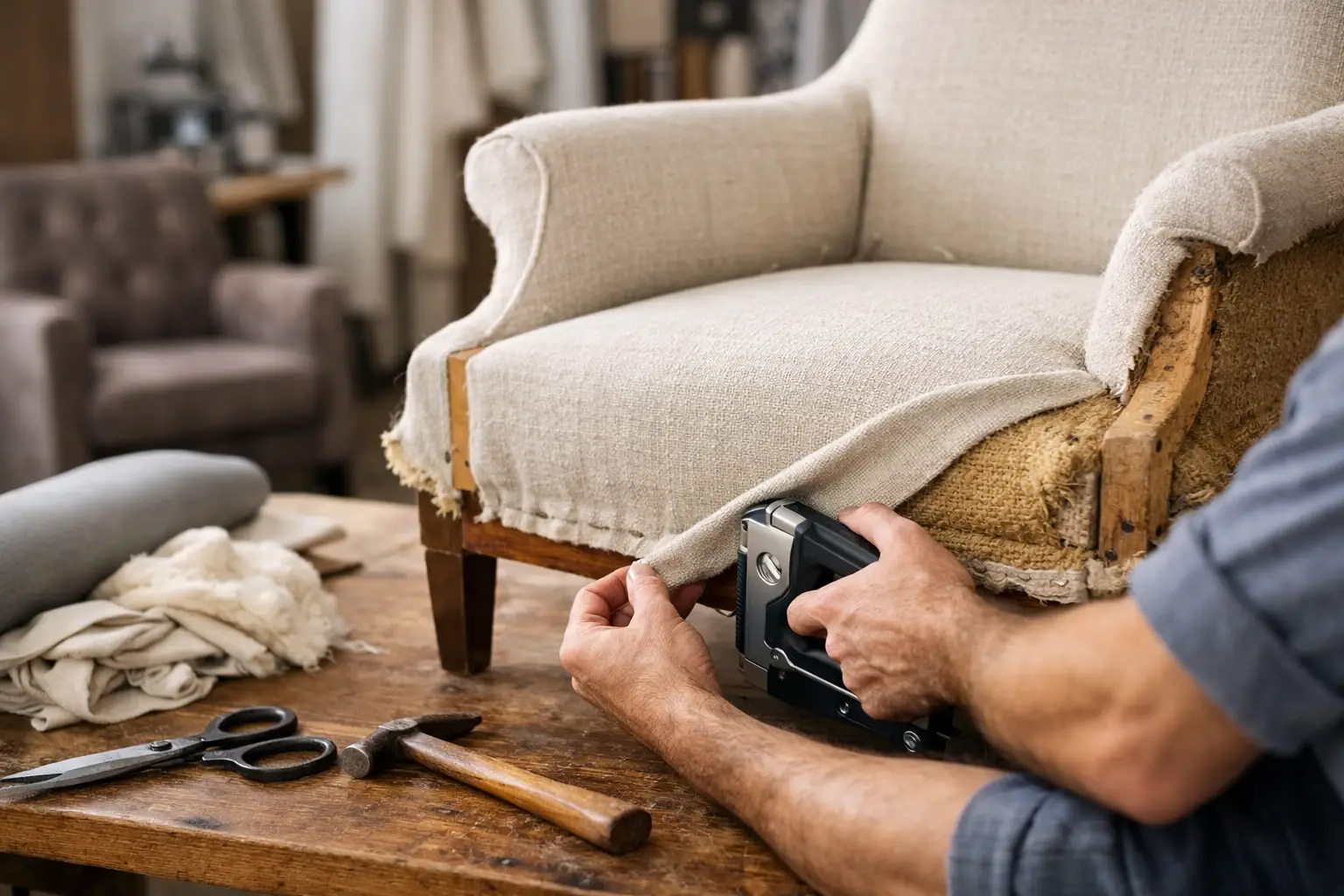
The first step is to remove the seat or cushion carefully and evaluate the full construction. On a loose cushion, that means opening the cover and removing the old insert. On a dining seat or attached upholstered panel, it may mean taking the seat apart from the frame and removing staples, fabric, batting, and foam layer by layer.
Take measurements before discarding anything. Width, depth, thickness, contour, crown, and edge shape all affect the final result. An old foam insert may be misshapen, so it should not be treated as a perfect template, but it still tells you how the seat was originally built. Photos help if the piece has multiple layers or a shaped profile.
From there, the real decision is material selection. Foam is not one-size-fits-all. Density and firmness both matter, and they are not the same thing. Density affects durability and how well the foam holds up over time. Firmness affects how soft or supportive the seat feels when someone sits down.
A dining chair seat, for example, usually needs a firmer foam than a casual back cushion because the support has to come from a thinner profile. A sofa seat often needs a balance of support and comfort with enough thickness to carry weight without feeling stiff. A boat seat or motorcycle seat may need specialized foam that handles moisture exposure or high-pressure use better than standard furniture foam.
That is where many do-it-yourself repairs go wrong. People buy the closest thickness available, cut it to shape, and expect the seat to feel correct. Sometimes it works. Often it changes the height, fit, and support enough to create a new issue.
Choosing the right foam
For most seat applications, high-density polyurethane foam is a common starting point, but the exact grade depends on use. Higher-use commercial seating typically calls for firmer, more durable foam than a decorative bench used occasionally. Automotive and marine seating can require different performance standards altogether.
Thickness also needs to match the construction. Too thin, and the seat bottoms out. Too thick, and the cover may strain, wrinkle, or distort the lines of the piece. If the original cushion had batting or a polyester wrap over the foam, that layer should be considered part of the build, not an afterthought. It softens edges, fills the cover, and helps the cushion look finished.
If the seat has contours, bolsters, or sculpted support areas, standard slab foam may not be enough by itself. Layering different foams or shaping the insert by hand can produce a much better result than forcing a square block into a shaped cover.
Cutting and shaping the foam
Clean cuts matter. Uneven edges and rough shaping show through upholstery, especially on tight seats and smooth vinyl or leather surfaces. An electric foam cutter, upholstery saw, or sharp carving knife is commonly used depending on the thickness and detail required.
The foam should be cut slightly oversized in some applications so it fills out the cover properly, but not so oversized that it compresses awkwardly or changes the seat profile. This is one of those it-depends areas. A boxed loose cushion behaves differently than a stapled dining chair seat. A motorcycle saddle behaves differently than an RV dinette cushion.
After the main shape is cut, edges can be crowned or beveled to remove harsh lines. Batting or Dacron wrap is then added where needed to smooth the surface and soften corners. Adhesive may be used to bond layers together, but it should be appropriate for foam and applied evenly.
Common mistakes when replacing seat foam
One of the most common mistakes is replacing only what is visible. New foam on top of a damaged support base will not hold up well. If webbing is stretched or the platform beneath the foam is compromised, the seat still will not perform correctly.
Another issue is choosing foam by feel in the store rather than by application. A foam sample can feel comfortable in your hand and perform poorly in a finished seat. The way foam responds under body weight, over a larger surface, and through repeated use is what matters.
Poor patterning is another problem. If the old cover has shrunk, stretched, or lost shape over time, matching the new foam exactly to that worn cover can produce a bad fit. In some cases, the upholstery itself needs repair or replacement along with the foam.
There is also the question of value. On a basic utility chair, a simple foam replacement may make sense as a stand-alone repair. On heirloom furniture, custom automotive interiors, restaurant booths, or marine seating, foam replacement is often part of a broader restoration process. The finished result depends on the full build, not just the insert.
When professional upholstery work makes more sense
If the seat has complex contours, attached upholstery, tufting, channeling, sewn covers, or structural damage underneath, professional replacement is usually the better route. The same applies when material matching matters, such as commercial seating, classic car interiors, or a family piece you want to preserve rather than experiment on.
A professional shop can evaluate whether the problem is foam alone or a combination of foam, frame, springs, webbing, and cover fit. That matters because replacing foam without addressing the rest of the seat can lead to disappointing results and repeated repair costs.
This is especially true for specialty seating. Marine cushions need to account for moisture and mildew resistance. RV and automotive seats need to fit existing frames and trim precisely. Motorcycle seats often require reshaping for rider comfort, height, and position. Commercial seating has to balance appearance with durability in high-use environments.
At Rocky Mountain Upholstery, this kind of work is approached as a full seat restoration problem, not just a foam swap. That allows the final cushion to fit the application, the frame, and the way the piece is actually used.
How to replace seat foam and know it will last
The best foam replacement is the one that restores function without changing what made the seat useful in the first place. That may mean matching the original feel closely, or it may mean improving it with better materials and construction. Older furniture and specialty seating often benefit from upgraded foam because modern materials can outperform what was originally installed.
Durability comes from correct density, proper shaping, and sound support underneath. Comfort comes from balancing firmness, thickness, and upholstery build. Appearance comes from precision – smooth surfaces, filled corners, consistent crown, and a cover that fits the way it should.
If your seat has lost support, the foam may be the most visible issue, but it is rarely just a matter of cutting a rectangle and slipping it into place. The better approach is to treat the seat as a system. When the foam, support layers, and upholstery are rebuilt to work together, the piece not only looks better – it feels right every time you use it.