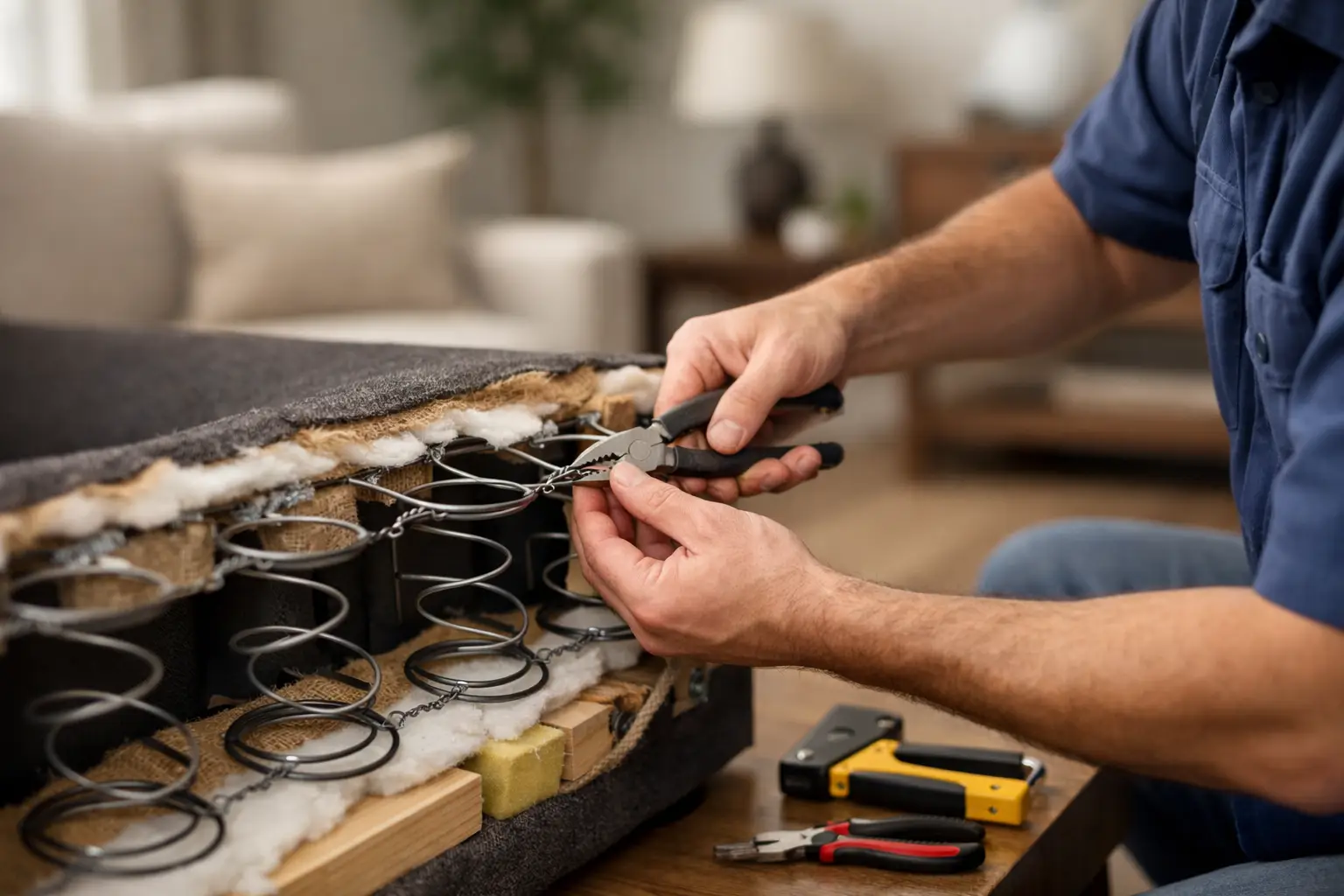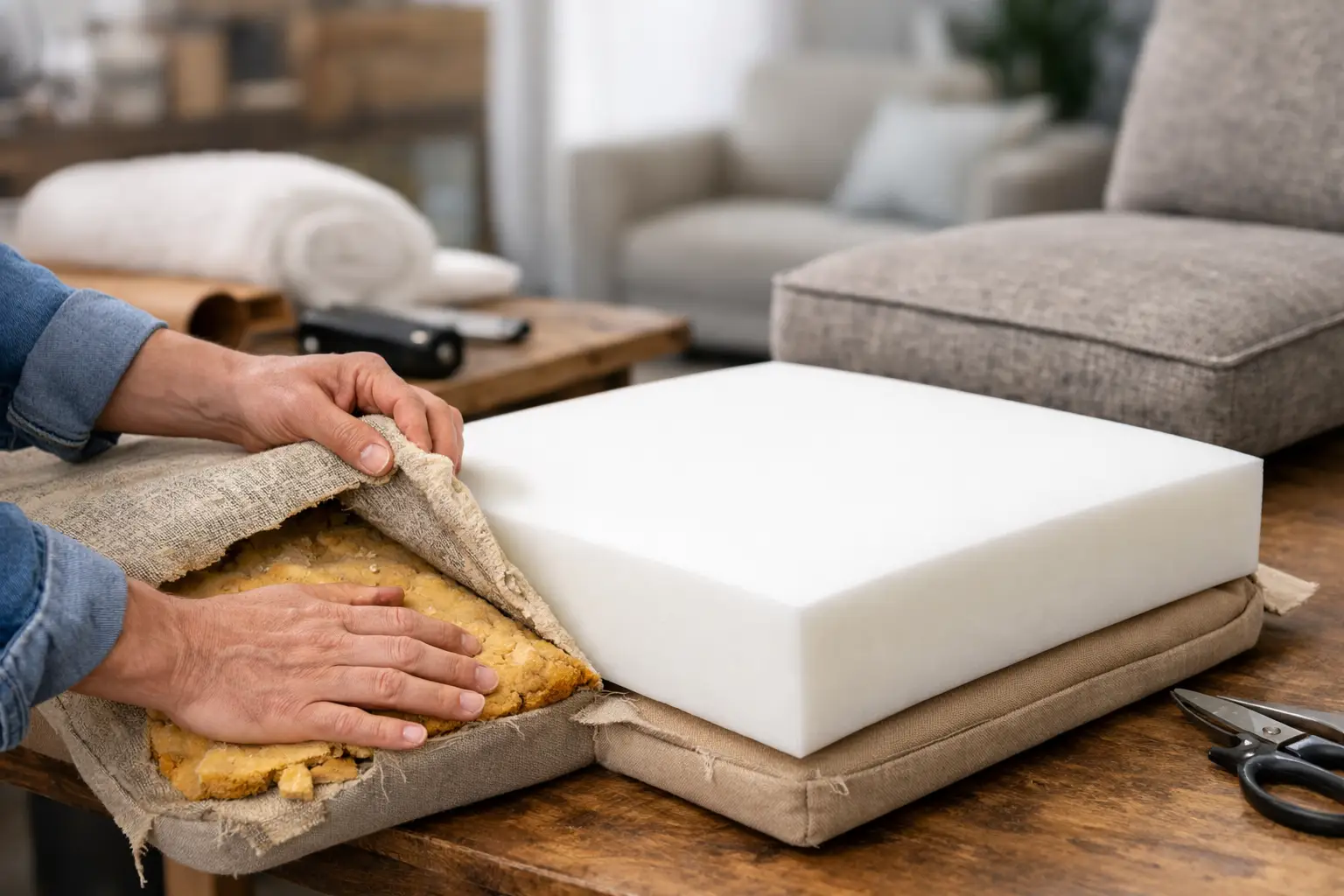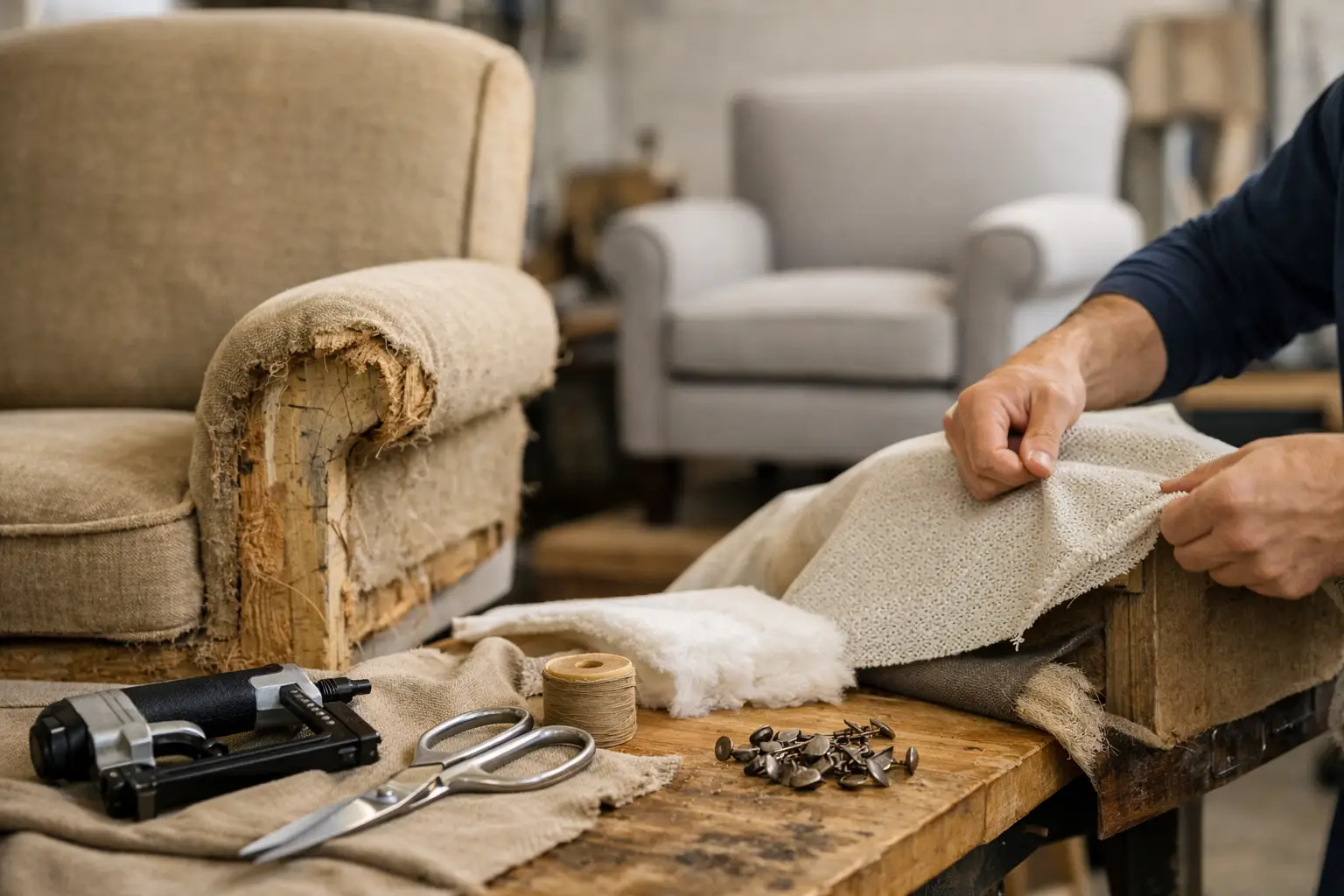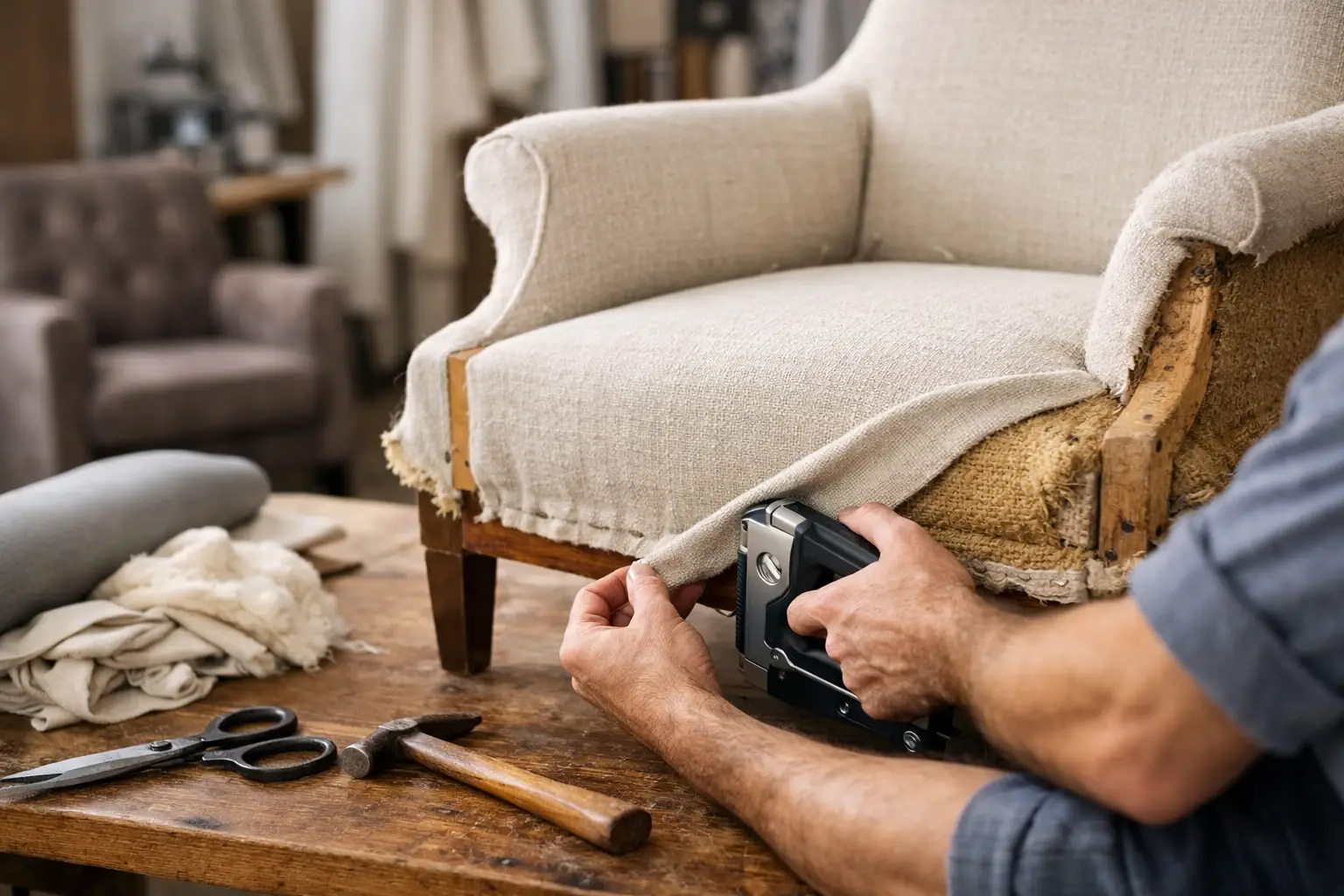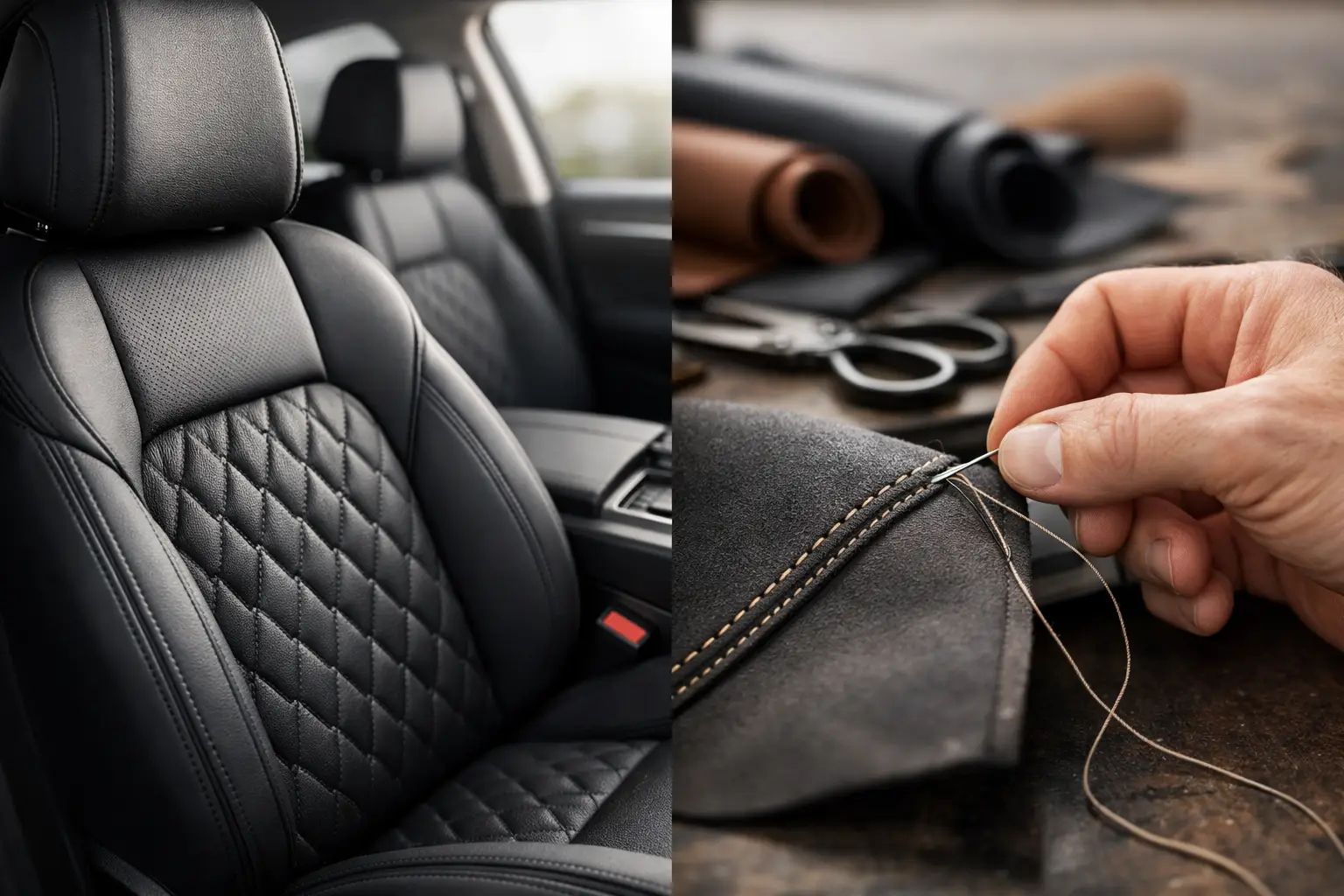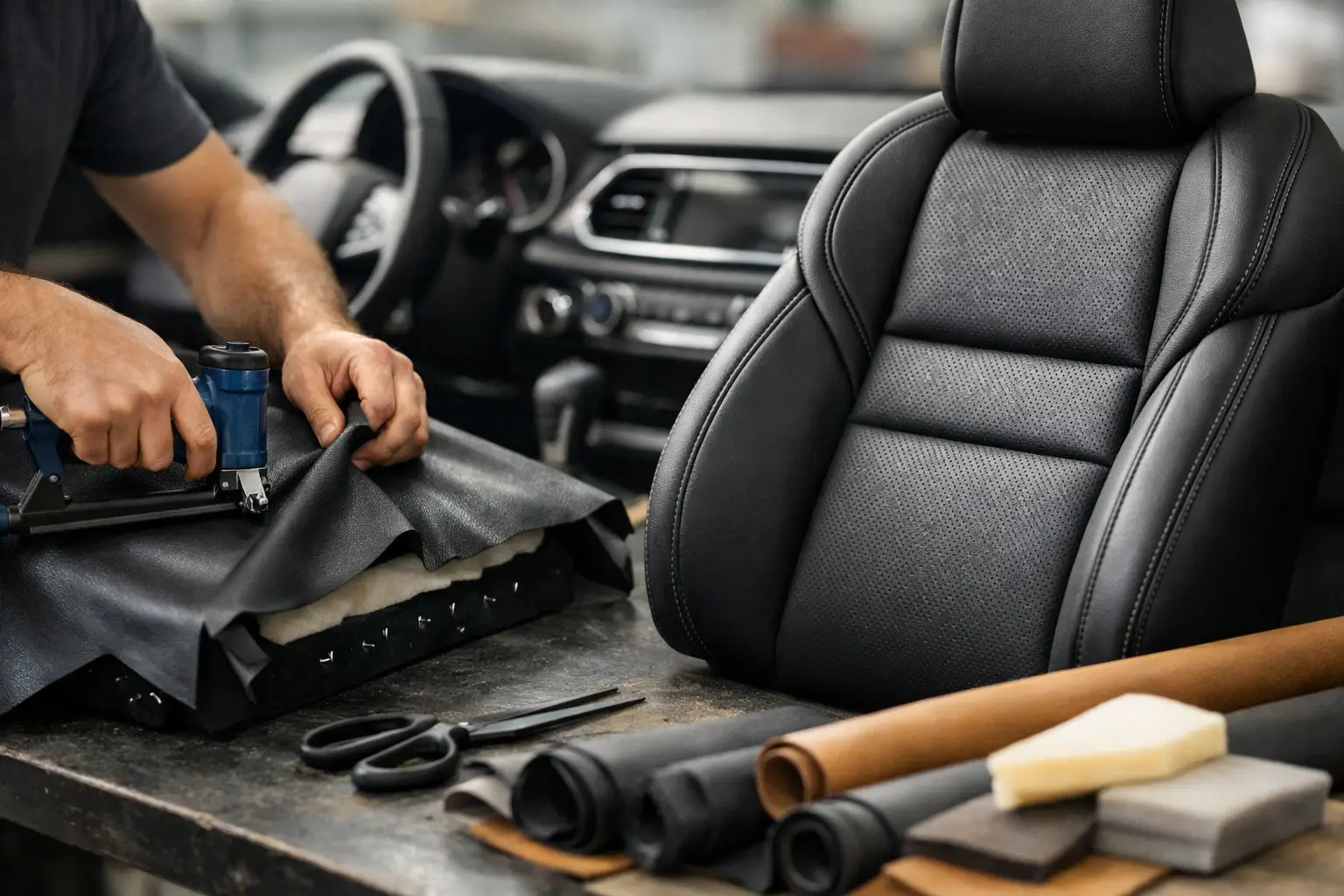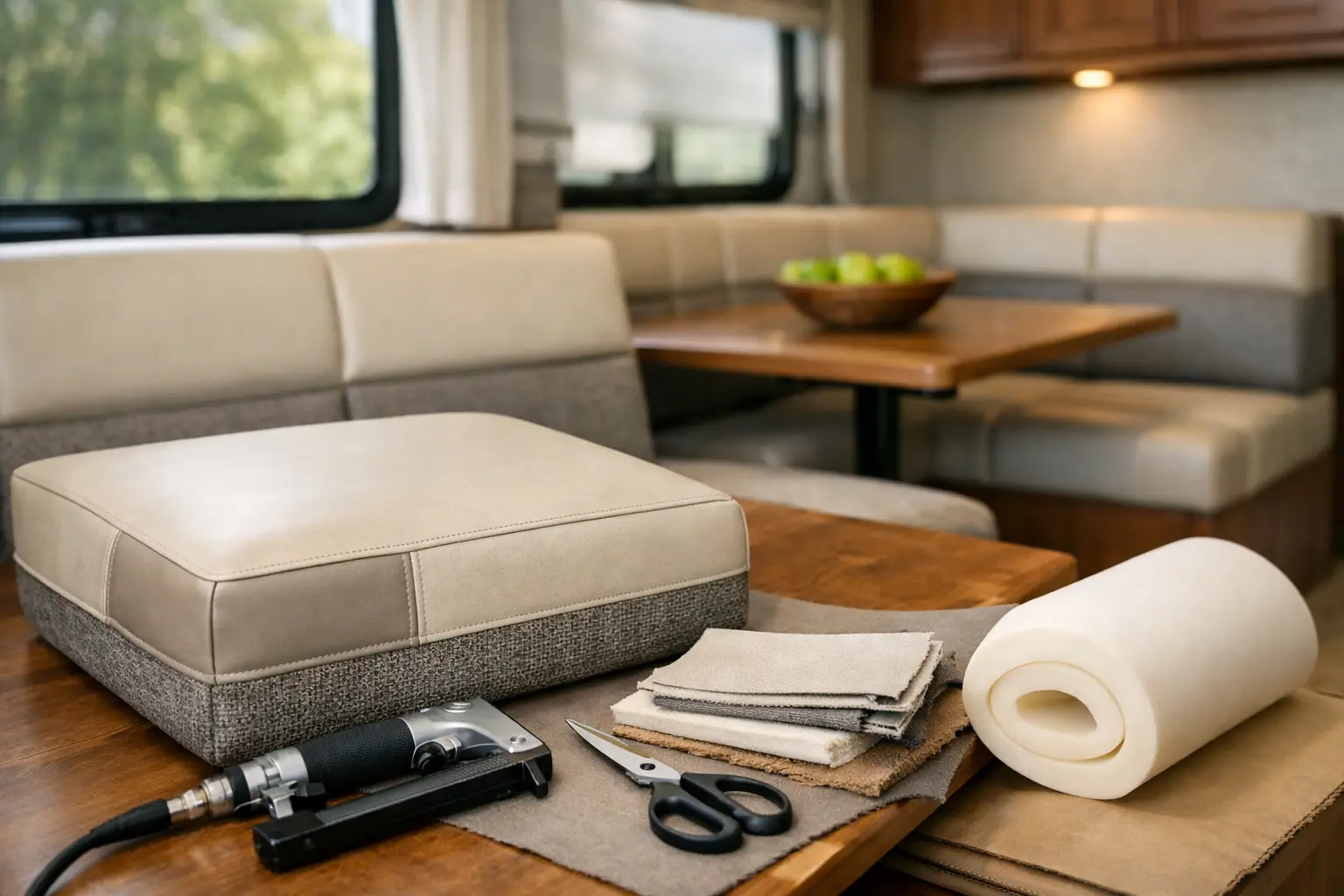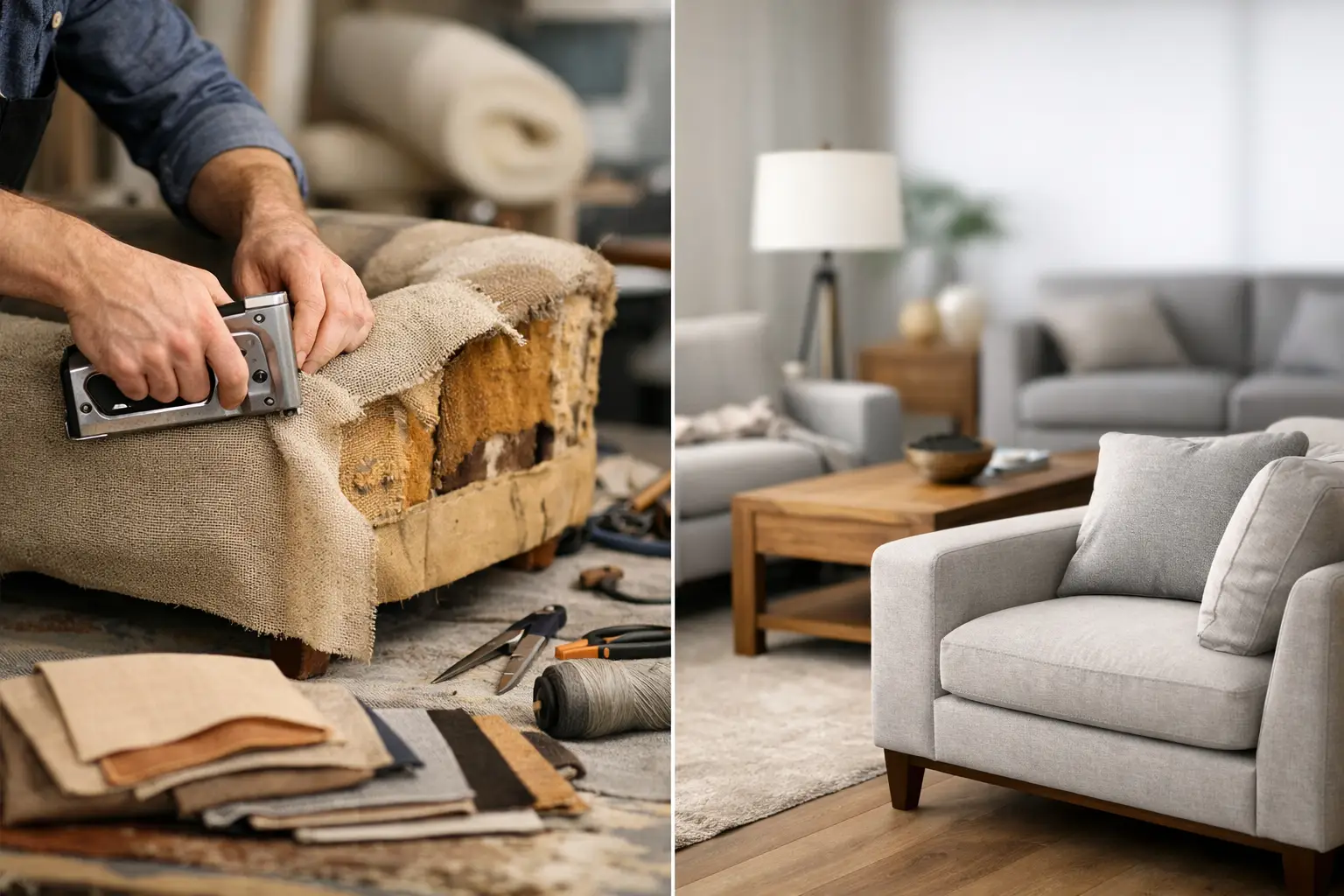
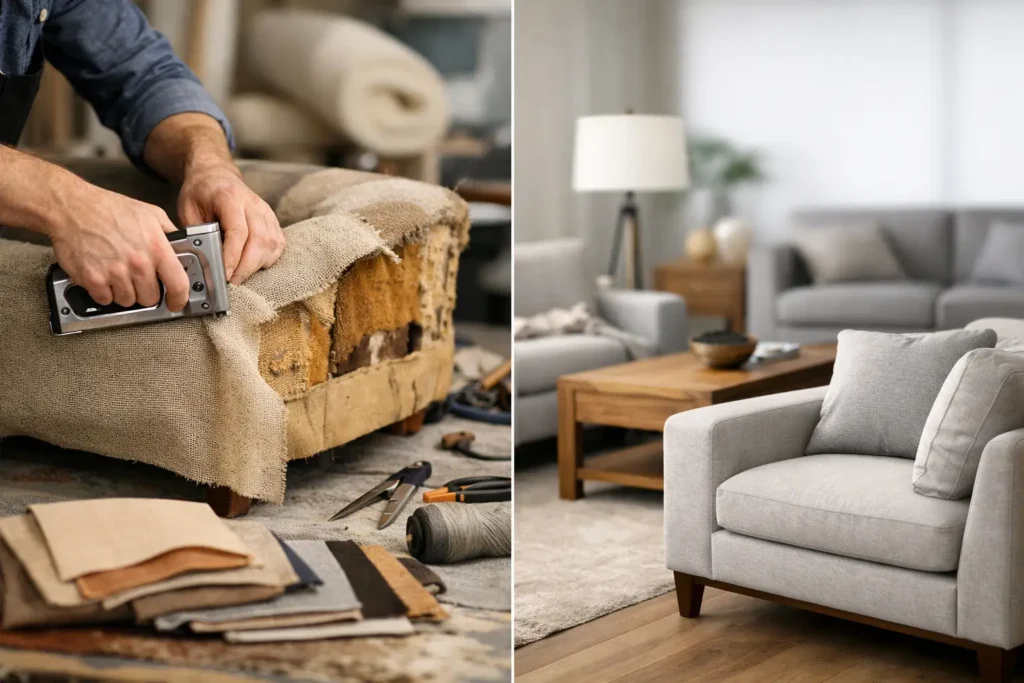
A sagging seat cushion, worn fabric, or cracked vinyl does not always mean the piece is finished. In many cases, reupholstery vs furniture replacement comes down to one question: is the underlying structure still worth saving? If the frame, springs, foam base, or interior build still has value, reupholstery can be a practical way to restore comfort, extend service life, and update the look without starting over.
For homeowners, business owners, and owners of cars, boats, RVs, motorcycles, and aircraft, the right choice depends on more than surface appearance. Cost matters, but so do build quality, fit, customization, durability, and how the piece is used every day. Replacement is sometimes the right call. Just as often, restoration gives you a better result.
How to compare reupholstery vs furniture replacement
The fastest way to evaluate the decision is to look at structure first, appearance second. Many pieces look worn because the fabric has faded, cushions have softened, or seams have failed. Those are surface-level problems. A well-built chair, sofa, booth, captain’s chair, or motorcycle seat may still have a solid frame and years of life left once the materials are replaced.
Replacement tends to make more sense when the internal structure is failing beyond reasonable repair. That includes severe frame breakage, widespread rot, water damage that has compromised the build, or low-quality construction that was never intended to last. If a piece has weak particleboard framing, poor support, or repeated failures in multiple areas, putting new upholstery on it may not be the best investment.
The real difference is this: replacement buys a new product, while reupholstery preserves and rebuilds an existing asset. If that asset has quality, function, or importance, restoration deserves a serious look.
When reupholstery is the better investment
Reupholstery is often the better choice when the piece was built better than many modern replacements. Older residential furniture frequently has stronger hardwood frames, better joinery, and more durable construction than newer mass-produced alternatives. The same principle applies in commercial and specialty settings. Restaurant booths, waiting room seating, marine cushions, RV dinettes, and automotive interiors may only need new materials and targeted repairs to perform like they should again.
It also makes sense when fit matters. A replacement sofa may not match the room. A new boat cushion may not fit existing contours correctly. An aftermarket vehicle seat cover may not deliver the same finish or comfort as a properly rebuilt seat. Reupholstery allows the piece to stay exactly where and how it was designed to work, while updating the materials around that structure.
Sentimental value matters too. Family heirlooms, inherited chairs, custom furniture, and specialty interiors often cannot be replaced in any meaningful way. Even when a similar product exists, it may not carry the same craftsmanship or significance. Restoring it keeps the original piece in use rather than reducing it to a memory.
Then there is customization. Replacement gives you whatever the manufacturer offers. Reupholstery gives you control over fabric, vinyl, leather, foam density, stitching details, durability level, and in many cases structural improvements. That matters for people who want a specific look, a better seating feel, or materials suited to heavy use.
When replacement makes more sense
Not every piece should be restored. If the frame is weak, the internal damage is extensive, and the original quality was low to begin with, replacement may cost less and perform better. This is common with some fast-manufactured furniture where the visible upholstery hides a short service life.
Replacement can also be the practical option when timelines are tight and exact matching is not important. For example, if a rental property needs a quick furnishing solution or a business is standardizing low-cost seating across multiple locations, replacement may be the easier path.
There are also cases where style changes drive the decision. If the size, shape, or configuration no longer works, reupholstery will not solve that by itself. A worn sectional that is too large for the room will still be too large after new fabric. A damaged bench seat in a work vehicle may still be the wrong layout for the current use. Reupholstery improves what is there. It does not turn one form into another unless the project also includes custom modification.
Cost is important, but it is not the whole calculation
People often compare the price of reupholstery to the sticker price of a new item and stop there. That can be misleading. A low retail price may reflect lower-grade materials, lighter frames, thinner foam, and shorter lifespan. Reupholstery may cost more upfront than buying a budget replacement, but still provide better long-term value if the original piece is worth saving.
This is especially true for commercial seating and specialty interiors. Replacing restaurant booths, office seating, marine upholstery, aircraft panels, or RV cushions is not always as simple as buying something off the shelf. There may be fit issues, downtime, installation concerns, or finish requirements that make custom restoration the more efficient option.
A proper comparison should include expected lifespan, material performance, comfort, structural quality, and how closely the final result matches your needs. Cheapest and best are not always the same thing.
Material quality changes the outcome
One of the strongest arguments for reupholstery is the ability to choose materials based on actual use. A household with pets and children needs something different than a formal sitting room. A restaurant needs different performance than a church pew. A boat, motorcycle, patio cushion, or RV interior needs materials that can handle sun, moisture, and temperature swings.
Replacement products are often built to hit a price point. Reupholstery allows material selection around durability, cleanability, comfort, and appearance. That means high-traffic vinyls for commercial seating, marine-grade materials for water exposure, upgraded foam for better support, or fabrics selected to match an existing interior. In many projects, the material choice is what takes the result from acceptable to lasting.
Reupholstery vs furniture replacement for commercial spaces
Commercial clients usually have an added layer to the decision: operational disruption. Replacing all seating in a restaurant, hotel, theater, office, or medical setting can create purchasing delays, layout changes, and inconsistent results across the space. Reupholstery often allows businesses to preserve existing seating layouts while refreshing the appearance and replacing worn materials.
That is particularly useful when the seating was originally custom built or integrated into the space. Booths, wall panels, waiting area seating, auditorium chairs, and hospitality furniture often make more sense to restore than replace. The structure is already there. The need is usually improved appearance, better durability, and continued function.
For high-use environments, repair also matters. Torn seams, collapsed foam, broken supports, and damaged panels do not always require complete replacement. In many cases, targeted restoration extends the life of the asset and keeps the space looking professional.
The same decision applies beyond household furniture
The phrase reupholstery vs furniture replacement usually brings sofas and chairs to mind, but the same decision applies across many categories. Vehicle interiors, boat seating, RV cushions, motorcycle seats, patio cushions, and aircraft upholstery all involve the same core question: replace the whole unit, or restore the structure and renew the materials?
In these settings, custom fit becomes even more important. Factory dimensions, contouring, mounting points, and usage conditions make replacement more complex than a simple retail purchase. Rebuilding existing seats and panels often produces a better fit and a more durable result, especially when foam, support layers, and upholstery materials are selected for the application.
What to look for before you decide
A good evaluation starts with the frame, support system, and foam condition. If those are solid or repairable, reupholstery is often worth considering. If the piece has custom dimensions, sentimental value, or better-than-average construction, that strengthens the case for restoration.
It also helps to think about your end goal. If you want a quick substitute, replacement may be enough. If you want the piece to look right, feel better, last longer, and suit the space or vehicle properly, custom upholstery work usually offers more control.
An experienced shop can tell you whether the structure justifies the investment, what repairs are needed, and what materials make sense for the application. That is especially useful when the damage is not only cosmetic. Rocky Mountain Upholstery works on everything from residential furniture to automotive, marine, RV, motorcycle, aviation, and commercial interiors, so the decision can be based on how the piece is actually built and used, not guesswork.
Sometimes replacement is the right move. But when quality, fit, comfort, or character still exist under the worn surface, restoring what you already have can be the smarter path and the one that holds up better over time.