A sofa usually tells you what is failing before it fully gives out. You sit down and feel the frame through the cushion. The front edge collapses first. The seat looks wrinkled even when no one is using it. If you are wondering how to repair sagging sofa cushions, the right fix depends on what is actually worn out – the foam, the fiber fill, the cushion wrap, or the support underneath.
That distinction matters. Many sagging cushions are treated with quick fillers or extra batting, only to flatten again a few weeks later because the core problem was never addressed. A better repair starts with identifying how the cushion was built and which materials have broken down over time.
What causes sofa cushions to sag
Seat cushions fail in a few different ways, and each one feels a little different. When the cushion feels soft and stays compressed after use, the foam core has usually lost resilience. When the seat looks uneven or lumpy but still has some firmness, the outer fiber wrap may be shifting or breaking down. If the cushion seems fine on a table but sags badly on the sofa, the issue may be under the cushion, not inside it.
Construction also plays a role. Loose back cushions and boxed seat cushions age differently than attached pillow-back designs. Lower-density foam breaks down faster, especially in heavily used family rooms, rental properties, and commercial seating. Sun exposure, moisture, body weight, and everyday use all speed up wear.
How to inspect a sagging cushion before you repair it
Before you buy foam or open a cushion cover, remove the cushion and check it on a flat surface. If it still looks collapsed off the sofa, the fill materials are likely the problem. If it regains shape off the frame but sinks in use, inspect the decking, springs, webbing, or platform beneath it.
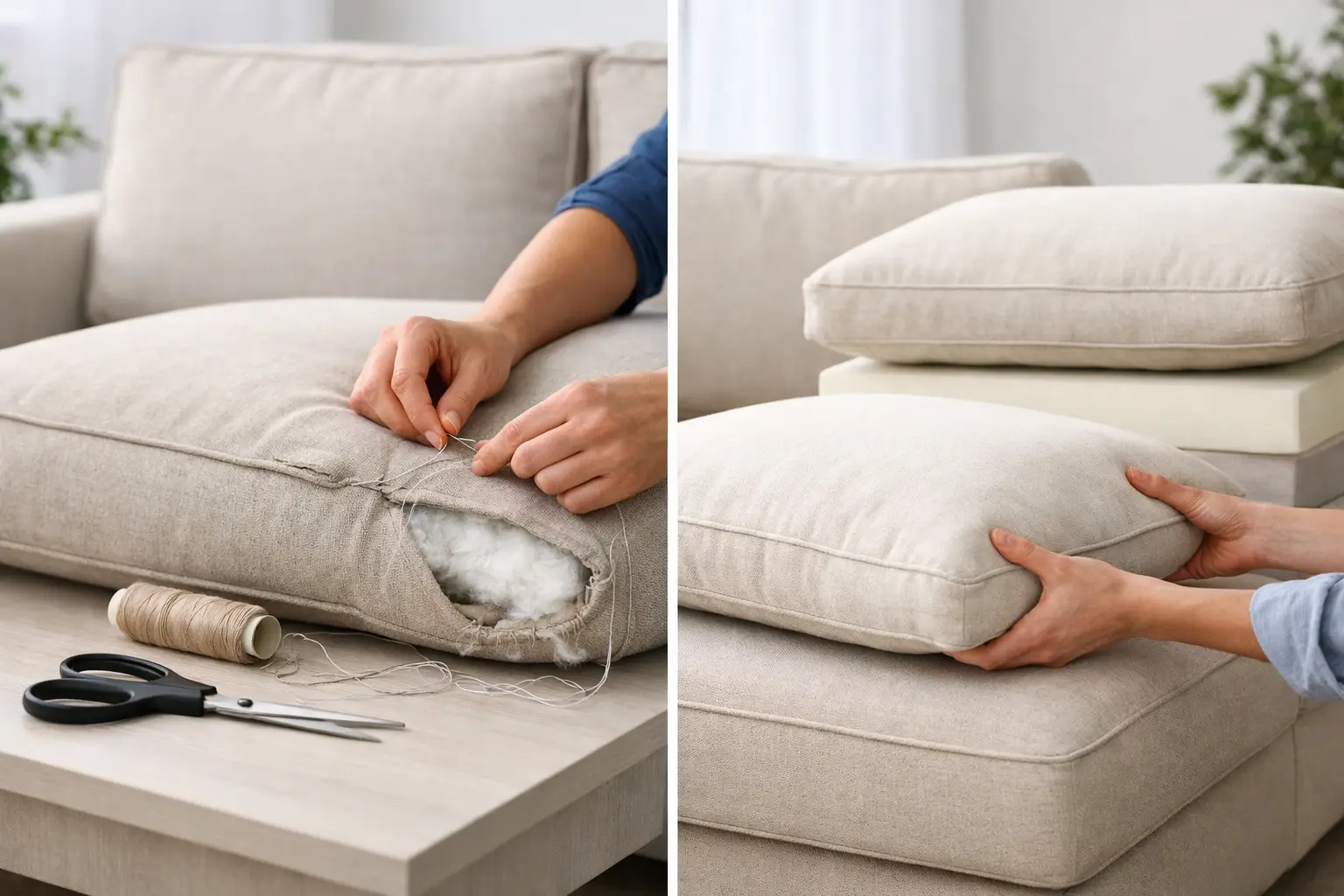
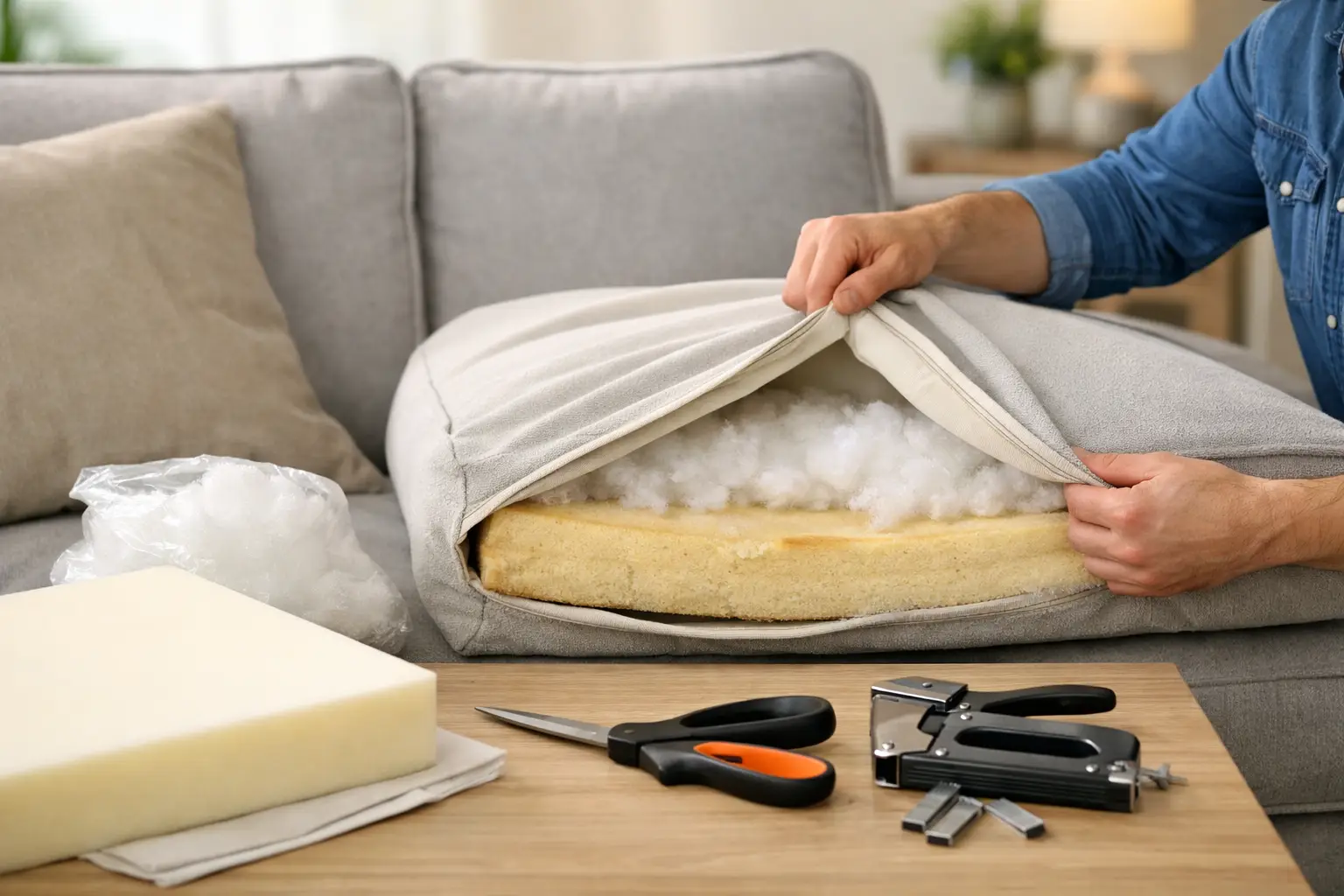
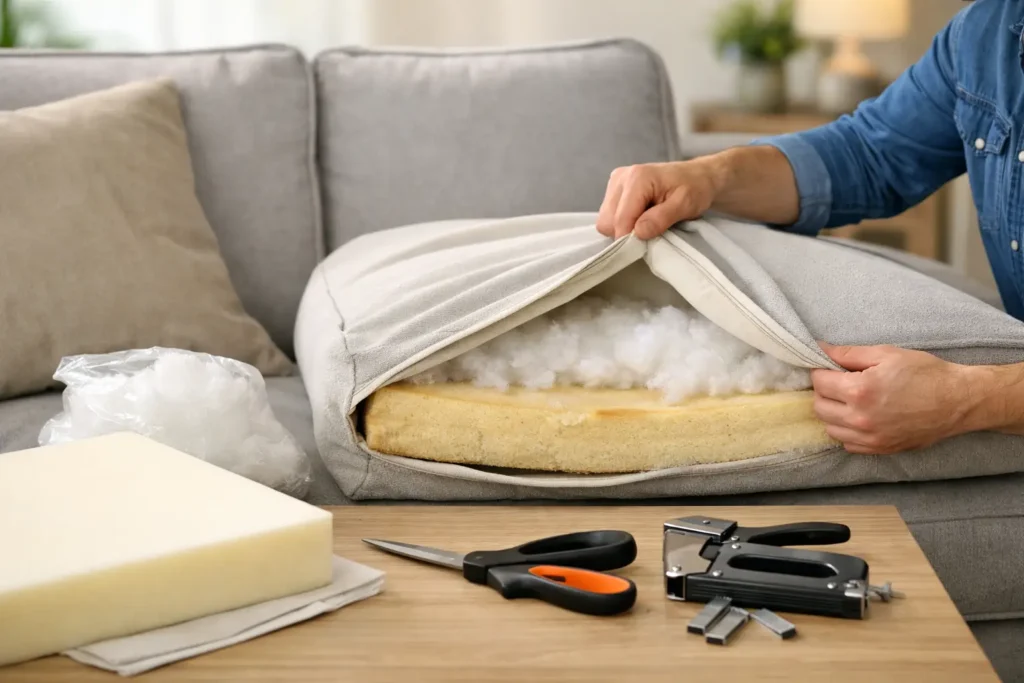
Open the zipper if the cover has one. Many seat cushions include a foam core wrapped in Dacron batting. Others use down blend, polyester fiber, or a combination construction with a foam center and softer outer channels. Look for crumbling foam, flattened wrap, torn ticking, or loose fill migration. Push down on the foam and release it. Good foam should rebound with some speed. If it stays compressed or feels powdery, replacement is usually the right move.
Measure carefully before ordering anything. Length, width, and thickness all matter, but so does the cushion shape. T-cushions, bullnose fronts, and curved arms require more precision than a simple rectangle.
How to repair sagging sofa cushions with the right fix
The most effective repair is usually the one that matches the original construction while improving the weak point. In some cases that means replacing only the wrap. In others, it means rebuilding the entire cushion insert.
Replacing flattened batting or fiber wrap
If the foam core still has structure but the cushion looks loose, wrinkled, or slightly deflated, replacing the outer batting may be enough. The old Dacron wrap can compress over time and stop filling out the cover properly. New batting restores shape, smooths the edges, and gives the cushion a fuller appearance.
This works best when the foam still supports weight and rebounds well. It will not correct a seat that bottoms out when someone sits down. Think of it as a contour and appearance repair rather than a structural one.
Adding a foam topper or foam layer
A thin foam layer can help when the existing core is only mildly worn and you want a firmer seat feel. This is sometimes used to buy more time from a cushion that is not completely failed. The result depends on thickness, density, and how tightly the cover fits.
There is a trade-off here. Adding material to a worn insert can overstuff the cover and distort the shape, especially on tailored furniture. It can also shift over time if it is not cut and wrapped correctly. For a short-term fix, it may help. For a long-term repair, full foam replacement is usually cleaner and more consistent.
Replacing the foam core
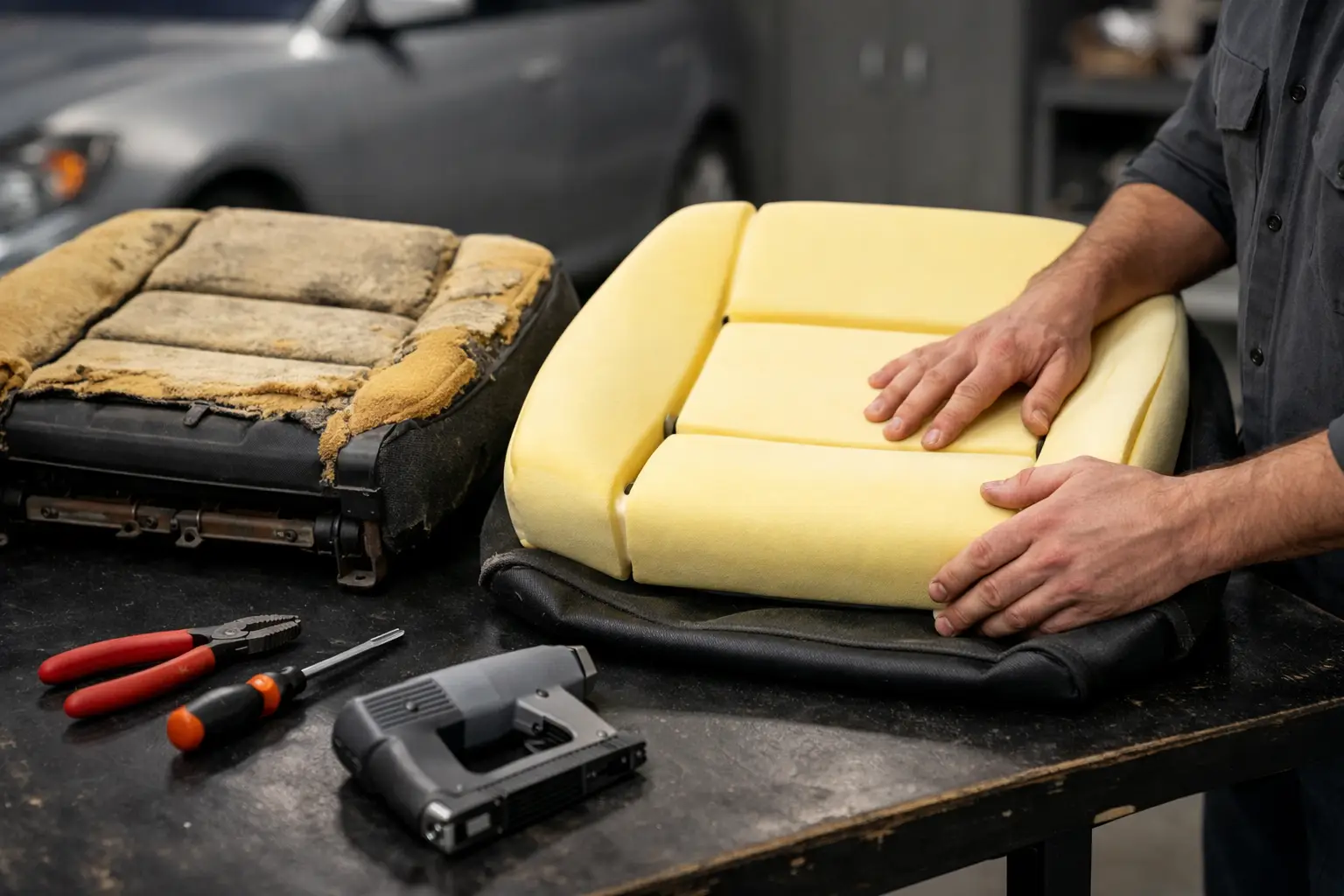
When the cushion has lost support, replacing the foam core is the most reliable solution. High-density foam holds shape longer and performs better under regular use. The firmness level should match the furniture style and how the piece is used. A formal sofa may call for a firmer seat, while a casual family room sectional often needs a balance of support and comfort.
Foam density and firmness are not the same thing. A cushion can feel soft at first touch but still be made from durable, high-quality foam. This is where many off-the-shelf replacements fall short. They may feel acceptable for a month or two, then start collapsing because the material is not rated for sustained seating use.
Restuffing down blend or fiber-filled cushions
Some sofa cushions do not use a solid foam core at all. Back cushions, knife-edge pillows, and certain casual seat designs may rely on loose fill. These can often be restuffed or rebuilt, but they require the right fill type and the right volume.
Overfilling makes cushions look tight and unnatural. Underfilling leaves them limp. If the insert casing is torn or the internal channels have failed, simply adding more fill will not solve the problem. The insert may need to be remade so the fill stays evenly distributed.
Don’t overlook the support under the cushion
One of the most common mistakes in how to repair sagging sofa cushions is focusing only on the insert. If the spring system, webbing, or seat platform is failing, even a brand-new cushion will sag.
Take a close look under the seat. Sinuous springs can bend or detach. Eight-way hand-tied spring systems can loosen. Webbing can stretch. Decking fabric can tear, letting the cushion settle lower than it should. In older or heavily used pieces, there may be a combination of cushion wear and frame support problems.
This is especially common with better-built furniture that is worth saving. The upholstery may still look serviceable, and the frame may be solid hardwood, but the seat system has simply aged. In that case, cushion replacement alone improves comfort only partway. A more complete repair restores the foundation so the new cushions perform the way they should.
When a DIY repair makes sense
If the cushion cover has a zipper, the shape is straightforward, and the foam is easy to access, some homeowners can handle a basic insert replacement. The best candidates are simple box cushions with standard dimensions and no major cover damage. If the sofa is used in a casual room and appearance perfection is not critical, a DIY repair may be enough.
The challenge is getting a professional fit. Cushion inserts are not just cut to size. They need the right density, proper wrap, clean edges, and enough fill to support the cover without strain. If the cushion has welting, boxing, topstitching, or irregular shaping, small measuring errors tend to show.
When professional cushion repair is the better option
Professional repair is usually the better route when the sofa has custom cushions, attached upholstery issues, or underlying structural wear. It also makes sense when the furniture has real value – whether that value is financial, sentimental, or practical.
A quality sofa often deserves more than a temporary patch. The same is true for restaurant seating, waiting room furniture, RV seating, marine cushions, and other high-use upholstered pieces. Material selection matters more in those settings because the cushion has to hold up under repeated use, changing temperatures, and sometimes UV or moisture exposure.
An experienced upholstery shop can evaluate the whole seating system, not just the cushion insert. That means matching foam to use conditions, rebuilding wraps, correcting fit, and identifying support failures that are easy to miss from the outside. For customers in Colorado Springs who want a repair that lasts, Rocky Mountain Upholstery handles this kind of work with the same focus on material performance and craftsmanship that applies across residential and specialty upholstery projects.
Choosing a repair that lasts
If your sofa cushions are sagging, the goal is not just to make them look fuller for a week. The goal is to restore support, comfort, and shape in a way that fits how the furniture is actually used. A guest room sofa may need a different solution than a daily-use sectional. A family heirloom may justify a more complete rebuild than a low-cost mass-market piece.
That is why the best repair is rarely one-size-fits-all. Sometimes a new wrap is enough. Sometimes the foam needs to be replaced. Sometimes the cushion is only telling you that the real problem is deeper in the seat. A careful inspection and the right materials make the difference between a quick cosmetic improvement and a repair that truly brings the piece back to life.
If your sofa still has good bones, sagging cushions are usually a repair problem, not a replacement problem.