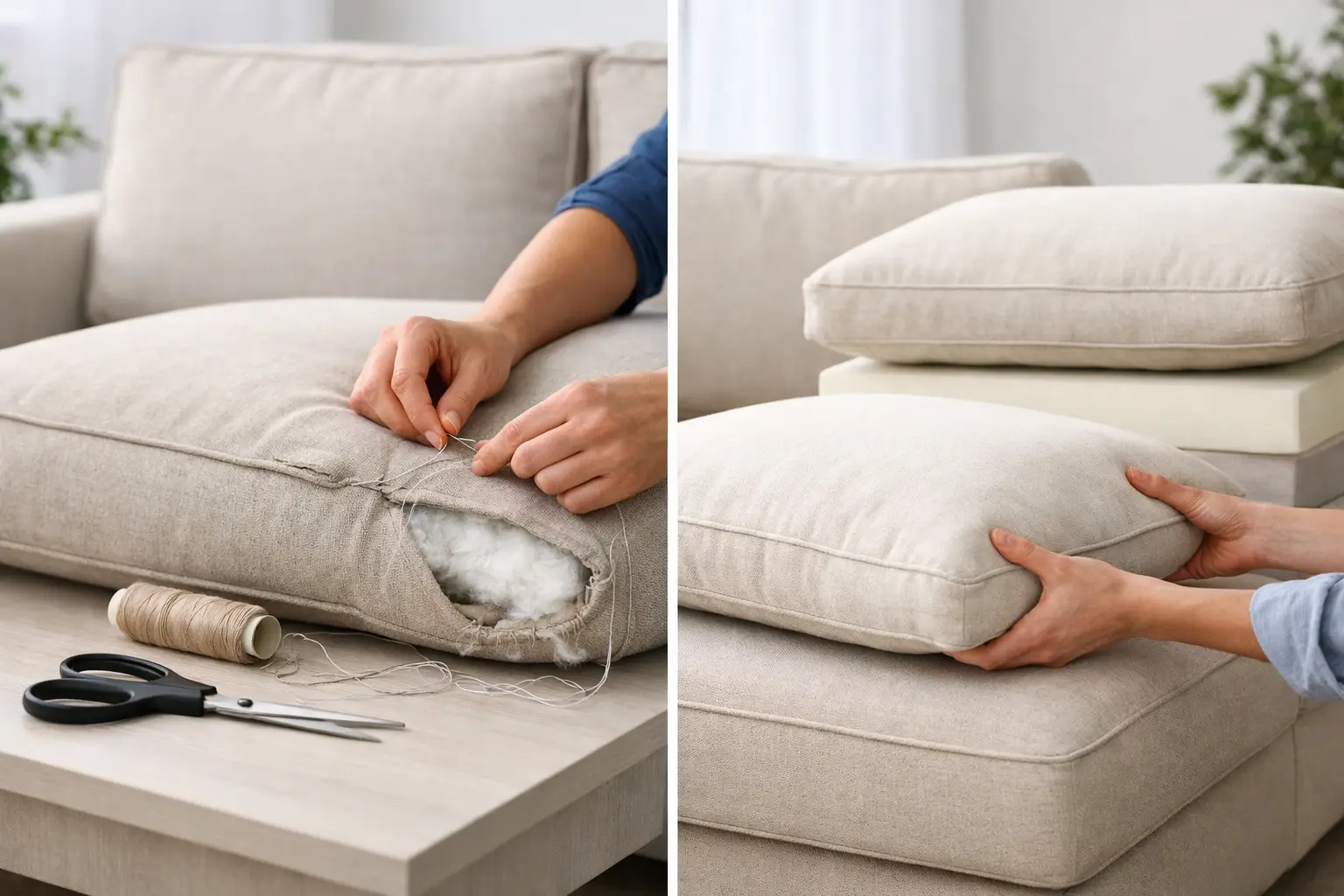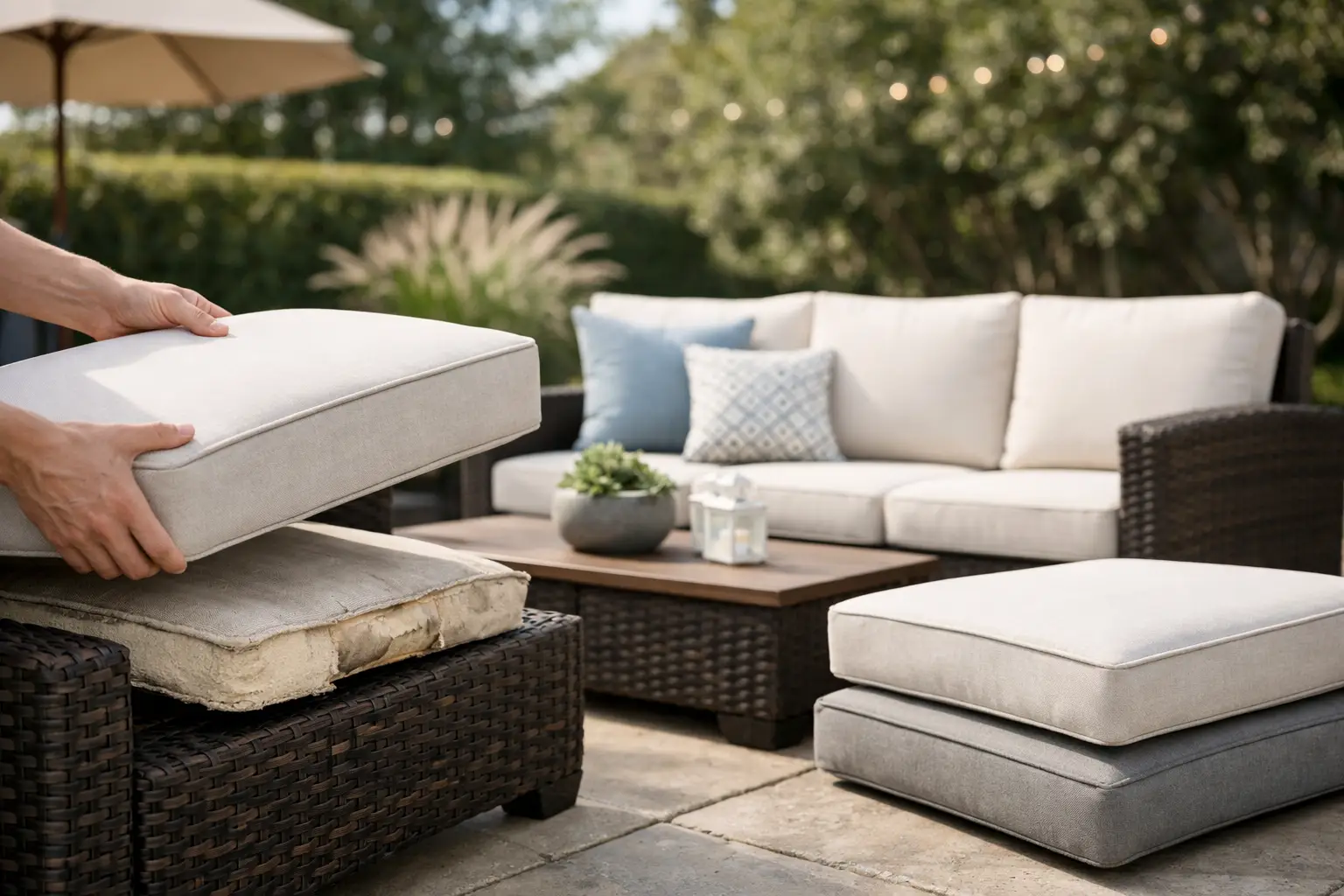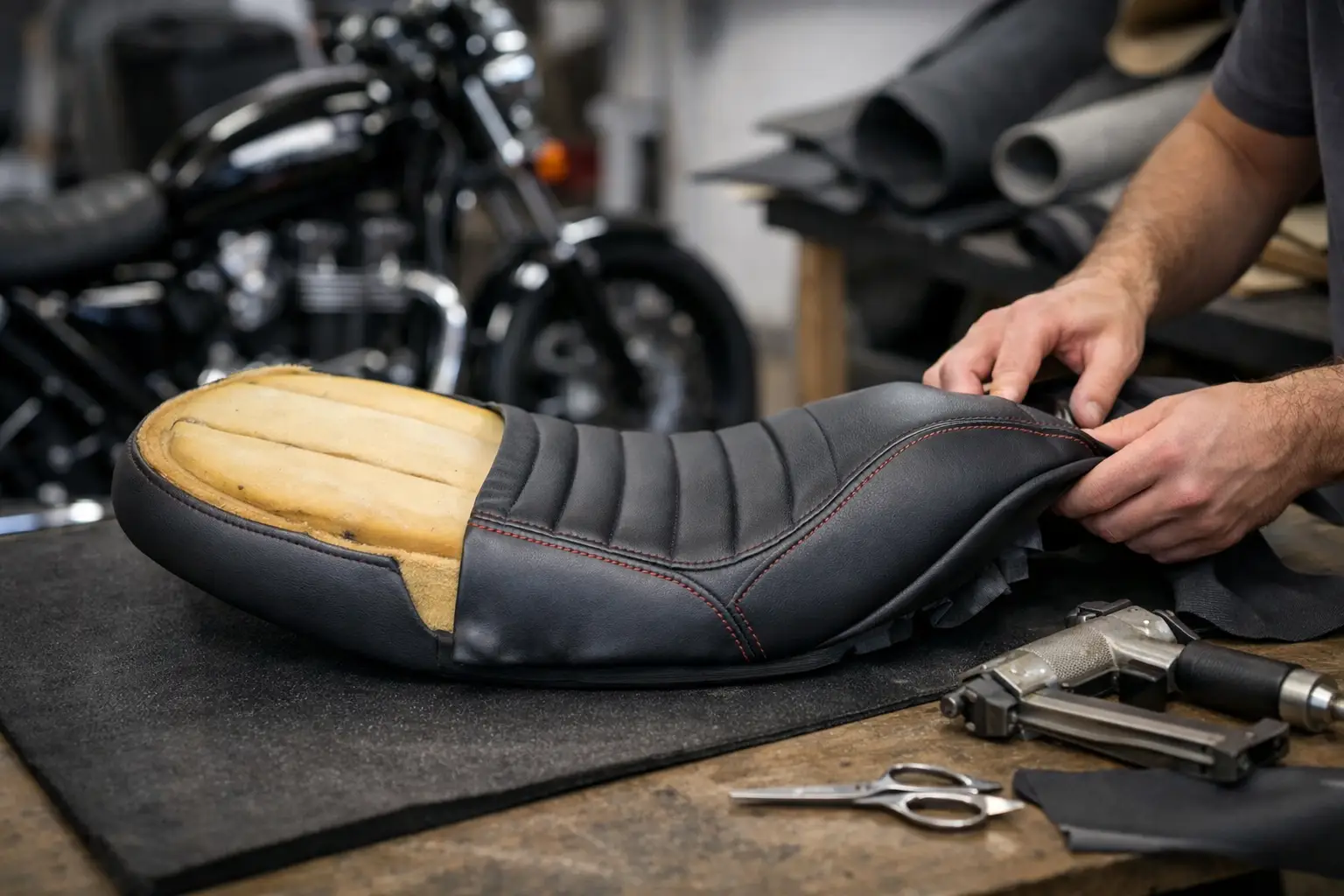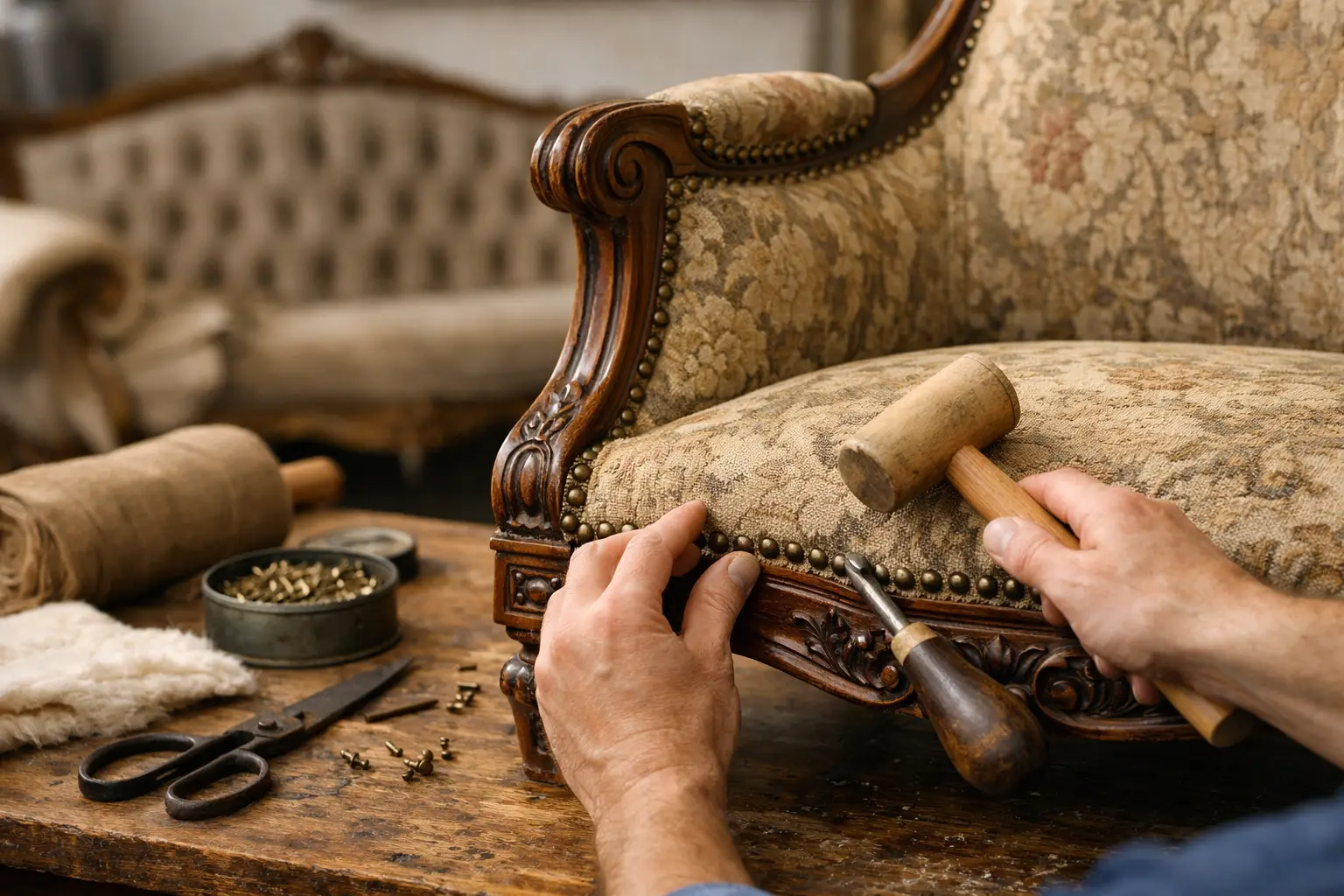
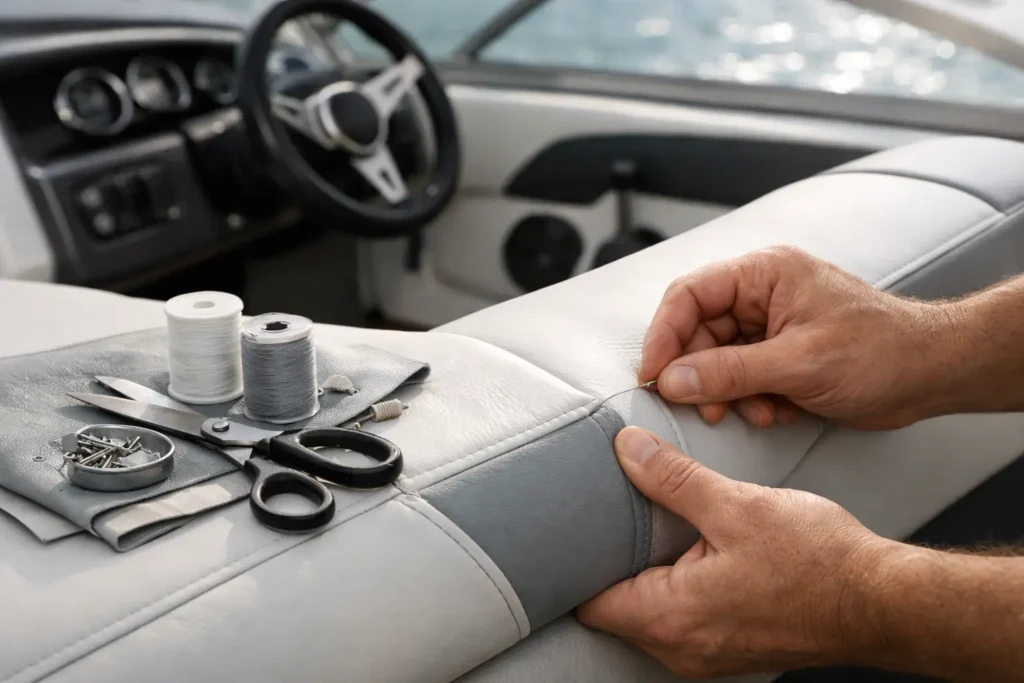
A split seam on a boat seat rarely stays a small problem for long. Sun, spray, temperature swings, and heavy use all work against marine materials, which is why boat upholstery repair is often less about cosmetics and more about protecting the seat underneath before the damage spreads.
When vinyl cracks or stitching fails, moisture gets into the foam and the base below it. That can lead to mildew, soft cushions, weakened support, and a worn appearance that makes the entire boat feel older than it is. A proper repair restores comfort and appearance, but just as importantly, it helps preserve parts of the interior that still have plenty of life left.
What boat upholstery repair usually involves
Marine upholstery takes a different kind of abuse than residential or automotive seating. Constant UV exposure dries out vinyl. Water finds its way into seams and punctures. People step, kneel, slide, and drop gear onto seats that were never meant to be treated gently. Over time, even well-built interiors begin to show it.
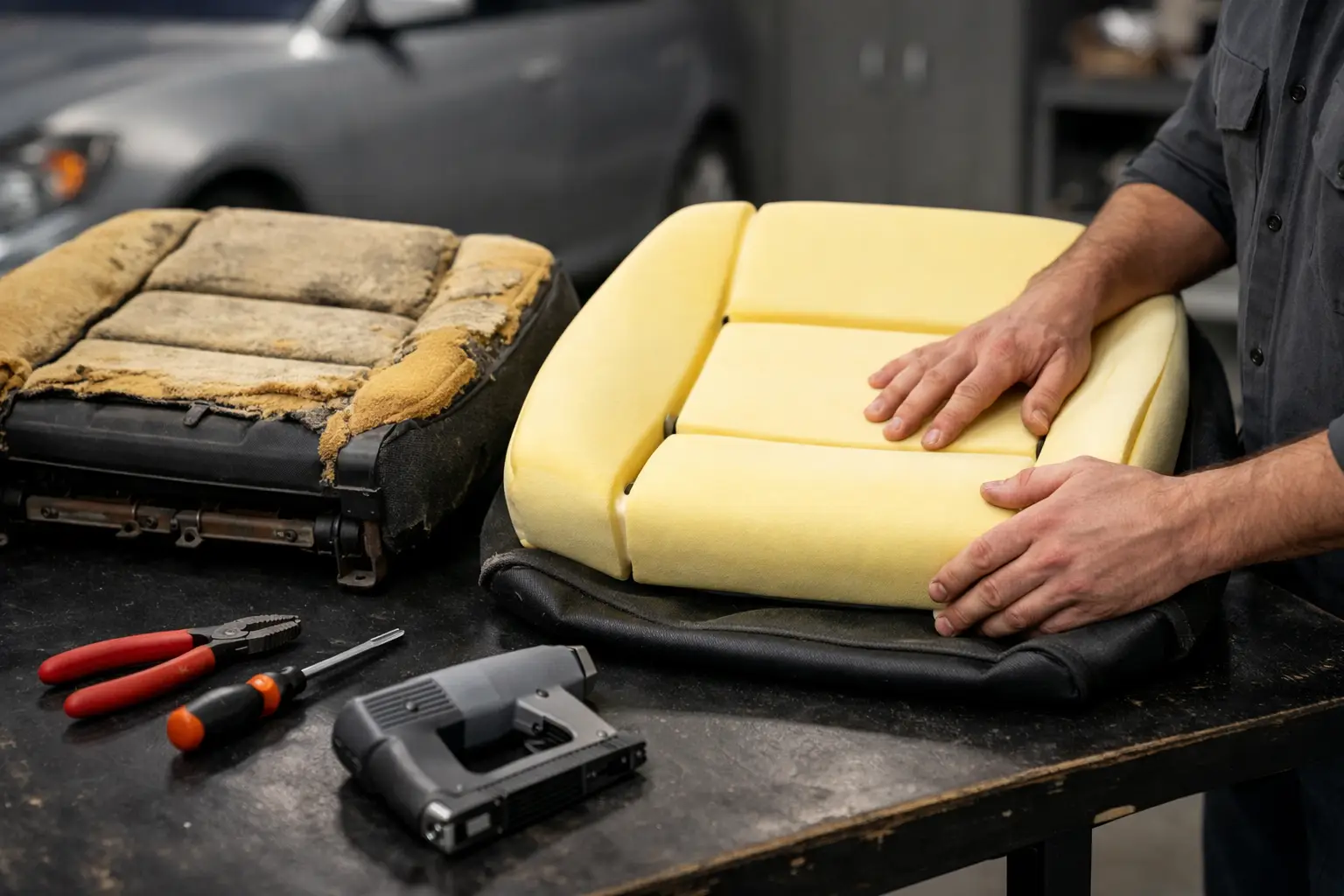
Boat upholstery repair can include patching torn vinyl, resewing split seams, replacing damaged panels, rebuilding foam, correcting loose or sagging cushions, and restoring seat bases affected by moisture. In some cases, the damage is isolated and a targeted repair makes sense. In others, the visible tear is only part of the problem, and the cushion needs to be opened up to address what is happening inside.
That distinction matters. A surface fix may improve the look for a while, but if the foam is saturated or the substrate is deteriorating, the seat will keep breaking down from underneath. Good repair work starts with identifying whether the issue is material failure, water intrusion, structural damage, or a combination of all three.
Signs your boat seats need attention now
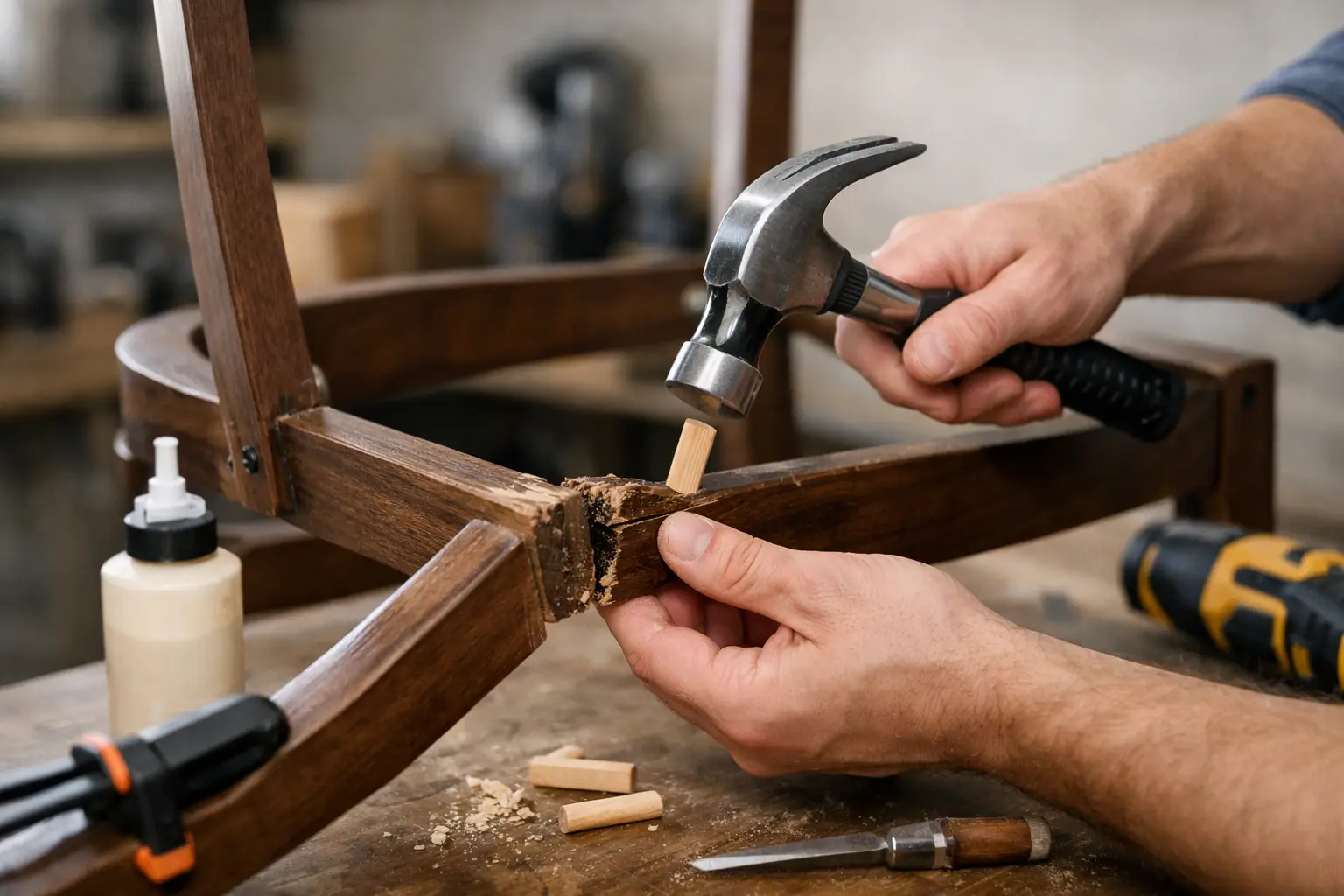
Some damage is obvious. Cracked vinyl, open seams, and foam showing through are clear signs that repair is overdue. Other problems develop more quietly. A cushion that feels lumpy, unusually soft, or slower to dry may already be holding moisture. Discoloration around seams can point to mildew or material breakdown. If a seat wobbles when you lean against it, the problem may be in the base rather than the upholstery alone.
Timing makes a difference. Repairing a split seam before it widens is usually more straightforward than replacing an entire section after water has entered the cushion. The same goes for small vinyl failures. Once UV damage spreads across multiple panels, matching the original material and restoring a uniform look becomes harder.
For owners who use their boats regularly, there is also a practical side to acting early. Worn seating is less comfortable, less attractive, and in some layouts less supportive for passengers. Delaying service often turns a manageable repair into a larger restoration.
Repair or full replacement?
This is where experience matters, because the right answer depends on the condition of the whole seat, not just the visible damage. If the foam is still supportive, the base is solid, and the damaged area is limited, repair is often the most sensible option. A localized vinyl replacement or seam rebuild can extend the life of the seat without redoing the entire interior.
If the vinyl is brittle across several cushions, colors have faded unevenly, or the underlying structure has been compromised by moisture, replacement may be the better value. Repairing one area on a generally worn-out seat can leave you with a stronger patch surrounded by aging material that fails next.
There is also the issue of appearance. On some boats, owners want the repair to blend as closely as possible with the existing upholstery. On others, especially older interiors, matching weathered vinyl perfectly is not realistic. In that case, replacing a full panel or a set of cushions may give a cleaner final result.
A dependable shop will tell you when a repair is worth doing and when it is only postponing a larger problem.
Materials matter in marine upholstery
Not all upholstery materials belong on a boat. Marine environments call for materials selected for UV resistance, moisture resistance, cleanability, and durability under repeated use. That applies to vinyl, thread, foam, and the hidden structural components beneath the finished surface.
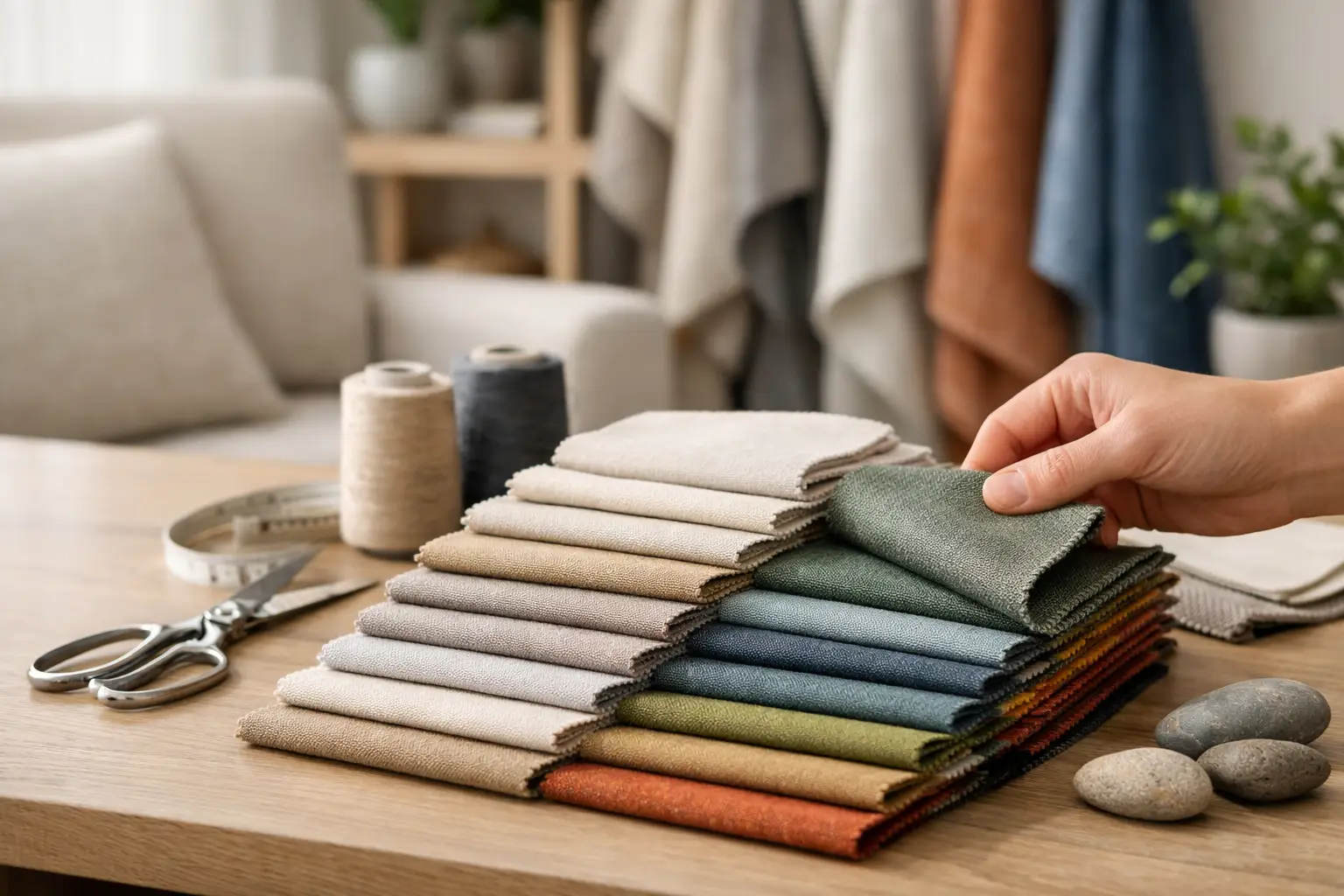
Marine-grade vinyl is designed to handle harsher exposure than standard upholstery vinyl, but even within marine materials, quality varies. Some options hold color better in strong sun. Some clean more easily after sunscreen, spills, and lake residue. Some perform better in high-flex areas where passengers regularly slide in and out.
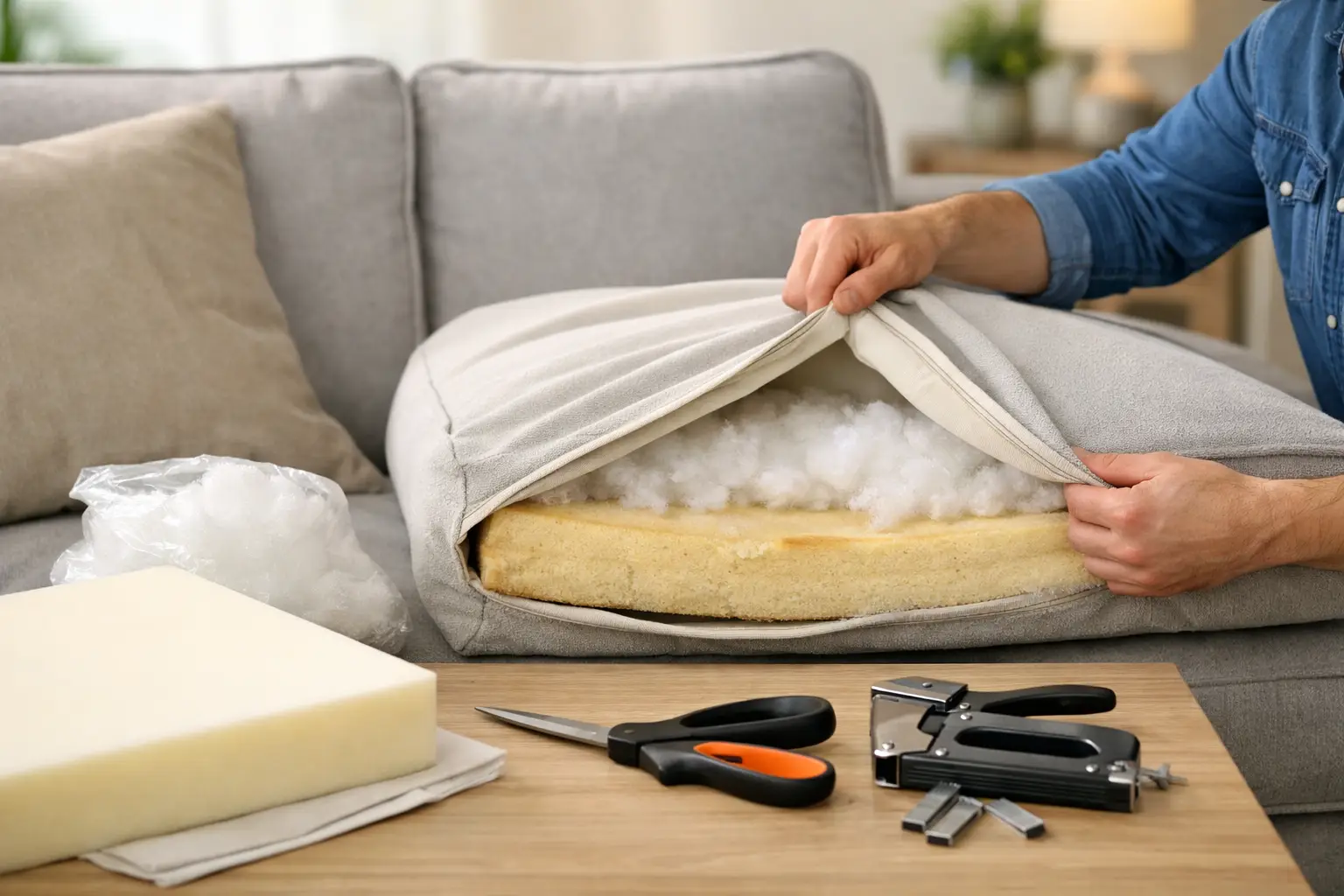
Thread is another detail that gets overlooked until seams start opening. UV-resistant thread and proper seam construction are essential in marine work because stitching often fails before the vinyl itself. Foam selection matters too. If the existing foam has absorbed water, replacing the outer cover alone will not solve the problem. The cushion needs to dry properly or be rebuilt with foam appropriate for marine use.
That is one reason boat upholstery repair should be handled as a system rather than a quick patch. The visible surface, the cushion core, and the structure beneath all affect how long the repair will last.
What skilled boat upholstery repair looks like
Quality marine upholstery work is not just about making a torn seat look acceptable again. It is about restoring the seat so it performs properly in real conditions. That means evaluating the damage, removing compromised material, rebuilding where needed, and using construction methods that hold up to use on the water.
In practice, that may involve replacing one damaged insert while preserving original surrounding panels, or removing an entire cushion cover to rebuild foam and repair the base before installing new material. On more involved projects, several seating sections may need coordinated repairs so the finish, fit, and pattern remain consistent across the interior.
Craftsmanship shows up in the details. Seams should sit straight and pull evenly. Vinyl should be fitted firmly without overstretching. Corners, curves, and high-contact areas need to be shaped with care so they do not pucker, shift, or wear prematurely. These are small things individually, but together they determine whether a repair feels temporary or truly finished.
For specialty work like marine interiors, that hands-on approach is what separates basic cover replacement from repair that actually adds service life.
Why local repair can be the smarter investment
Replacing boat seating outright can be expensive, especially when only part of the interior is damaged. If the underlying layout still works and most components are structurally sound, repair often makes more sense than starting over.
That is especially true for owners trying to preserve a well-built boat, maintain a custom interior, or avoid the disruption of full replacement. A shop with broad upholstery and restoration experience can often repair what is salvageable, replace what is not, and keep the project proportional to the actual condition of the boat.
For Colorado owners who store seasonally or use their boats heavily during warmer months, scheduling repairs before peak season can also help avoid downtime when the boat should be in use. Rocky Mountain Upholstery works with customers who need practical solutions, whether that means targeted seat repair or larger interior restoration.
How to help repairs last longer
Even the best marine upholstery benefits from regular care. Wiping seats down after use, covering the boat when stored, and addressing small cracks or seam issues early will all help extend material life. Heat and UV are constant factors, so reducing long periods of direct exposure matters.
Cleaning also needs a measured approach. Harsh cleaners can dry out vinyl or weaken stitching over time. Mild products approved for marine upholstery are generally the safer choice. If a cushion has been soaked, allowing it to dry thoroughly before storage can help prevent moisture problems from building inside.
Most of all, pay attention to early changes. A small split, a cushion that feels different, or a section that no longer fits tightly usually means the seat is asking for service before the damage spreads.
Boat interiors do not need to be perfect to be worth repairing. They need sound work, appropriate materials, and a clear understanding of what can be restored. When that happens, worn seating can become comfortable, durable, and ready for many more seasons on the water.