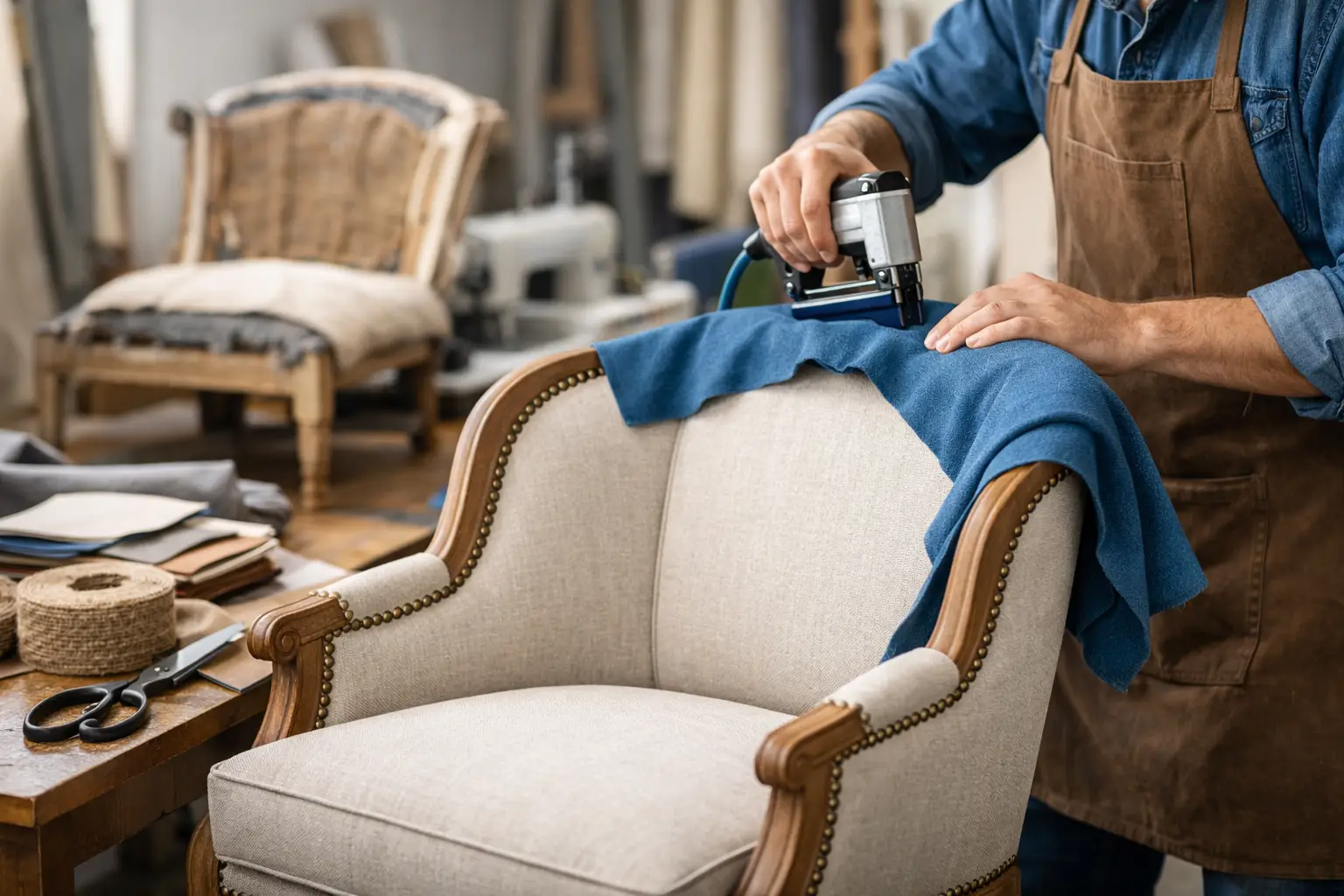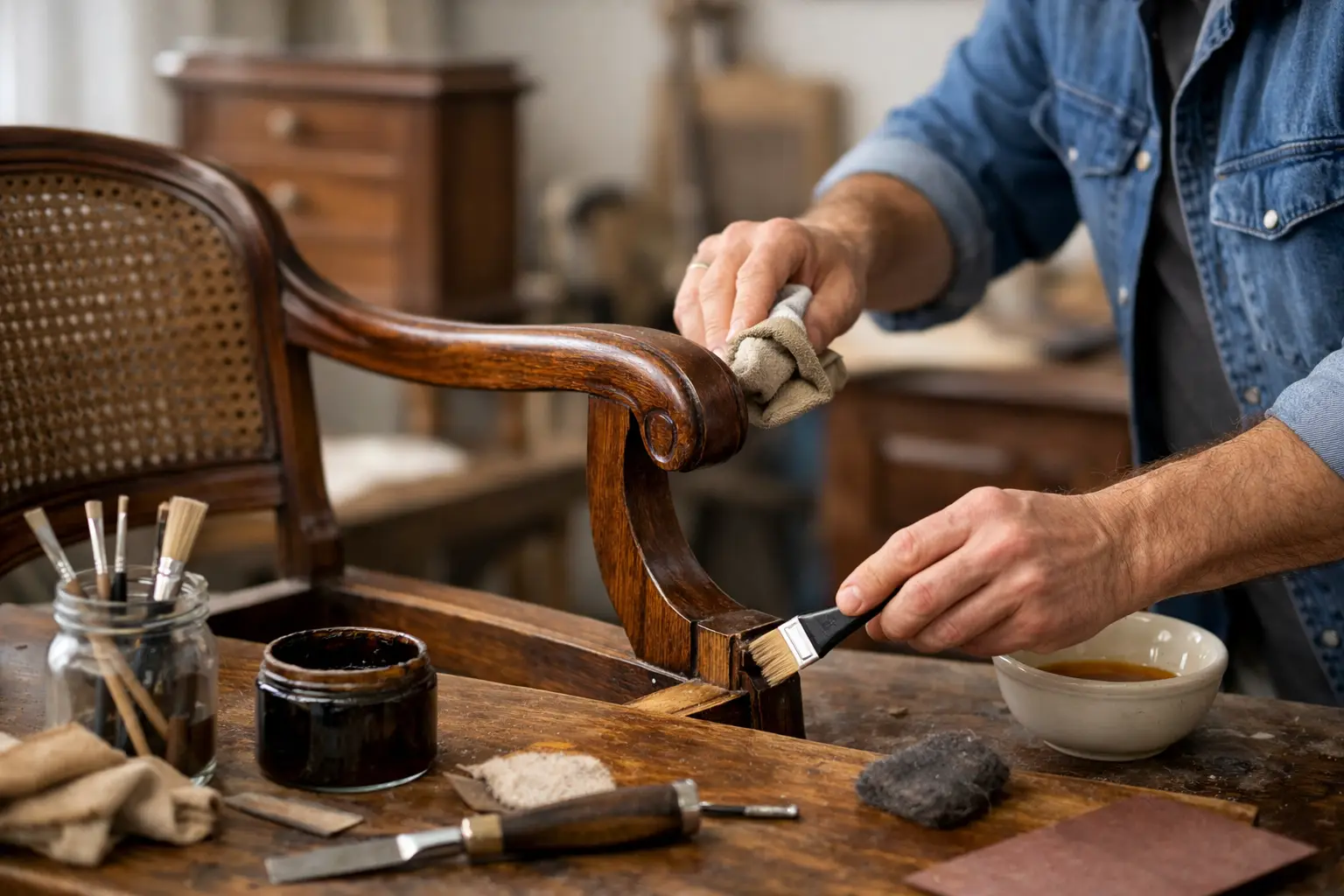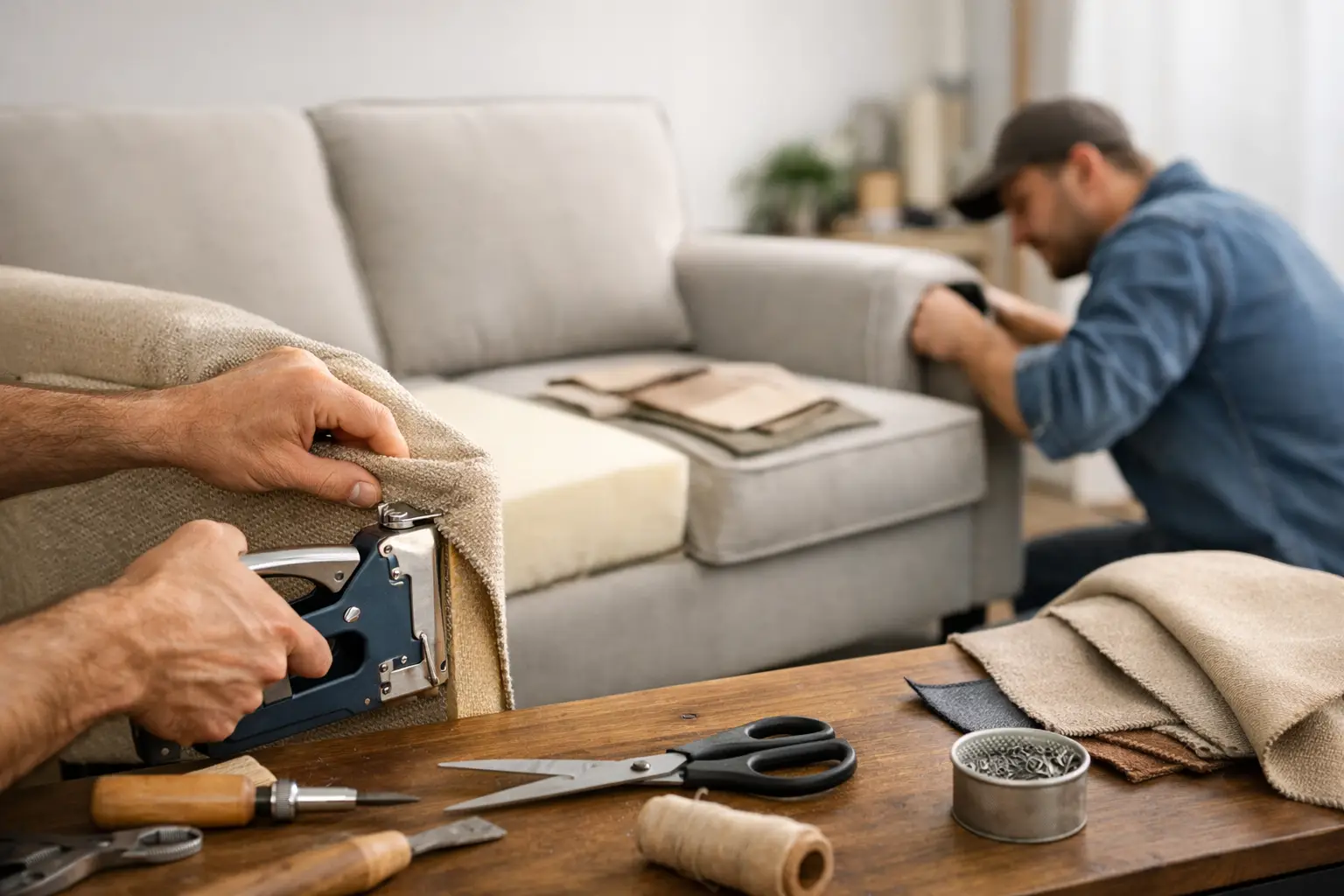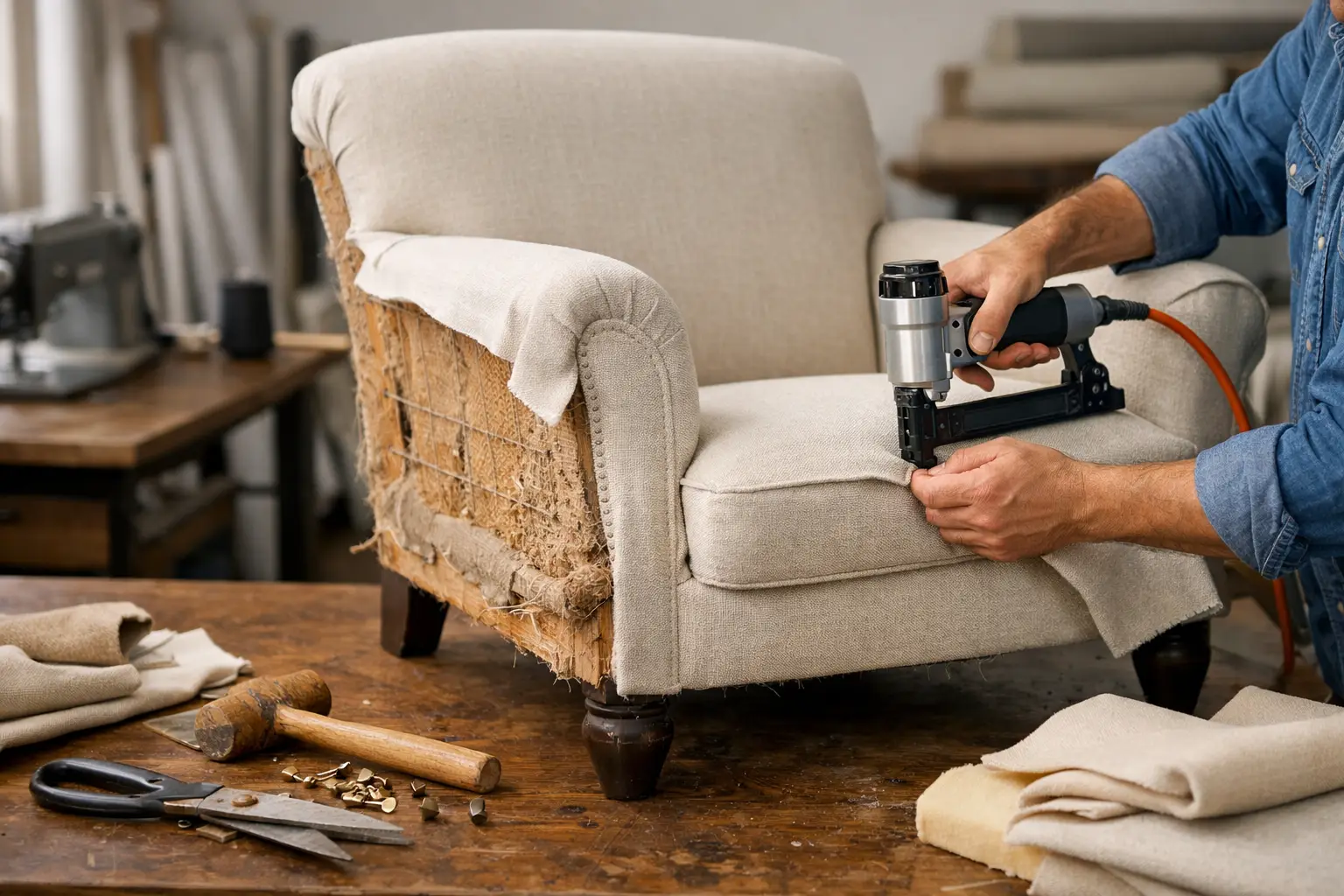
A worn seat bolster, cracked side panel, or sagging headliner does more than make a cabin look dated. In aircraft interior upholstery, those details affect comfort in the air, how well the interior holds up over time, and how the aircraft is perceived the moment someone steps inside.
For aircraft owners, operators, and maintenance-minded buyers, interior work is rarely just cosmetic. It is often about correcting wear, replacing degraded materials, improving fit and finish, and restoring confidence in the condition of the cabin. Whether the goal is a clean refresh or a more complete cabin update, the quality of the upholstery work matters.
What aircraft interior upholstery includes
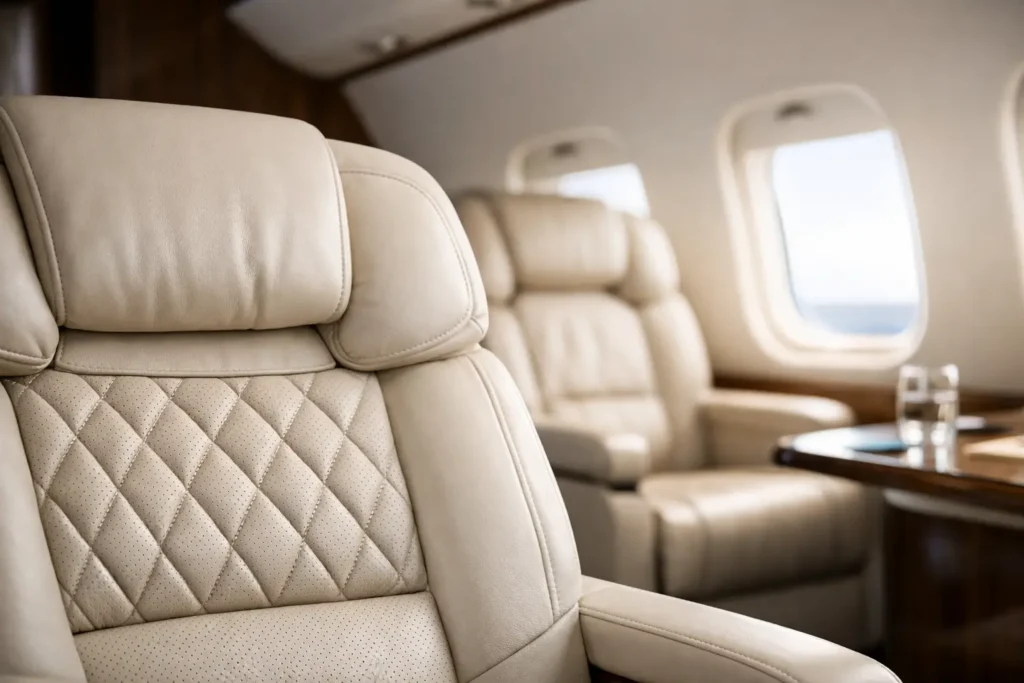
Aircraft interior upholstery covers more than the seats. In many cabins, the work can include seat cushions, seat backs, armrests, side panels, kick panels, headliners, glare shields, yokes, door panels, carpets, and other trimmed surfaces. Some projects involve replacing only the visibly damaged sections, while others require a coordinated interior refurbishment so materials, stitching, foam density, and color all work together.
That scope is one reason aviation upholstery should be approached differently than a typical automotive or household project. Aircraft interiors have tighter tolerances, unique shapes, and a higher expectation for clean, durable workmanship. Materials need to perform well in a demanding environment, and the finished result needs to look intentional rather than pieced together.
Why owners choose to update aircraft interior upholstery
In most aircraft, the interior wears unevenly. The pilot seat may break down long before the passenger seats. Entry areas may show scuffs and cracking first. Sun exposure can dry out surfaces on one side of the cabin while carpets and lower panels show dirt, staining, and edge wear. That means the right solution depends on what is failing and how far the deterioration has gone.
Some owners come in because the cabin simply looks tired. Others are dealing with torn seams, flattened foam, brittle trim, or panels that no longer sit correctly. There are also practical reasons to update an interior before the condition gets worse. Minor cracking can turn into larger splits. Foam that has lost support can make longer flights noticeably less comfortable. Small repairs made at the right time often preserve more of the surrounding interior and help avoid a larger overhaul later.
Resale value is another factor. Buyers notice interiors quickly, and they tend to treat a neglected cabin as a sign that other maintenance may also have been deferred. A well-finished interior does not replace proper mechanical records, but it does support the overall presentation of the aircraft.
Repair, partial replacement, or full reupholstery?
The right path depends on the condition of the existing interior, the age of the materials, and the owner’s goals.
When repair makes sense
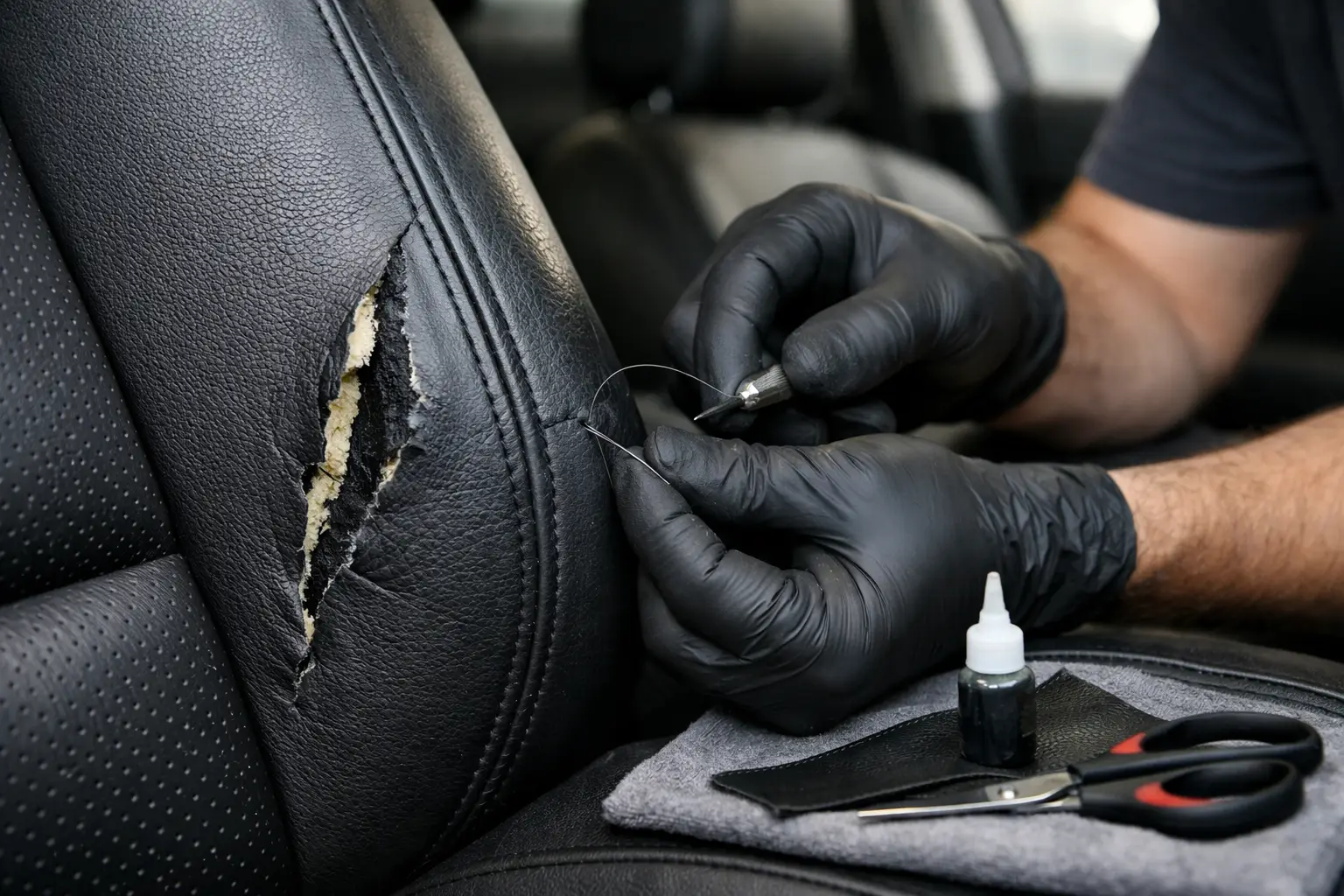
Targeted repair is often the best choice when the damage is isolated and the surrounding materials still have life left in them. A split seam, localized panel damage, worn piping, or small-area foam failure may be corrected without rebuilding the whole cabin. This approach can be cost-effective, especially when the original layout and materials still suit the aircraft.
The trade-off is consistency. If one section is repaired and the rest of the cabin is faded or aged, the repaired area may look newer than adjacent surfaces. In some aircraft that difference is minor. In others, it is enough to make a partial repair feel temporary.
When partial replacement is the better option
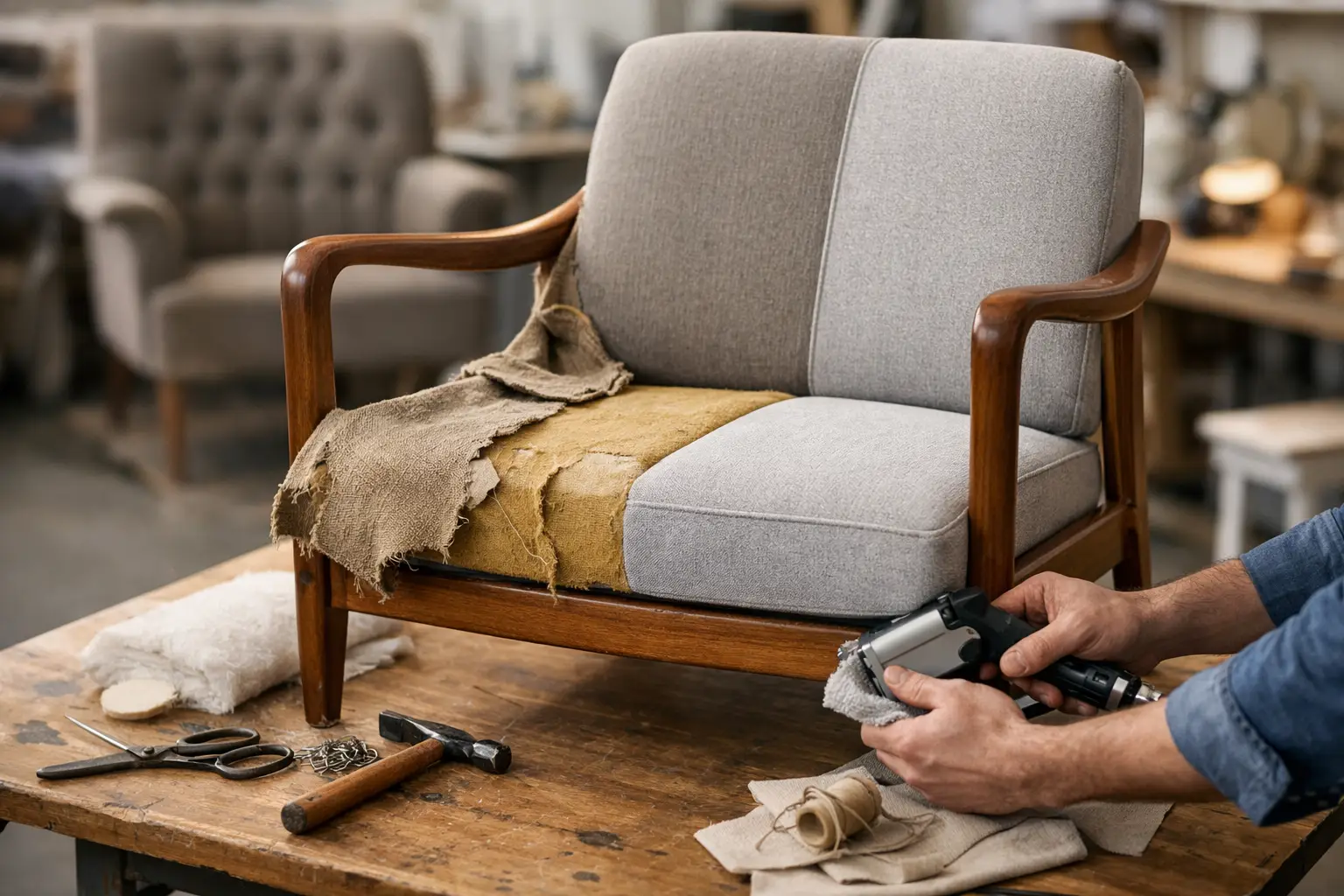
Partial replacement works well when a few high-wear components have reached the end of their service life, but the rest of the interior remains structurally sound. Seat bottoms, seat backs, side panels, or carpeting may be replaced to address the worst wear while keeping other components in place.
This route requires careful material selection. Matching color, grain, texture, and stitching style is not always simple, especially in older interiors where sun exposure and age have changed the original appearance. The work can still look excellent, but good results depend on realistic expectations and skilled fabrication.
When full reupholstery is worth it
If multiple components are worn, the foam has broken down, and the cabin no longer looks cohesive, full reupholstery is often the most practical long-term choice. It allows the interior to be rebuilt as a complete system rather than a patchwork of old and new materials.
A full project also gives the owner more control over the result. Colors can be updated, seating comfort can be improved, and the cabin can be brought back to a cleaner, more professional standard. For aircraft that are well maintained structurally and mechanically, a full interior refresh can make continued ownership far more satisfying.
Material selection matters more than most owners expect
One of the biggest decisions in aircraft interior upholstery is material choice. Appearance matters, but so do wear characteristics, cleanability, texture, and how the material behaves over time.
Leather remains a strong option for many aircraft interiors because it offers a finished, high-end look and can wear very well when selected and installed correctly. At the same time, not every leather is the same. Grain, thickness, flexibility, and finish all affect how it performs on contoured seats and trimmed panels.
Vinyl can also be a smart choice, particularly where durability, easier maintenance, or budget control is a priority. Modern options can provide a clean, professional appearance and hold up well in active-use cabins. Fabric may still be appropriate in some applications, but it depends on the aircraft, the desired look, and how easy the owner wants the cabin to be to maintain.
Foam is just as important as the visible surface. An attractive seat with collapsed support underneath will not feel right for long. Replacing or reshaping foam can restore seating comfort, improve support, and help the upholstery maintain its form. This is one of the most overlooked parts of the job, yet it often makes the biggest difference in everyday use.
Fit and finish are where quality shows
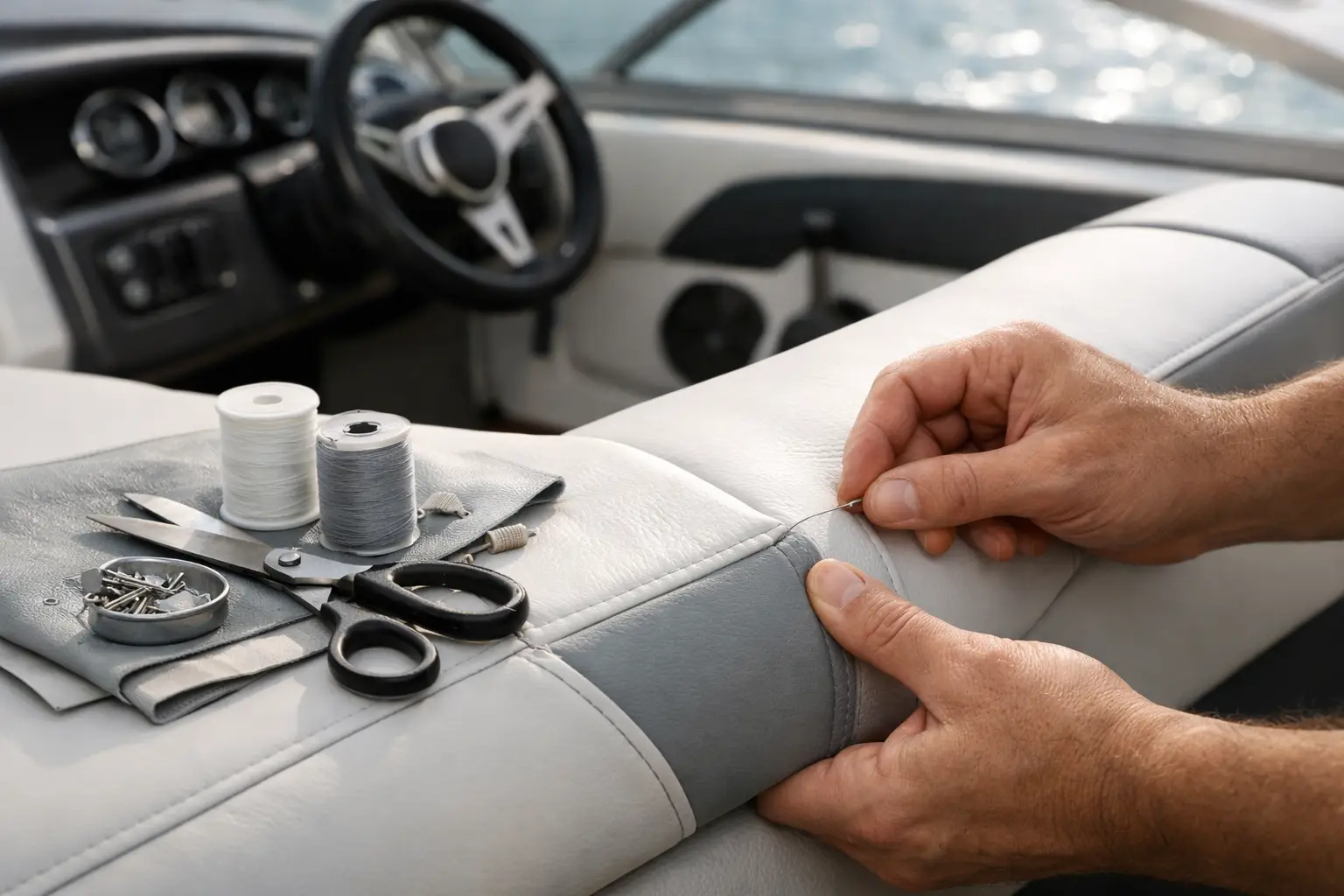
Aircraft cabins are not forgiving. Misaligned seams, loose material, uneven panel edges, and poor contouring are easy to spot in a compact interior. Good craftsmanship shows in the details – clean stitching, proper shaping, consistent tension, smooth panel transitions, and materials that fit the structure instead of fighting it.
This is especially important in older aircraft where underlying components may have shifted, warped slightly, or been altered over time. A good upholstery shop does not just wrap new material over an old problem. It evaluates the condition underneath, corrects what can be corrected, and builds the finished surface so it looks right and holds up.
That practical approach is what many owners are looking for when they bring a project to Rocky Mountain Upholstery. The goal is not just to make the cabin look better for a week. It is to produce work that feels solid, looks professional, and gives the aircraft interior a longer usable life.
Planning a custom interior update
Not every aircraft owner wants a dramatic redesign. In fact, many prefer a cabin that looks clean, appropriate, and well cared for rather than overly styled. Custom work does not have to mean flashy. Often it means choosing the right color balance, improving seat comfort, refining stitching details, and selecting materials that better fit how the aircraft is used.
A custom plan usually starts with a few practical questions. Which components are most worn? Is the goal to preserve the original look or update it? Will the aircraft be used primarily for personal travel, training, business, or resale? Those answers shape the level of work that makes sense.
There are trade-offs in every direction. A full custom interior creates the most unified result, but it also requires a larger investment. A selective refresh can solve immediate wear issues, but it may leave older sections that still show their age. The best outcome usually comes from balancing budget, condition, and long-term plans for the aircraft.
What to expect from the process
A quality upholstery project begins with an honest evaluation of the interior’s condition. That includes visible wear, hidden foam issues, panel stability, and how well existing materials can be matched if only part of the cabin is being updated. From there, the scope can be defined clearly so the owner knows what is being repaired, rebuilt, or replaced.
Good communication matters throughout the process. Aircraft owners typically want straightforward guidance on what can be saved, what should be replaced, and where an upgrade will make a meaningful difference. That kind of clarity helps avoid spending money in the wrong places.
The end goal is simple. The interior should look clean, feel comfortable, and reflect the care that has gone into the aircraft as a whole. When the upholstery is done properly, the cabin stops feeling like a weak point and starts feeling like part of the aircraft’s value again.
If your cabin has worn seats, damaged panels, aging foam, or interior materials that no longer match the condition of the aircraft, it is worth addressing sooner rather than later. Well-built aircraft interior upholstery gives you more than a better appearance – it gives you a cabin that is more comfortable to use, easier to take pride in, and better prepared for the years ahead.