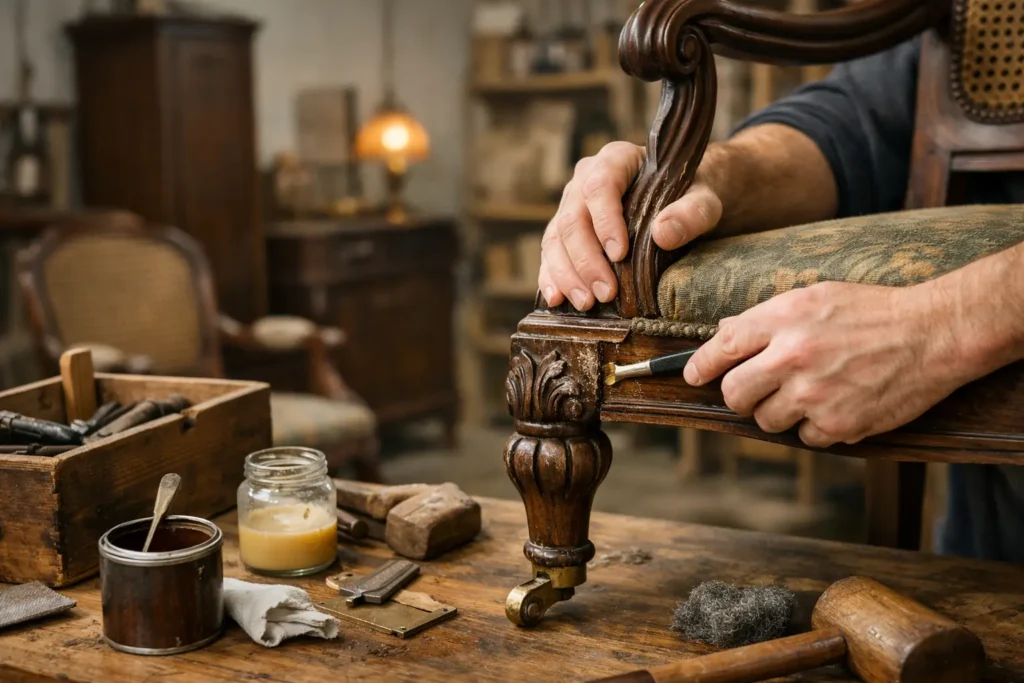
An antique chair with loose joints, a dresser with a chipped veneer corner, or a settee with worn-out springs may look ready for replacement. Often, the opposite is true. A well-built antique can usually be repaired, stabilized, and made useful again without erasing the details that give it character. This guide to antique furniture repair explains how to make sound decisions before work begins, especially when a piece has family value, quality construction, or a place in your home for years to come.
Start With the Piece, Not the Damage
The first step is determining what you have. Age alone does not make furniture valuable, and not every old piece needs museum-level conservation. Some items are best treated as practical furniture that can be refreshed for daily use. Others have original finishes, hardware, carving, labels, or upholstery details worth protecting.
Look underneath drawers, on the back panels, and beneath seat cushions for maker marks, dates, stamps, or construction clues. Solid wood, hand-cut dovetails, mortise-and-tenon joints, and quality veneer work can indicate that a repair is worth considering. A loose chair made from hardwood with well-shaped joinery may be an excellent restoration candidate. A heavily damaged particleboard piece, even if it is several decades old, may not justify extensive structural work.
Condition matters as much as age. Separate cosmetic wear from structural problems. Scratches, faded finish, minor water rings, and worn fabric can often be addressed without taking apart the entire piece. Broken joints, insect damage, missing veneer, warped components, and failed springs require a closer inspection because the repair approach affects safety, appearance, and long-term durability.
Preserve the Original Before Replacing It
The most common repair mistake is removing original material too quickly. Stripping a finish, sanding through a patina, replacing a solid wood drawer front, or covering a historic frame with unsuitable fabric can reduce both the character and the value of the piece.
Patina is not simply dirt or discoloration. It is the soft wear, color variation, and surface character developed over decades of use. In many cases, a careful cleaning, wax treatment, touch-up, or finish repair is better than fully refinishing the wood. That choice depends on the condition of the finish and how the furniture will be used. A dining table exposed to regular spills needs more protection than a display cabinet in a low-traffic room.
The same principle applies to hardware. Original pulls, escutcheons, casters, and hinges should be retained whenever possible. They may need cleaning, adjustment, or a small repair, but replacement hardware often changes the look of a piece more than owners expect. If a part is missing, a skilled shop can sometimes locate a close match or fabricate a practical replacement that respects the original style.
Repair the Structure Before Addressing the Surface
Furniture repair should move from the inside out. A beautiful new finish will not solve a chair that rocks, a cabinet that leans, or a sofa frame with cracked rails. Structural repairs come first because they create the foundation for every later step.
Loose Chairs and Wobbly Tables
Loose joints are common in antique dining chairs, rocking chairs, and tables. The right repair usually involves carefully separating the joint, removing failed adhesive, correcting the fit, and regluing it with appropriate clamps and alignment. Adding screws through the outside of a joint may seem like a quick fix, but it can split aged wood, leave visible damage, and make future repairs more difficult.
A chair may also feel unstable because of missing corner blocks, damaged stretchers, or a weakened seat frame. These parts can often be repaired or recreated. The goal is not just to stop the wobble today, but to restore how the frame carries weight over time.
Drawers, Doors, and Case Goods
Sticking drawers are frequently caused by seasonal wood movement, worn drawer runners, loose case joints, or a cabinet that is no longer square. Forcing the drawer can break old joinery or damage the face. A proper assessment identifies whether the issue is friction, misalignment, swelling, or structural movement.
Doors that no longer close may need hinge adjustment, repair to a warped frame, or stabilization of the cabinet itself. In Colorado’s dry climate, wood can shrink and joints can open, particularly when furniture is exposed to direct heat, sunlight, or dramatic humidity changes. Avoid storing antique furniture near vents, fireplaces, garages, or unfinished basements where conditions shift quickly.
Veneer, Inlay, and Decorative Details
Veneer repair requires patience. Loose veneer can sometimes be re-adhered, while chipped or missing sections may need a carefully matched patch. Matching the grain direction, wood species, color, and thickness is what keeps a repair from looking obvious. Inlay, marquetry, carved trim, and decorative molding need the same level of attention.
Avoid filling missing veneer with thick wood putty and staining over it. That approach may hide damage from a distance, but it rarely blends well and can make a future professional repair more complicated.
Antique Upholstery Needs More Than New Fabric
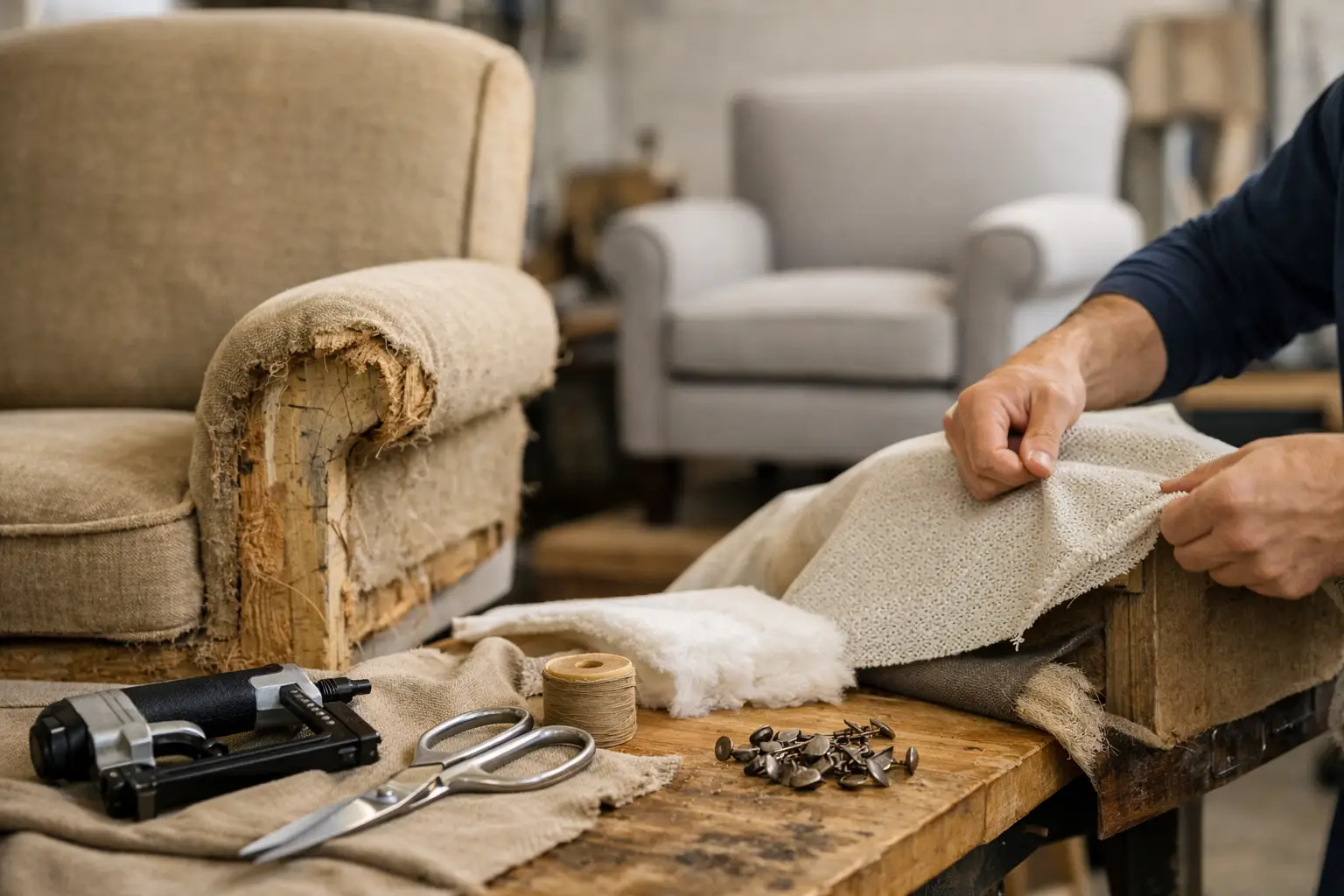
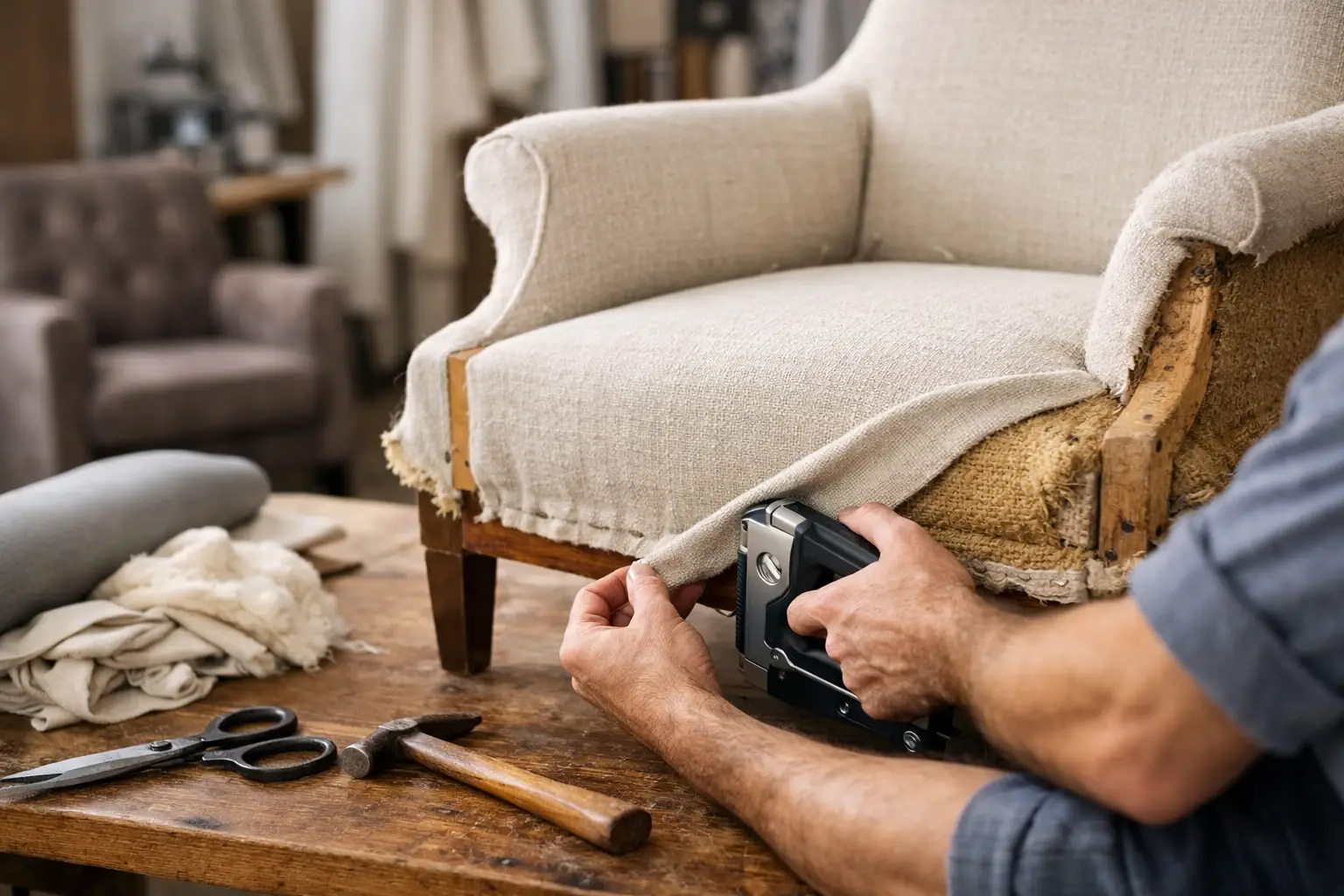
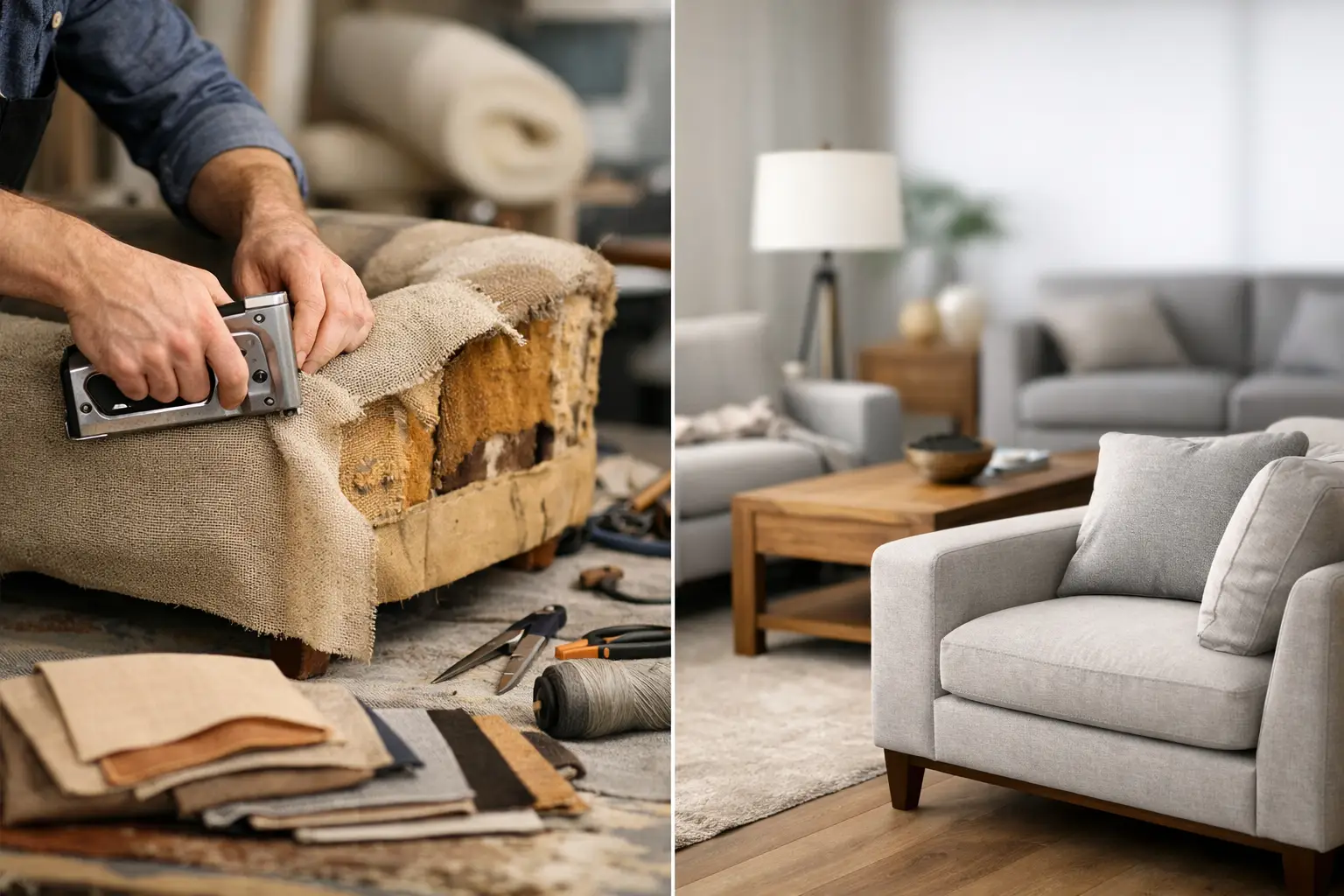
An upholstered antique can have a strong wood frame while its padding, webbing, springs, and cover fabric have reached the end of their service life. Reupholstery gives the piece a chance to be comfortable and functional again, but the work beneath the fabric is as important as the fabric itself.
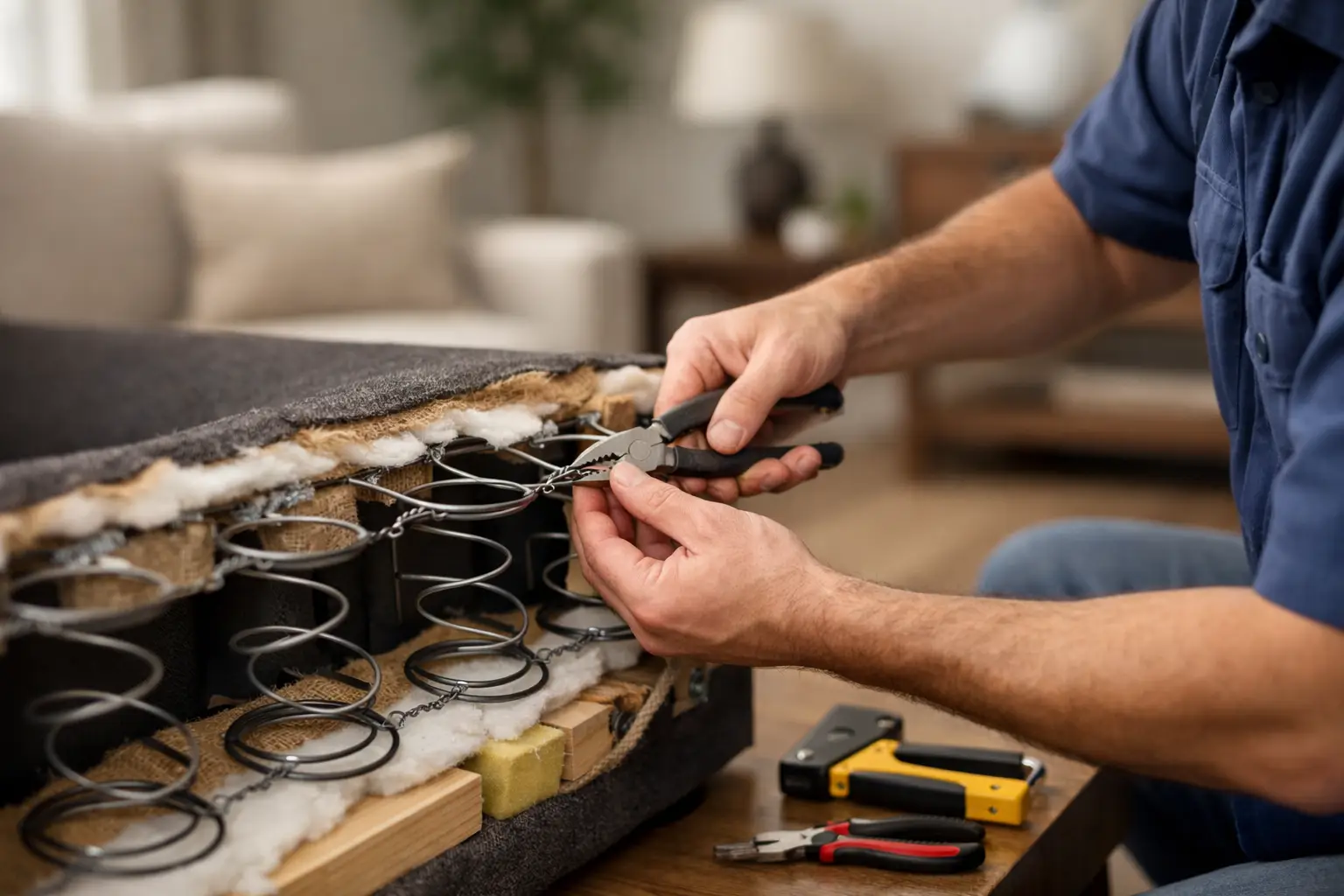
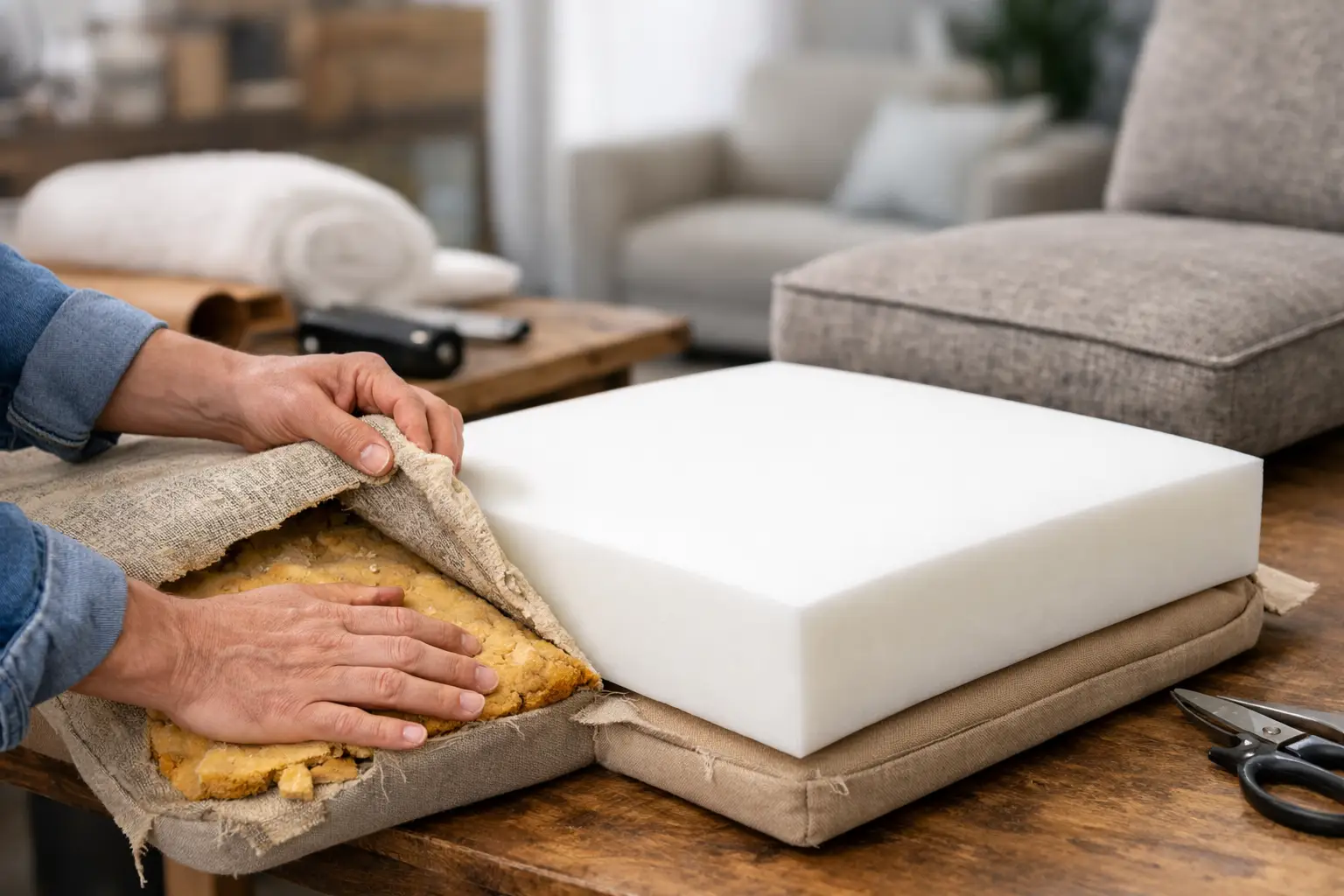
Traditional pieces may contain coil springs, jute webbing, horsehair, cotton, or other natural materials. These can sometimes be repaired and retained. In other cases, modern materials provide better comfort and durability while preserving the original silhouette. There is no single correct answer. A formal Victorian chair intended for display may call for a more historically faithful approach, while a family heirloom used every day may benefit from updated support materials and performance fabric.
Fabric selection should match the furniture’s use. Delicate woven fabrics can suit low-traffic accent pieces, while durable textiles may be more appropriate for a regularly used sofa, dining chair, or bench. Pattern scale, fabric direction, trim, cushion shape, and the condition of the frame all affect the finished result. A professional upholsterer can also identify concealed problems, such as cracked seat rails or broken springs, before the new cover is installed.
Know When a DIY Repair Makes Sense
Homeowners can safely handle some basic care tasks. Gentle dusting, careful cleaning with products suited to the finish, tightening accessible hardware, and placing felt pads under feet can prevent additional wear. A minor surface scratch may respond well to a touch-up product when tested in an inconspicuous area first.
DIY work becomes risky when it involves structural joints, veneer, old finishes, springs, or antique upholstery. Aggressive sanding can remove irreplaceable surface material. Household glue may fail under stress or prevent a joint from seating correctly. Chemical strippers and strong cleaners can discolor wood, damage veneer adhesive, or create an uneven finish that is difficult to correct.
Be especially cautious with pieces that may have historical or resale value. If the furniture is signed, unusually old, rare, or connected to family history, document its condition with photos before any work begins. A qualified appraisal may also be worthwhile before major alterations.
Choosing a Professional for Antique Furniture Repair
The best repair is tailored to the furniture, not forced into a standard process. Ask a repair shop how it approaches original finishes, loose joints, veneer patches, spring systems, foam replacement, and fabric selection. Clear answers indicate that the work will be planned around the needs of your specific piece.
It also helps to discuss the intended use. A repaired antique desk in a home office has different requirements than a decorative hall table. A set of dining chairs needs dependable joints and durable seat materials. A vintage sofa may need frame repairs, new support, and custom cushions before it can serve as everyday seating again.
At Rocky Mountain Upholstery, antique furniture projects can be evaluated as complete restorations, combining frame repair, structural reinforcement, foam or spring work, and custom upholstery when needed. That full-service approach helps ensure the visible finish and the hidden foundation are working together.
A well-repaired antique should not look newly manufactured. It should look cared for, feel solid in use, and retain the details that made it worth keeping in the first place. Before making a permanent change, take the time to understand what the piece needs and what you want it to do in your home.