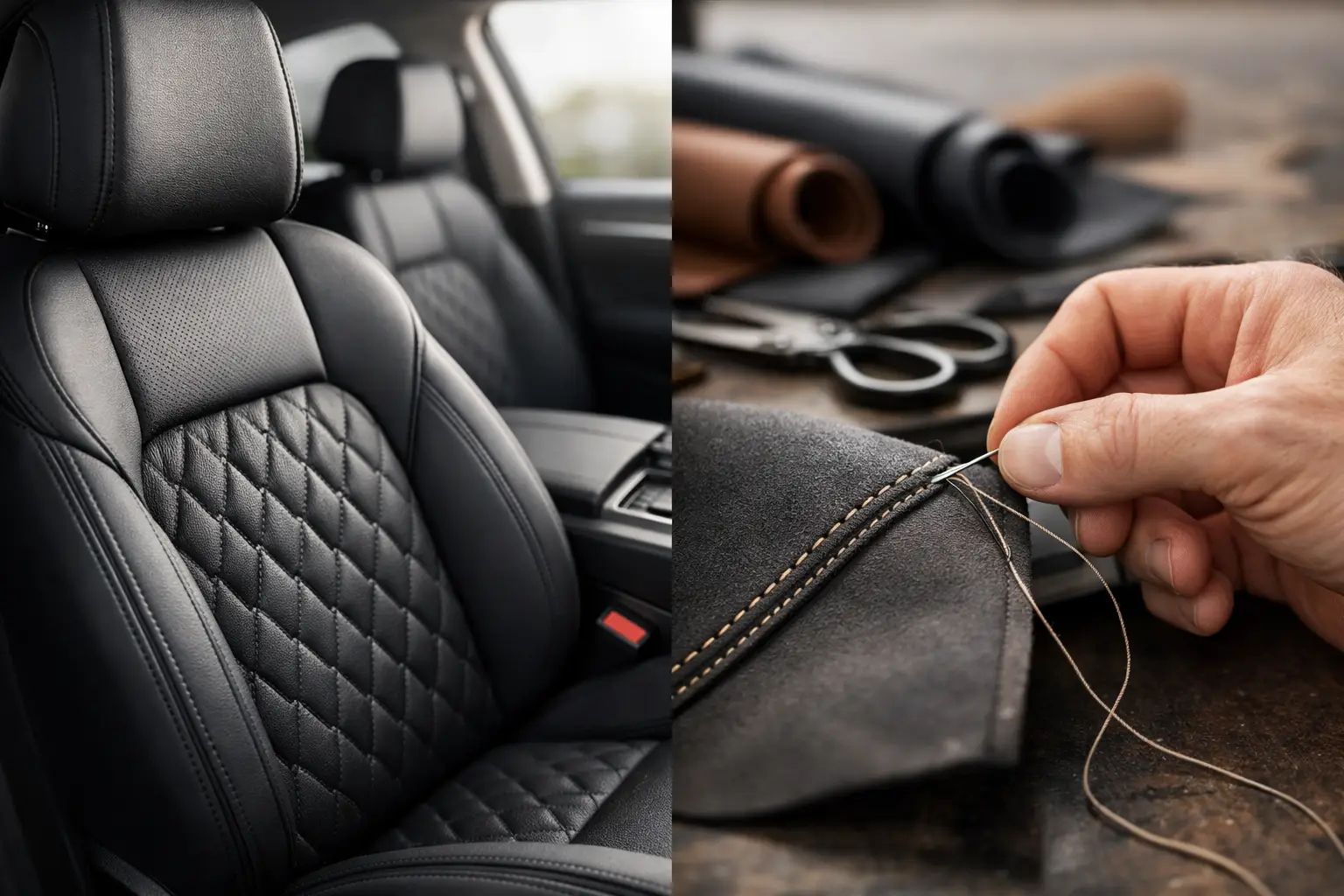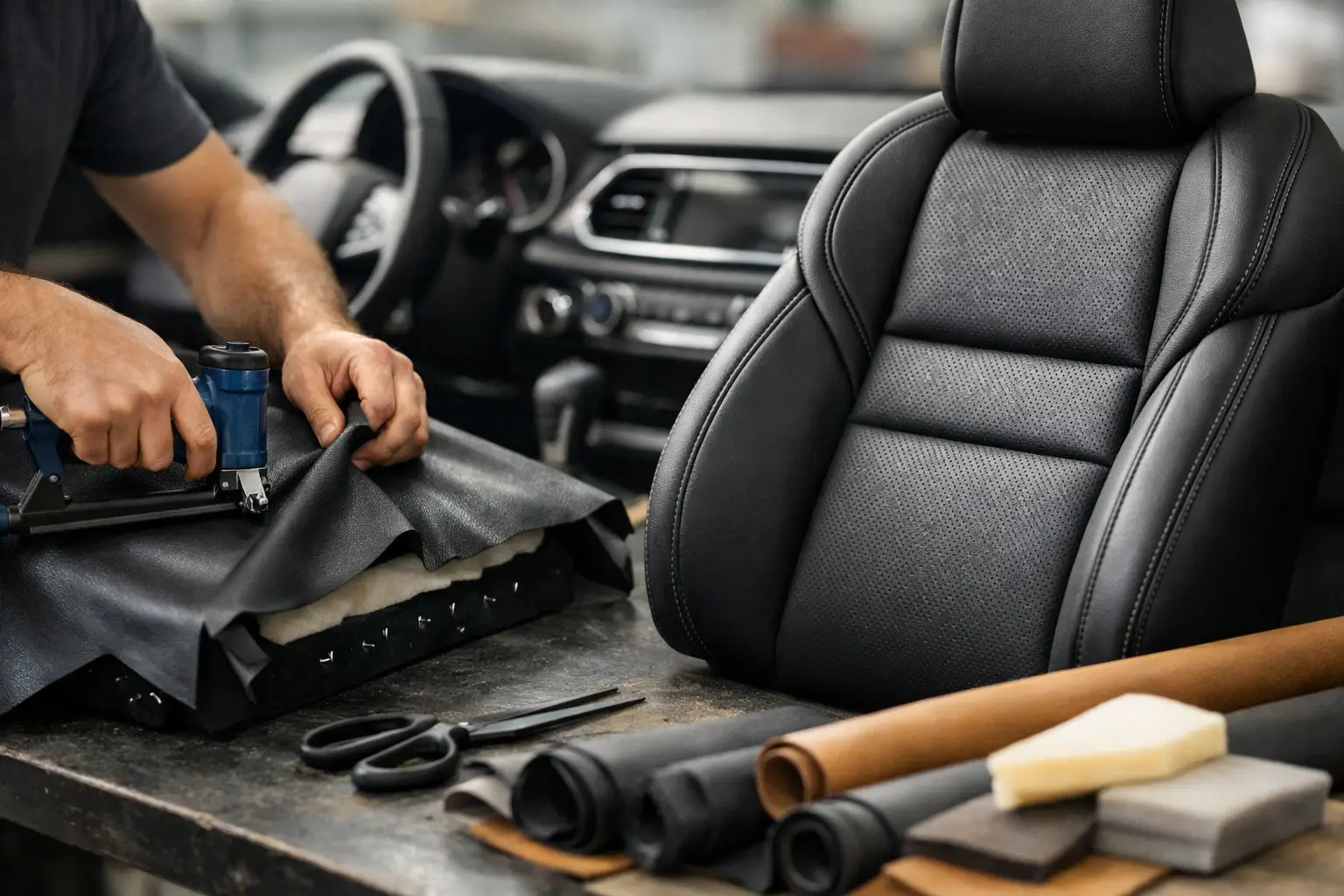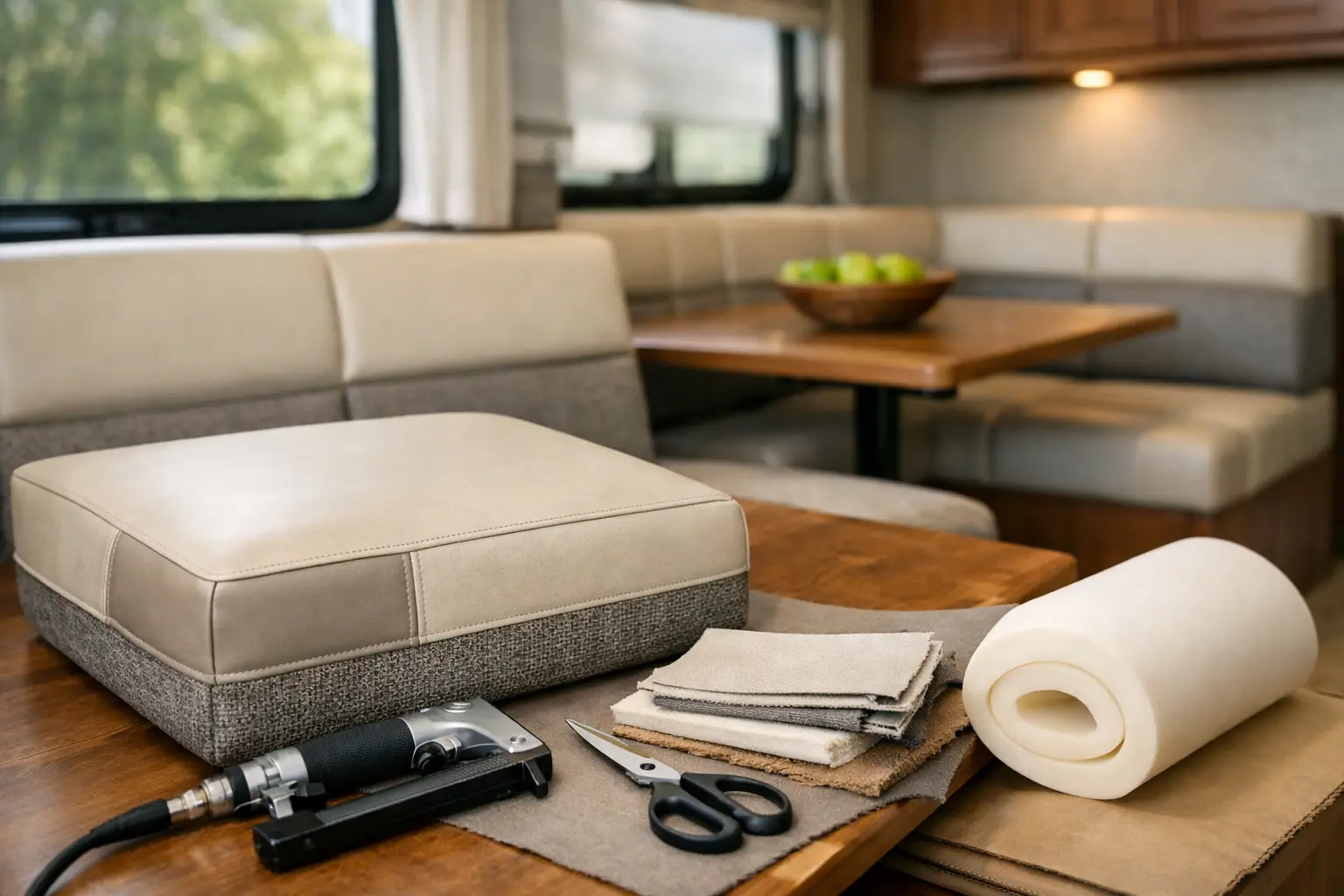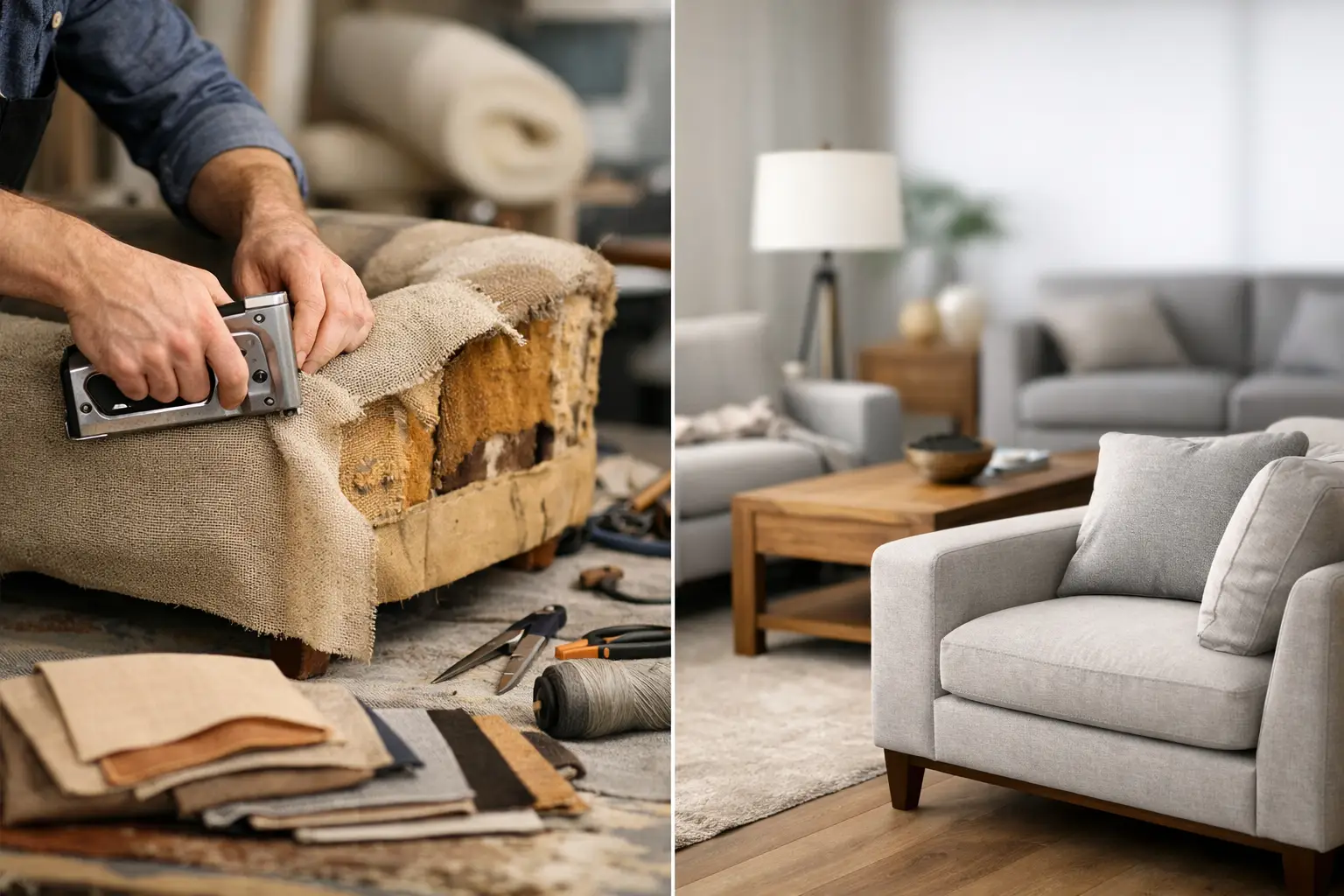
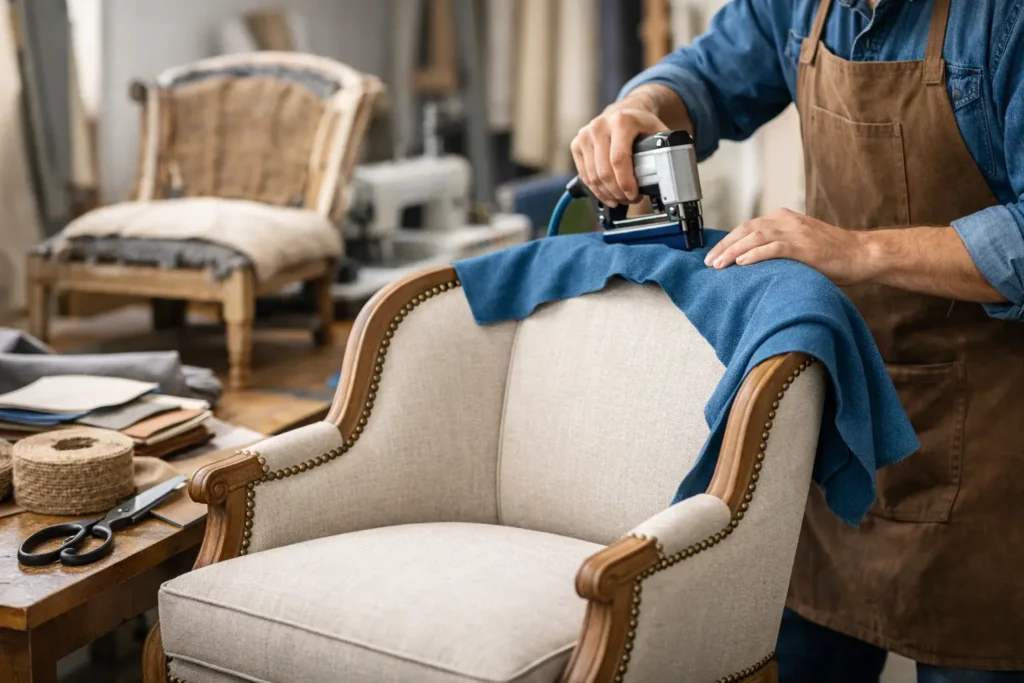
A sagging cushion, worn arms, or faded fabric does not always mean a chair or sofa belongs on the curb. In many cases, the better option is reworking what is already there. This guide to custom furniture upholstery explains how to evaluate a piece, choose materials, understand the process, and decide whether custom upholstery is the right investment.
Custom upholstery is not just about changing the look of furniture. It is often about preserving a solid frame, correcting years of wear, improving comfort, and getting a result that fits the room better than a replacement piece. That is especially true with older furniture, heirlooms, quality-built pieces, and seating that needs to hold up to specific use.
What custom furniture upholstery really includes
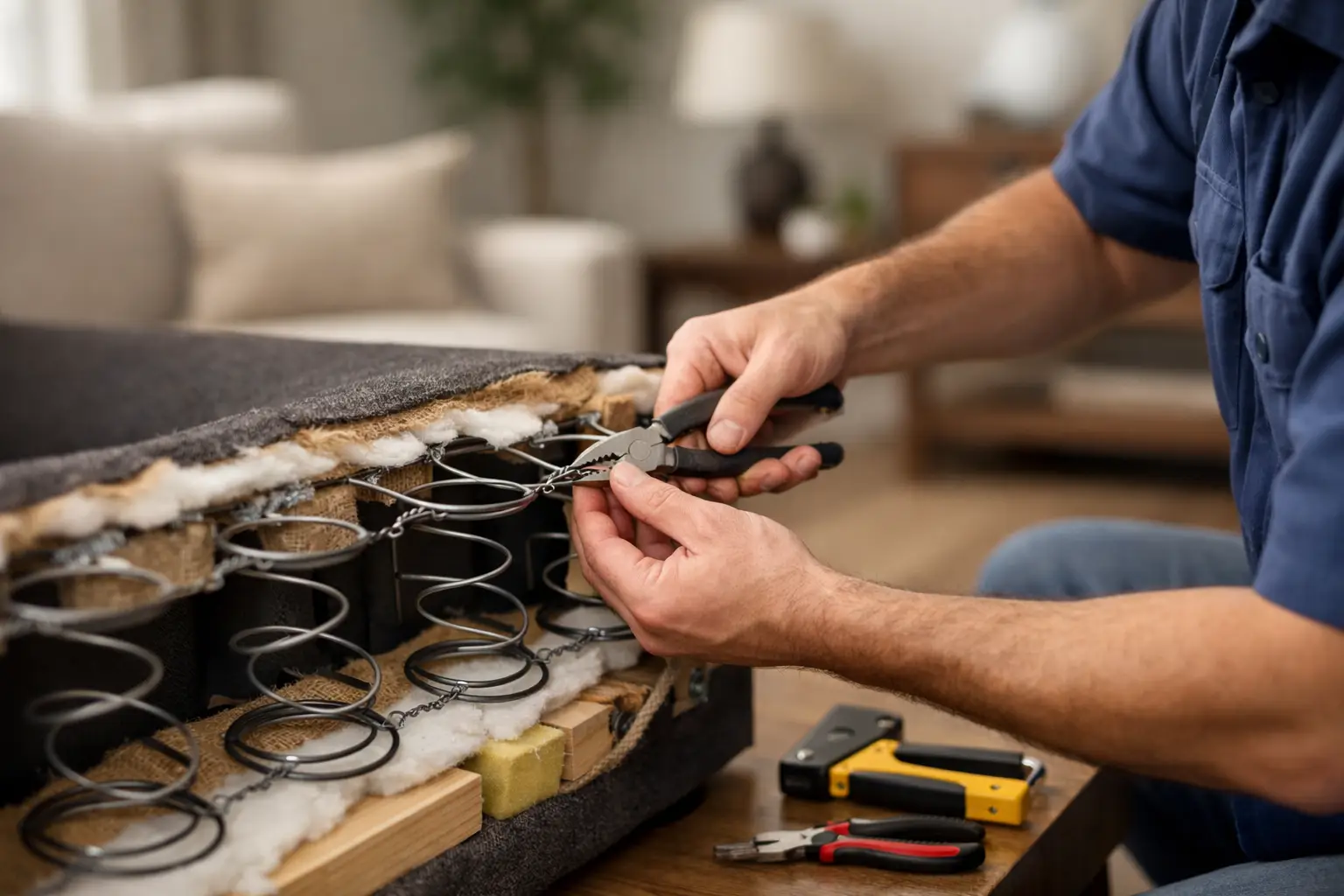
When people hear upholstery, they often think only of fabric replacement. In practice, custom work can be much more involved. Depending on the condition of the piece, the job may include stripping old material, repairing springs, replacing foam, reinforcing the frame, rebuilding cushions, refinishing trim, and installing new fabric or vinyl.
That matters because appearance is only one part of the finished result. A chair can look fresh on the outside and still feel uncomfortable if the foam is worn out. A sofa can have beautiful new fabric and still fail early if the frame has loose joints that were never repaired. Good upholstery work addresses both structure and surface.
When reupholstery is worth it
Not every piece should be reupholstered, but many should. The strongest candidates usually have one or more of three qualities: solid construction, sentimental value, or a hard-to-replace size or style.
Older furniture often has hardwood frames and better internal construction than many mass-produced pieces sold today. If the frame is sound or can be repaired, new upholstery can extend the life of the piece for many years. The same applies to dining chairs, headboards, benches, and built-in seating where the original dimensions already fit the space.
Sentimental value is another reason people choose custom work. Family furniture, inherited pieces, or items tied to a home or business often carry value that replacement cannot match. Upholstery lets you preserve the piece while updating its function and appearance.
Then there is the practical side. Some furniture simply does not come in the right dimensions, profile, or comfort level off the showroom floor. Custom upholstery gives you more control over seat firmness, fabric performance, trim details, and overall finish.
A guide to custom furniture upholstery starts with the frame
The frame is the foundation of the project. If it is weak, cracked, out of square, or poorly built, upholstery alone will not fix the problem. Before choosing fabric, it makes sense to assess whether the furniture has lasting structural value.
A good candidate for upholstery usually has a hardwood frame, secure joints, and a shape worth preserving. Some damage can be repaired without issue, including loose arms, broken supports, worn decking, and failed springs. What matters is whether the piece can be restored to reliable use.
This is one area where professional evaluation helps. Surface wear is easy to spot. Internal damage is not. A skilled upholstery shop can tell whether a piece needs minor repair or a more involved rebuild, and whether that investment makes sense compared to replacement.
Fabric choice affects more than appearance
Fabric is where many customers start, but it should not be selected by color alone. Upholstery fabric has to match the way the piece will be used.
For everyday family seating, durability matters as much as style. A living room sofa used daily needs a different material than an accent chair in a guest room. Homes with kids or pets usually benefit from fabrics with stronger abrasion resistance, easier cleaning, and tighter weaves. Commercial seating needs performance materials that can handle heavy traffic and frequent maintenance.
Texture and pattern also affect the final result. Large prints may not work well on small or curved pieces. Some patterns require extra yardage to align correctly. Smooth fabrics can show wrinkles or wear differently than textured ones. Leather and vinyl create a distinct look, but they also change the feel, maintenance needs, and cost of the project.
The best fabric choice is usually a balance between appearance, durability, and where the furniture will be used. A good shop will walk through those trade-offs rather than pushing a material that looks good only on a sample book.
Foam, cushions, and comfort make a bigger difference than most people expect
One of the biggest advantages of custom upholstery is the ability to improve how furniture feels. If a seat is too firm, too soft, uneven, or no longer supportive, the issue may be inside the cushion rather than in the fabric.
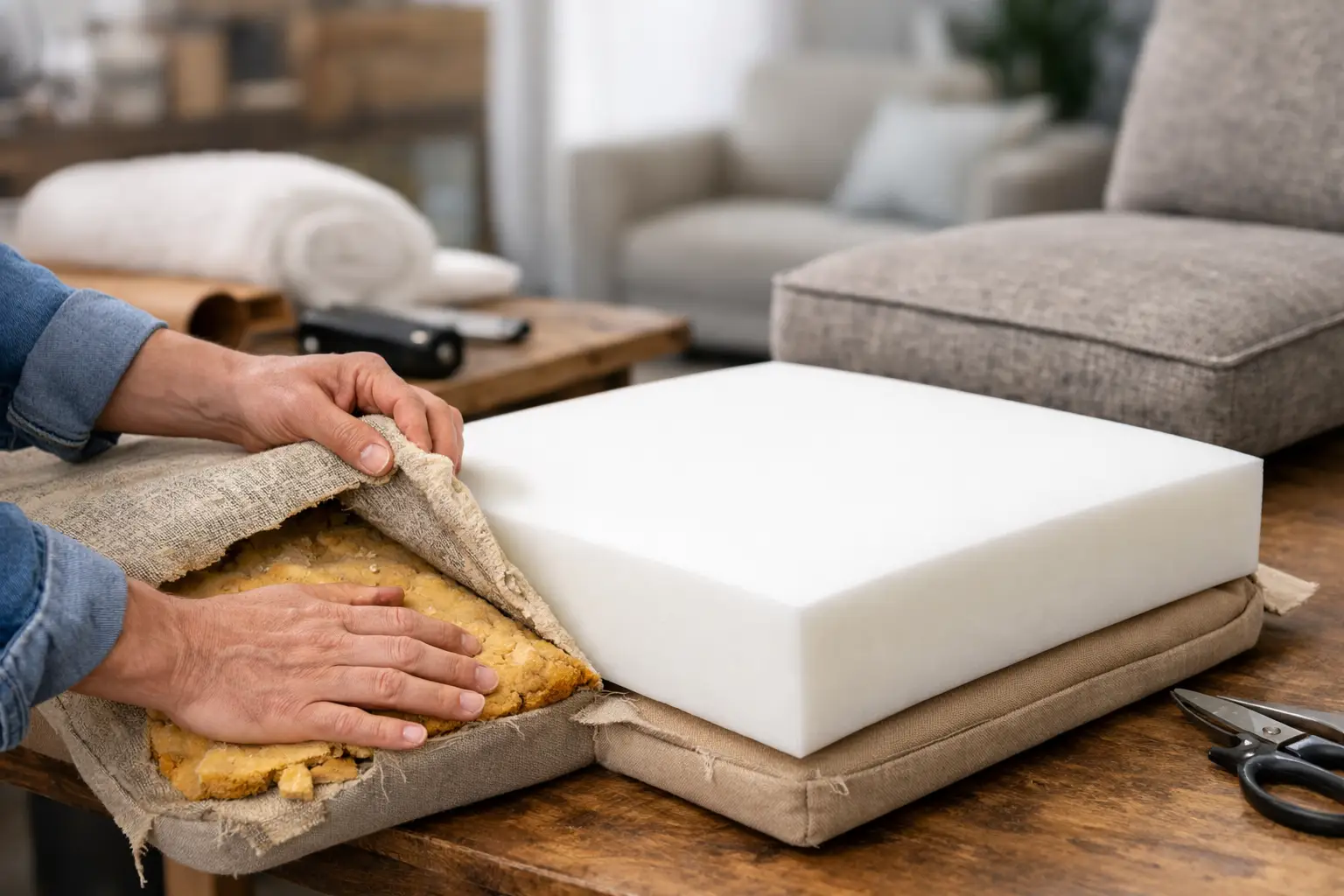
Foam density, wrap, and cushion construction all affect comfort and longevity. Higher quality foam generally holds shape longer, but the right choice depends on the application. A formal chair, a deep lounge cushion, and a restaurant booth all need different support levels. Replacing foam without considering use can leave a piece looking better but feeling wrong.
This is also where custom work can correct original design issues. Seat height can sometimes be adjusted. Cushion fill can be changed. Back support can be improved. For many customers, that functional upgrade is just as important as the visual update.
The upholstery process from estimate to finish
The process usually starts with an evaluation of the piece and a discussion of goals. Some customers want a faithful restoration. Others want a complete update with new styling, fresh padding, and more durable materials. Those are different projects, and the estimate should reflect that.
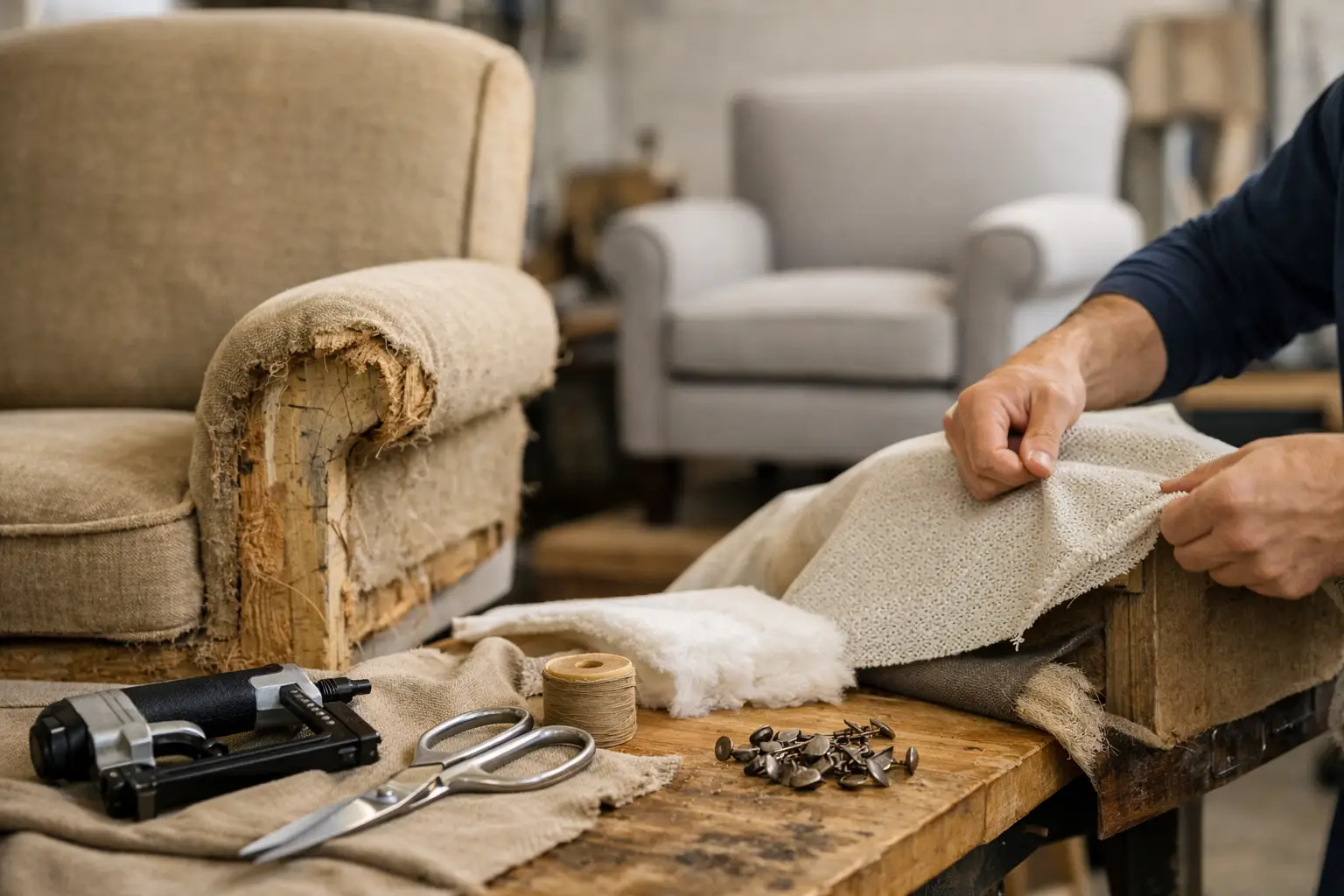
Once the scope is clear, the old upholstery is removed so the frame, springs, webbing, padding, and underlying construction can be inspected. This stage often reveals hidden wear that was not obvious from the outside. Repairs are made before new materials go on.
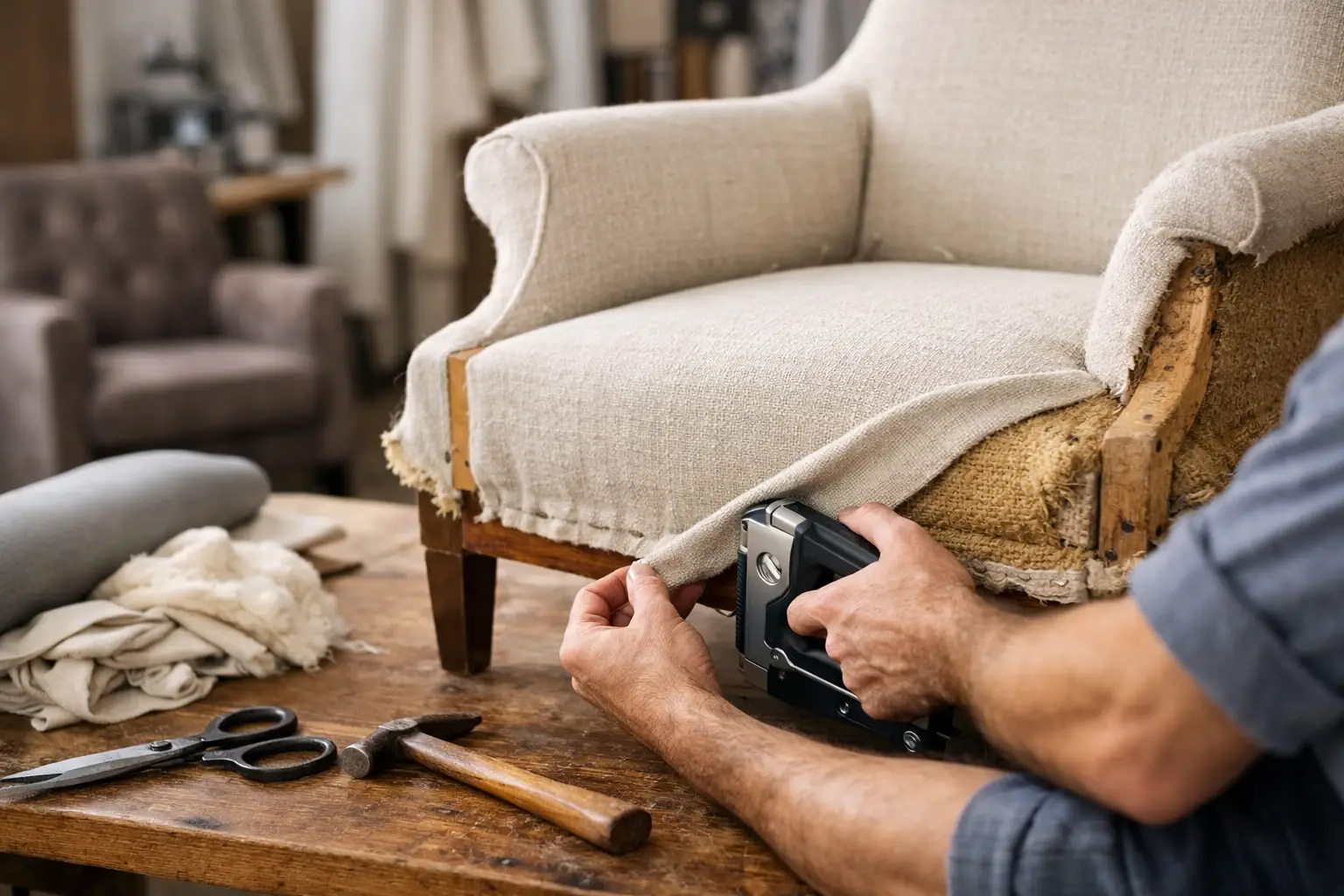
After structural work, the shop rebuilds padding and cushions as needed, cuts and fits the selected material, and installs the new upholstery with attention to pattern alignment, seam placement, and overall shape. Details matter here. Clean corners, even tension, consistent piping, and secure attachment are what separate a professional result from a quick recover.
Lead time depends on the piece, material availability, and how much restoration is involved. A simple dining chair project moves differently than a fully rebuilt sofa or an heirloom chair with frame repair. It is reasonable to ask about timeline up front, but it is also worth understanding that quality custom work takes time.
Cost depends on labor, condition, and material
There is no universal upholstery price because furniture pieces vary so much in size, shape, and condition. Material cost is one factor, but labor is often the larger one. Intricate backs, tufting, channeling, skirts, trim, and extensive repairs all increase the time involved.
Condition also matters. Two chairs that look similar on the outside may require very different levels of work inside. One may need only fabric and foam. The other may need spring repair, frame reinforcement, and full padding replacement.
That is why estimates should be based on the actual piece and the intended scope. If you are comparing upholstery to buying new, compare like with like. A low-cost replacement may not offer the same frame quality, dimensions, comfort, or service life.
Who benefits most from custom upholstery
Homeowners often choose custom upholstery for sofas, chairs, dining seats, ottomans, headboards, and patio cushions when the underlying piece is still worth keeping. Businesses often need booth seating, lobby furniture, office seating, and waiting room pieces restored to a professional standard without replacing an entire set.
Custom upholstery also makes sense when furniture needs to meet a specific look or use requirement. Matching existing interiors, upgrading material performance, or preserving a coordinated set are common reasons to reupholster instead of replace.
For customers in Colorado Springs, Rocky Mountain Upholstery often sees projects where the goal is not just to make furniture look new again, but to return it to dependable use with the right materials and construction for the setting.
How to prepare before requesting an estimate
It helps to know what you want the finished piece to do. Do you want the same look with better fabric, or a full redesign? Is comfort the problem, appearance, or both? Are you trying to preserve a family piece, match other furniture, or improve durability for heavy use?
Photos are useful, but dimensions and condition details help too. Mention whether cushions have collapsed, the frame feels loose, springs are poking through, or the piece has pet damage, sun fading, or broken trim. The more specific the information, the easier it is to set realistic expectations.
If you already have a material in mind, bring that into the conversation early. If not, be ready to describe how the furniture is used. That is often the best starting point for selecting the right upholstery solution.
Custom upholstery works best when the piece has value beyond its current condition. A well-built frame, a meaningful history, or a fit that cannot easily be replaced are all strong reasons to restore rather than start over. The right project does not just look better when it is finished. It performs better, lasts longer, and continues to earn its place in the room.